
Roofing Company in McKinney, TX
Phone
(214) 774-8818
Two build waves
Collin County
Shingle age
two eras of housing
Two building waves, and two different roof problems
McKinney grew in two distinct waves, and the roof problems split along the same line. The 2000s neighbourhoods are old enough for builder details to have failed; the 2010s neighbourhoods are young enough that a leak is usually one bad transition. With a median year built of 2007 and 27.2% of homes predating 2000, the city has both conversations at once, often on the same street.
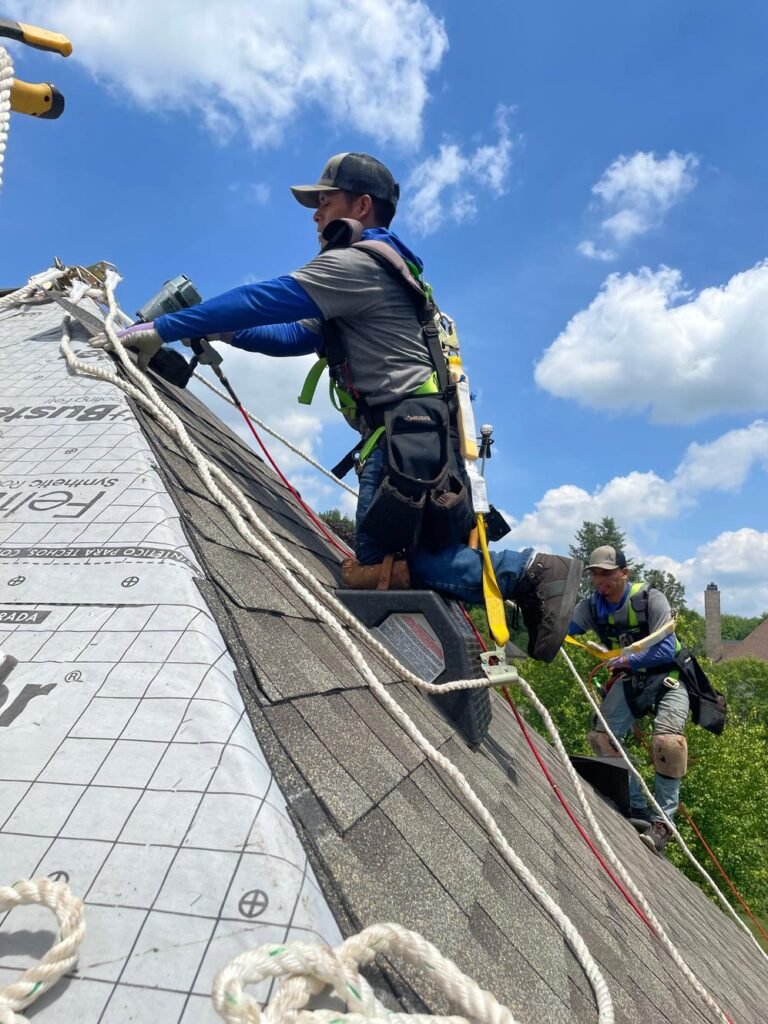
Homes in McKinney: the local picture
McKinney has 77,617 homes and a median year built of 2007. 34.7% went up between 2010 and 2019 and 33.2% between 2000 and 2009, so two thirds of the city was built in a twenty-year window, and the remaining third is older and closer to its second roof.
Median year built 2007, with a 1990s tail
The Census Bureau’s 2024 five-year estimate puts the median year built at 2007, with 14.9% of homes from the 1990s and 27.2% predating 2000. A house finished in 2005 carries shingle that is now about twenty years old — the point where a builder’s standard product starts losing granule and the first boots crack. A house finished in 2015 is at the other end: the shingle is sound, and the failures are installation details.
That split decides what a visit looks like. On the older wave the questions are granule loss, deck condition and whether the ridge vent was ever enough; on the newer wave they are boots, valleys and whether a vent was cut through at all.
The other difference is what sits under the shingle: a 2005 build usually has the original deck, a 2015 build often has a synthetic underlayment still sound.
Collin County hail, on both waves
NOAA’s Storm Events database records 310 hail reports in Collin County between 2016 and 2025, on 62 days, with 63 reports at two inches or larger across 17 days and a county maximum of 5.25 inches. On the older wave a two-inch stone finds shingle that has already lost granule; on the newer wave it usually leaves bruising that shows on the soft metal first.
The season runs March to June with a second window in September, and reporting density rises with population, so the count measures exposure rather than a schedule. The practical reading is that a roof here will meet hail several times in its life, and the roof that survives it is the one whose details were installed properly.
The same storm therefore produces two kinds of repair on one street.
570 feet, and heat that ages a young shingle early
The USGS Elevation Point Query Service returns 570.5 feet at the Census Bureau’s point for McKinney. Elevation is not a factor at that height, but summer heat is. The granule layer protects the asphalt from ultraviolet light, and the Asphalt Roofing Manufacturers Association describes granule loss as the route by which prolonged UV exposure degrades the shingle.
On 2000s and 2010s housing the vent openings are frequently sized to the minimum, and an attic that cannot exhaust keeps the deck hot through the evening. That is why a roof here can lose granule faster than its rating suggests, and why the sunward slope is the one to read first.
Attic ventilation is the least costly item to correct while a roof is open and the most costly to ignore, because a hot deck shortens the life of every shingle above it.
Collin County, and a permit on every roofing project
McKinney sits in Collin County, and the city issues residential roof permits directly. The city’s residential roofing permit document covers all roofing projects, which removes the ambiguity that other cities leave around small repairs: on this side of the county line, the paperwork is expected.
For a homeowner that is mostly good news, because the permit carries an inspection and the inspection is a second set of eyes on the deck and the flashings. Confirm the current form and the inspection sequence with the city’s Building Inspections division before the crew is booked, and keep the permit number with the house papers afterwards.
The permit record also follows the house, which matters at resale: a buyer’s inspector will ask when the roof was replaced and expect a permit number with the answer.
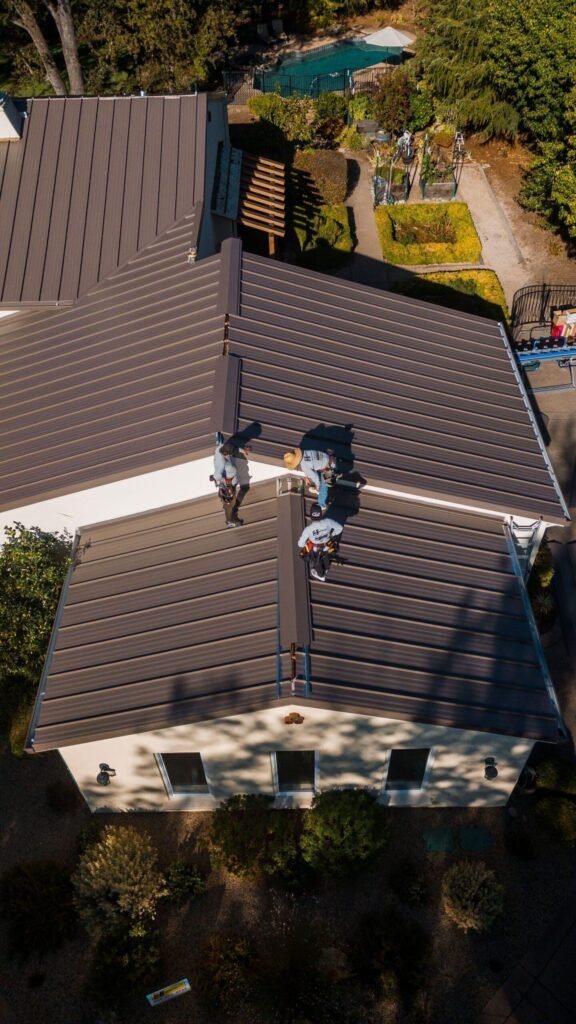
Roofing services in McKinney, TX
The work here divides by wave: a 2000s roof heading for replacement, a 2010s roof with a detail failure, and storm damage on either. Because so much of the city was built inside twenty years, the visit is usually about deciding whether a roof is at the end of its shingle or at the start of its problems.
A leak at a boot, a valley or a ridge is a roof repair job, and the repair should replace the detail rather than cover it. Where a roof from the 2000s has lost granule across whole slopes, roof replacement is the honest answer, and the scope covers the deck and the ventilation the house actually has.
After a hail day, storm and hail damage repair starts on the slopes and the soft metals, because bruising is easier to read there than on a ceiling. A roof inspection documents a roof before a sale or a warranty conversation, and the newer neighbourhoods fall under residential roofing as a whole. Between replacements, roof maintenance addresses the boots and the ridge before a small failure becomes a ceiling stain.
One more pattern is worth naming. On a street built in a single year the same detail tends to fail on several roofs within a season, so a leak that is common on your block is usually a known detail rather than a mystery.
Because the city permits every roofing project, the record for a house also tells the next owner which of the two waves a street belongs to and when the roof was last closed. That is worth a phone call before a valuation, a refinance or a sale, and it is cheaper than discovering the answer in an inspection report.
Two waves, one standard of work
Why homeowners in McKinney choose this crew
On a city built in two waves, the same visit has to answer two different questions. On a 2000s roof it is whether the shingle has reached the end of its life; on a 2010s roof it is which detail failed. Both answers come from the attic and the roof rather than from the age on the tax record, and both go in writing with photographs.
If the shingle has life in it, the recommendation is a repair with the reason attached. Where the deck is wet or the venting is short, the scope names it, because a new roof over an unvented attic will age the same way the old one did. The crew comes up from Plano on US 75, which keeps a return visit practical and a second look at a ridge vent easy.
Why now, with the 2000s roofs at twenty years
- A roof finished in 2005 is at the age where granule loss and cracked boots arrive together. A repair costs less before the deck is wet, and less again before the shingle is brittle.
- Collin County hail runs March to June. A roof closed in the cooler months is inspected before the season that fills the calendar. A permit record on the address is worth having before a sale, and it is easiest to obtain while the work is being done.
- The city permits every roofing project, so the inspection is part of the job and the record follows the address.
- Ridge vents sized to the minimum keep a 2010s attic hot, and heat ages a young shingle faster than the calendar suggests. The shingle profile used in the 2000s is being discontinued line by line, which makes a small repair on a 2005 roof easier this year than next.
- Matching a discontinued shingle gets harder every year, so a small repair on a 2000s roof is easier now than it will be after another season.
What a roof visit covers on either wave
- The attic, for deck staining, daylight at penetrations and whether the ridge vent is open. The ridge line, where a vent that was never cut through shows as a hot attic and a stained deck.
- Boots and appliance vents, the first details to fail on 2000s housing.
- Valleys and step flashings, where underlayment laps show as staining.
- The slope faces, for granule loss and hail bruising after the last storm. The garage ceiling, which often shows the first stain from a valley above it.
- A written note and photographs, usable for a warranty conversation or a sale.
Frequently asked questions about roofing in McKinney
Does every roofing project need a permit in McKinney?
The city’s residential roofing permit document covers all roofing projects, so the paperwork is expected rather than optional. The permit brings an inspection with it, which is a second look at the deck and the flashings. Confirm the current form and sequence with the city’s Building Inspections division before the work is scheduled.
How old is the housing stock here?
The median house was built in 2007 and 27.2% of the city’s 77,617 homes predate 2000, according to the Census Bureau’s 2024 five-year estimate, with 34.7% from the 2010s and 33.2% from the 2000s. Two thirds of the city was built in a twenty-year window, which is why roofs here fail in groups.
How much hail does the county record?
NOAA’s Storm Events file records 310 hail reports in Collin County between 2016 and 2025, on 62 days, with 63 reports of two-inch stones or larger across 17 days and a county maximum of 5.25 inches. On a 2000s roof the stone that matters is the one that lands on shingle already short of granule.
Can a 2010s roof be repaired rather than replaced?
Usually yes. A boot, a valley, a ridge cap or a flashing on a roof from the 2010s is a repair, and the shingle around it has most of its life left. The exception is a slope that has taken hail across a wide area, where matching the existing shingle becomes the practical problem. Because the shingle lines used in the 2000s are being discontinued one profile at a time, matching gets harder every year, which is an argument for repairing early rather than late.
Does a 30-year shingle really last 30 years in McKinney?
The figure assumes maintained conditions. Here the variables are ultraviolet light, summer attic heat and hail, and the shingle that fails first is usually the one on the sunward slope with the least ventilation behind it. Granule loss in the gutter is the practical gauge.
Which county is McKinney in?
McKinney sits in Collin County, and roof permits are issued by the city rather than the county. The county matters for records and tax purposes; the city’s Building Inspections division is who answers questions about a specific address.
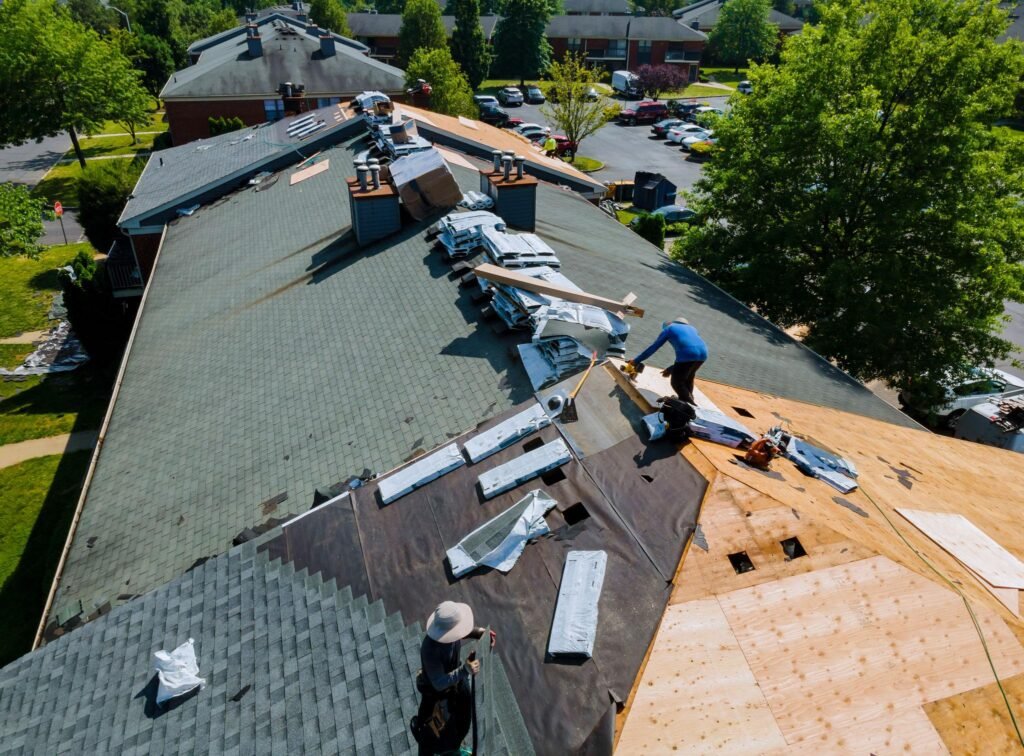
Permits and inspections on a McKinney roof
McKinney issues residential roof permits directly, and the city’s roofing permit document covers all roofing projects rather than only full replacements. The permit carries an inspection, which is where the deck condition and the flashings get a second look from someone other than the installer.
Ask which inspections the job will have and when they fall in the schedule, because a replacement that includes decking usually needs a look before the shingle goes on. Keep the permit number with the house papers, and confirm the current form with the city’s Building Inspections division, since the process is revised from time to time.
On a two-wave city the permit also settles an argument about age: the record says when the roof was last replaced, which is often earlier or later than the owner remembers.
McKinney roofs, street by street
Next step: get a roof in McKinney looked at
Call (214) 774-8818
Describe the leak and the year the house was built.
Point at the stain
A ceiling mark, a drip at a vent or granules in the gutter each implicate a different detail.
Have roof and attic seen
Field shingle, valleys, boots and the deck above the living space.
Get the findings written
What is worn, what is sound, and what the deck is doing.
Choose repair or replace
On the 2010s wave it is usually the smaller job.
Book the work
Roofing Repair Plano, 2715 Preston Meadow Dr, Plano, TX 75093.
McKinney's Hail Record: Why This Page Leads With It
McKinney is the Collin County seat, and Collin County’s hail record is the story of roofing in this city: 316 hail reports from 2016 to mid-2026, 269 at 1 inch or larger, 63 at 2 inches or more, averaging about six hail days a year with the season concentrated in March through June. The county’s defining storm, the supercell of April 11, 2016, crossed Collin County on its way to dropping the largest hailstone in the National Weather Service Fort Worth office’s record just down the road in Wylie. Metro-wide, 2023 was the heaviest hail year in the record — 27 hail days and 332 reports. For McKinney’s roughly 68,400 households — historic-district homes near downtown, 1990s and 2000s subdivisions, and new builds still spreading north — that record means hail is not an if but a when, and a roof’s documented condition before and after each season is what every repair and claim decision rests on. After a hail day, call Roofing Repair Plano on (214) 774-8818 for a dated, photographed inspection.