
Roofing Company in Murphy, TX
Phone
(214) 774-8818
One decade
Collin County
Roofs in step
same age, same street
A town built in one decade has roofs that fail together
Murphy is unusual for this part of the metro: 63.6% of its 6,030 homes went up in a single decade, the 2000s. The median house dates from 2005, which means most of the town’s roofs are within a few years of each other and are reaching the end of a builder-grade shingle at the same time. On a street like that, the first ceiling stain is usually a warning about fifteen other roofs.
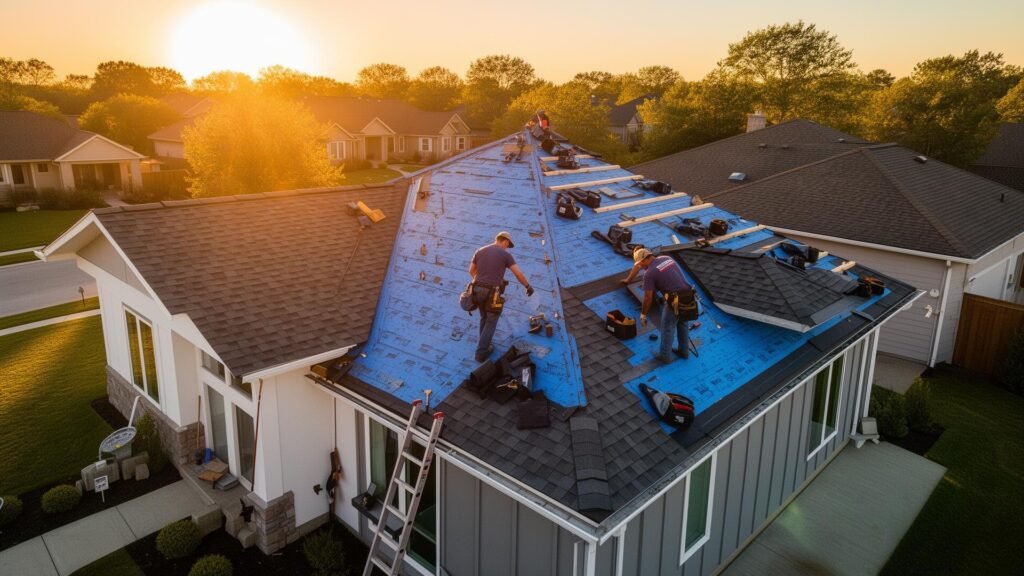
Homes in Murphy: the local picture
Murphy has 6,030 homes, a median year built of 2005 and a distribution that is almost a single bar: 63.6% from the 2000s, 15.8% from the 2010s and 18.7% predating 2000. The roof stock is therefore synchronized, and so is the work.
Median year built 2005, and a very concentrated stock
The Census Bureau’s 2024 five-year estimate puts the median year built at 2005, with 63.6% of homes completed between 2000 and 2009. A roof from that window is now about twenty years old, which is where a builder’s architectural shingle starts to lose granule and the first pipe boots crack at the collar. Because the houses went up together, the failures arrive together, and a street can go from one replacement to six in a season.
The upside is predictability: a 2005 roof with a known shingle, deck and ventilation design can be scoped quickly, and the neighbour’s roof tells you what yours will look like in two years.
Roofs on the same street also share a shingle line and a ventilation design, which is why the second roof on a block is usually quoted in the same month as the first.
Collin County hail on synchronized roofs
NOAA’s Storm Events database records 310 hail reports in Collin County between 2016 and 2025, on 62 days, with 63 reports at two inches or larger across 17 days and a county maximum of 5.25 inches. On shingle that is already twenty years old, a two-inch stone is enough to fracture a mat that would have survived the same hit at ten years.
The season runs March to June with a second window in September, and reporting density rises with population, so the count measures exposure rather than a schedule. The practical reading for a town of this size is that a hail day here is a neighbourhood event rather than a single-address one.
That is also why an inspection after a hail day is a neighbourhood question rather than a private one: the roof next door is the same age, the same product and usually the same condition.
571 feet, and the heat load on a 2005 attic
The USGS Elevation Point Query Service returns 571.1 feet at the Census Bureau’s point for Murphy. Elevation is not a factor there; the attic is. The granule layer protects the asphalt from ultraviolet light, and the Asphalt Roofing Manufacturers Association describes granule loss as the route by which prolonged UV exposure degrades the shingle.
On 2000s housing the ridge and soffit openings were sized to the code minimum of the time, and a blocked intake makes the exhaust useless. The result is a deck that stays hot and a shingle that ages from underneath, which is why two roofs of the same age on the same street can be five years apart in condition.
Ventilation is the one variable a homeowner can change, and correcting a blocked soffit intake is inexpensive while a roof is open and impossible afterwards.
Collin County, and a re-roofing permit sheet
Murphy sits in Collin County, and residential roof work is reviewed by the city rather than by the county. The city publishes its re-roofing permit requirements as a standalone sheet, which tells a homeowner that the paperwork is expected rather than optional.
For a small city that is a useful thing: the requirement is written down, it applies to the address, and it gives the inspection a place in the schedule. Confirm the current sheet and the inspection sequence with the city before the crew is booked, and keep the permit number with the house papers.
Because the sheet is written down, the requirement is the same for every house on the street, which removes the argument about whether a repair is big enough to need one.
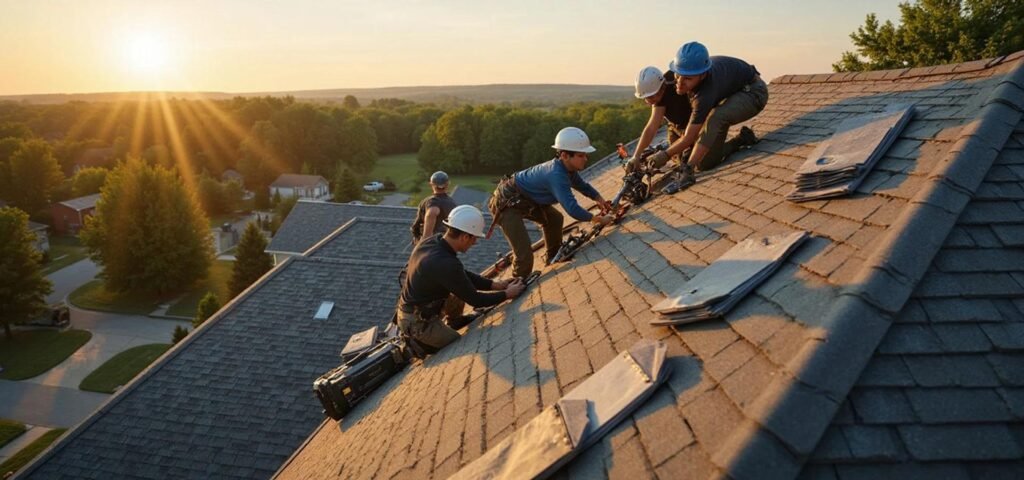
Roofing services in Murphy, TX
Nearly every roof in this town is in the same phase of life, so the work divides by condition rather than by age: a 2000s roof that still has shingle left and needs a detail repaired, a 2000s roof that has run out of granule, and storm damage on either.
A leak at a boot, a valley or a ridge is a roof repair job, and the repair should replace the detail rather than cover it with sealant. Where the shingle has gone thin across whole slopes, roof replacement is the honest answer, and the scope covers the decking and the ventilation the house actually has.
After a hail day, storm and hail damage repair starts with the slopes and the soft metals, because a twenty-year-old mat bruises before it leaks. A roof inspection puts a condition record on a house before a sale or a renewal, and the 2000s neighbourhoods here fall under residential roofing as a whole.
Between replacements, roof maintenance is what catches the cracked boot and the lifted ridge cap before the next storm does. On a synchronized street that visit is also a way to find out what the neighbours already know about their roofs, which is usually a fair predictor of your own.
A second pattern is worth naming. When a street is built in one go, the same detail fails on several roofs within a season or two, so a leak that is common on your block is usually a known detail rather than a mystery. That makes the first visit faster and the repair more predictable, and it means the neighbours are usually a fair guide to what your own roof is doing.
Same street, same age, same answer
Why homeowners in Murphy choose this crew
On a street where every roof is the same age, a homeowner needs to know whether theirs is the one that failed early or the one that is simply next. That answer comes from the attic and the slopes rather than from the year on the tax record: granule depth, deck condition, and whether the ridge vent was ever cut through.
The findings go in writing with photographs, and if the roof can take a repair the recommendation is a repair even though a replacement is the larger job. Where the deck is wet or the venting is short, the scope names it, because a new roof over an unvented attic will age the same way the old one did. The crew comes up from Plano, twenty-five minutes west, which keeps a return visit practical.
Why now, before the block books its replacements
- Most roofs here are twenty years old and within a few years of each other, so the spring calendar fills early once a hailstorm passes over a single street.
- Collin County hail runs March to June. A roof closed in the cooler months is inspected and documented before the queue forms. A permit record on the address is worth having before a sale, and it is easiest to obtain while the work is being done.
- A cracked boot on a 2005 roof is a small repair now and a wet deck later, and the deck is the part that turns a shingle job into a carpentry job.
- Ridge vents sized to the 2000s minimum keep the attic hot, and heat is what makes two identical roofs age differently. The shingle profile used in the 2000s is being discontinued line by line, which makes a small repair easier this year than next.
- Matching a shingle that has been on a street for twenty years gets harder each year as profiles are discontinued, so the repair done now is easier than the same repair in two years.
What a roof visit covers on a synchronized street
- The attic, for deck staining, daylight at penetrations and whether the ridge vent is open. The ridge line, where a vent that was never cut through shows as a hot attic and a stained deck.
- Boots and appliance vents, the first details to fail on 2000s housing.
- Valleys and step flashings, where underlayment laps show up as staining.
- The slope faces, for granule loss and hail bruising after the last storm. The garage ceiling, which often shows the first stain from a valley above it.
- A written note and photographs, useful for a warranty conversation or a sale.
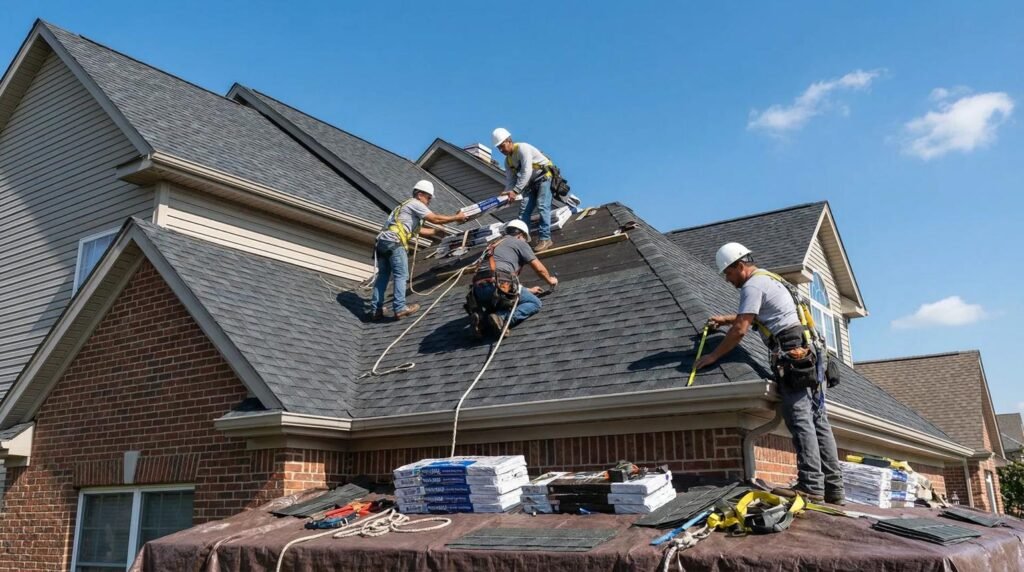
Frequently asked questions about roofing in Murphy
Does a re-roof in Murphy need a permit?
The city publishes re-roofing permit requirements as a standalone sheet, so the paperwork is expected rather than optional, and the permit carries an inspection. Confirm the current sheet and the sequence with the city before the crew is booked, because the requirement applies to the address and the inspection has to fall in the right place in the job. Ask who pulls the permit and keep the number with the house papers once it is issued. Ask who pulls the permit and keep the number with the house papers once it is issued, because the next owner will ask when the roof was replaced.
How old are the houses and roofs here?
The median house was built in 2005 and 63.6% of the town’s 6,030 homes went up between 2000 and 2009, according to the Census Bureau’s 2024 five-year estimate. Only 18.7% predate 2000, which is why most roofs here are in the same phase of life at the same time.
How much hail does the county record?
NOAA’s Storm Events file records 310 hail reports in Collin County between 2016 and 2025, on 62 days, with 63 reports of two-inch stones or larger across 17 days and a county maximum of 5.25 inches. On a twenty-year-old shingle the stone that matters is the one that hits a mat already short of granule.
Can a 2005 roof be repaired instead of replaced?
Sometimes. A boot, a valley or a ridge cap is a repair, and if the field shingle still has granule the repair is worth doing. Where the shingle has gone thin across a whole slope, a repair moves the water to the next weak point, and the deck condition is the honest dividing line.
Does a 30-year shingle really last 30 years here?
The figure assumes maintained conditions. In North Texas the variables are ultraviolet light, summer attic heat and hail, and the roof that fails first on a street is usually the one with the least ventilation behind it rather than the oldest shingle. Granule loss in the gutter is the practical gauge of how much of the rating is left.
Which county is Murphy in?
Murphy sits in Collin County, and roof permits are handled by the city rather than the county. The county matters for records and tax purposes; the city is who answers questions about a specific address.
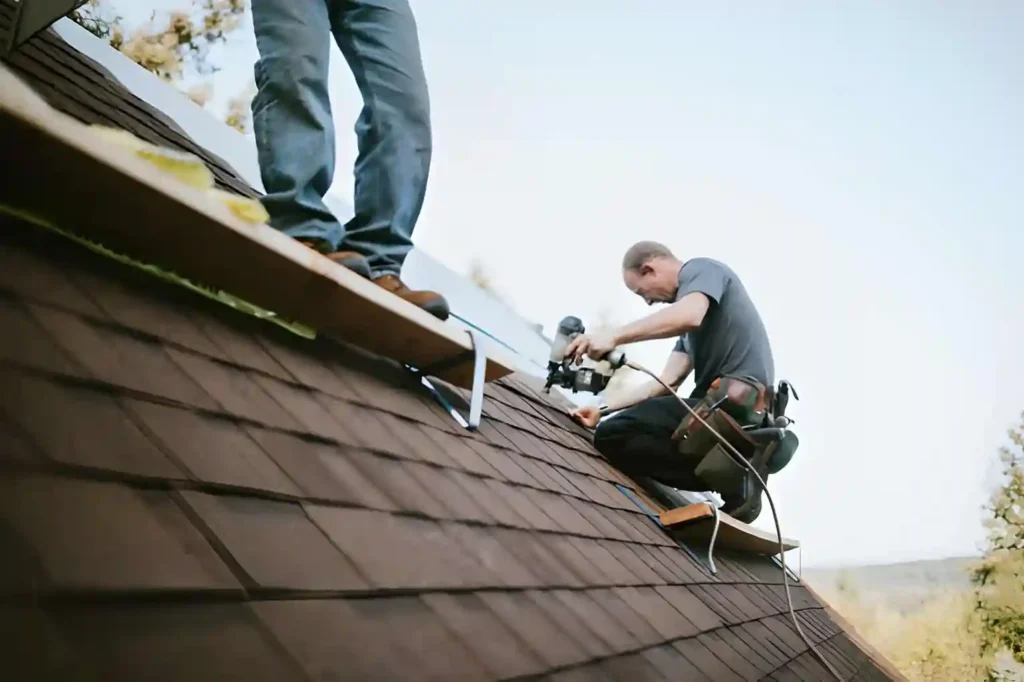
The permit and the inspection on a Murphy roof
Murphy reviews residential roof work through a written re-roofing permit sheet rather than an informal practice, and the permit brings an inspection with it. For a homeowner that means two things to confirm before the crew arrives: which form applies, and when the inspection falls relative to the shingle going on.
Ask the contractor for the permit number once it is issued and keep it with the house papers, because the next owner’s inspector will ask when the roof was replaced. Requirements are revised from time to time, so confirm the current version with the city rather than relying on a summary.
On a small city the inspection is also quick to schedule, which is one reason a twenty-year-old roof here can be replaced inside a normal working week once the permit is in hand.
Murphy roofs, street by street
Next step: get a roof in Murphy looked at
Call (214) 774-8818
Describe the leak and the year the house was built.
Point at the stain
A ceiling mark, a drip at a vent or granules in the gutter each implicate a different detail.
Have roof and attic seen
Field shingle, valleys, boots and the deck above the living space.
Get the findings written
What is worn, what is sound, and what the deck is doing.
Choose repair or replace
On a 2005 roof the deck decides the answer.
Book the work
Roofing Repair Plano, 2715 Preston Meadow Dr, Plano, TX 75093.