
Roofing Company in Lewisville, TX
Phone
(214) 774-8818
Lowest ground
Dallas and Denton
First replacement
first replacement
The lowest ground in the group, and a 1990s roof stock
Lewisville sits at 474 feet, the lowest elevation in this group of cities, and its housing is dominated by the 1990s: the median house dates from 1997 and 23.8% of the stock went up in that decade. Those roofs are now twenty-five to thirty years old, which is the point where a first replacement stops being optional and starts being scheduled, usually after a ceiling stain that appears in a rainstorm rather than a hail event.
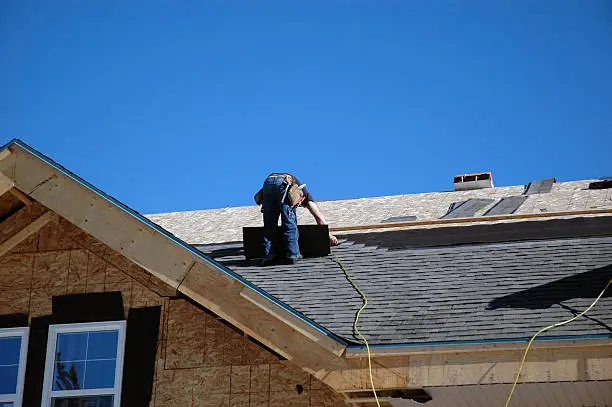
Homes in Lewisville: the local picture
Lewisville has 54,237 homes, a median year built of 1997 and 56.8% of its stock built before 2000. The city spreads across Dallas County and Denton County, and the roof stock runs from older houses near the centre to 1990s subdivisions and 2010s infill.
Median year built 1997, and a 1990s peak
The Census Bureau’s 2024 five-year estimate puts the median year built at 1997, with 23.8% of homes from the 1990s, 20.1% from the 2000s and 19.2% from the 2010s. A house finished in 1997 was shingled with a twenty-five-year product, decked at the thickness of that era, and vented with soffit and ridge openings sized to the attic it had.
Twenty-eight years on, the shingle is past its stated life, the pipe boots have hardened, and the decking is original. The first replacement on those homes is the job being quoted now, and it usually arrives with a soft valley and a ridge vent that was never enough for a Texas summer.
On a 1997 house the first replacement is also the point where the deck is exposed and can be read properly for the first time.
Denton County hail, the heaviest record in the group
NOAA’s Storm Events database records 373 hail reports in Denton County between 2016 and 2025, on 80 days, with 60 reports at two inches or larger across 16 days and a county maximum of 5.9 inches. Lewisville’s northern half sits in that county, so those totals apply to part of the city.
Reporting density rises with population, so the count measures exposure rather than a schedule, and the season runs March to June with a second window in September. On a roof that is already at the end of its shingle life, a two-inch stone is enough to turn a maintenance list into a replacement.
The county totals apply to the northern half of the city, which is why two houses a few miles apart can have different roof histories.
474 feet, and heat that works from underneath
The USGS Elevation Point Query Service returns 474.3 feet at the Census Bureau’s point for Lewisville, the lowest of the cities in this group. Elevation is not a factor at that height; the attic is. The granule layer protects the asphalt from ultraviolet light, and the Asphalt Roofing Manufacturers Association describes granule loss as the mechanism by which prolonged UV exposure degrades the shingle.
On 1990s housing the venting was sized to the code minimum of the time, and a blocked soffit intake makes the ridge exhaust useless. The result is a deck that stays hot and a shingle that ages from underneath, which is why two roofs of the same age on the same street can be years apart.
Ventilation is the one variable a homeowner can change, and correcting a blocked intake costs least while the roof is open.
Two counties, and a re-roof on the building permit list
Lewisville sits in Dallas County with a large northern portion in Denton County, and roof permits are issued by the city rather than by either county. The city lists re-roofs and re-decks among the building permits it issues, and contractor registration runs through the city’s online portal without a roof-specific condition. Ask the city which of the two applies, since the answer decides whether an inspection is part of the job.
For a homeowner that means the permit question is answered by the city for the address, and the deck question is answered by the roof. Confirm the current requirement before the crew is booked, and keep the permit number with the house papers.
Because a re-deck is named separately from a re-roof, the deck question is worth settling before the tear-off rather than during it.
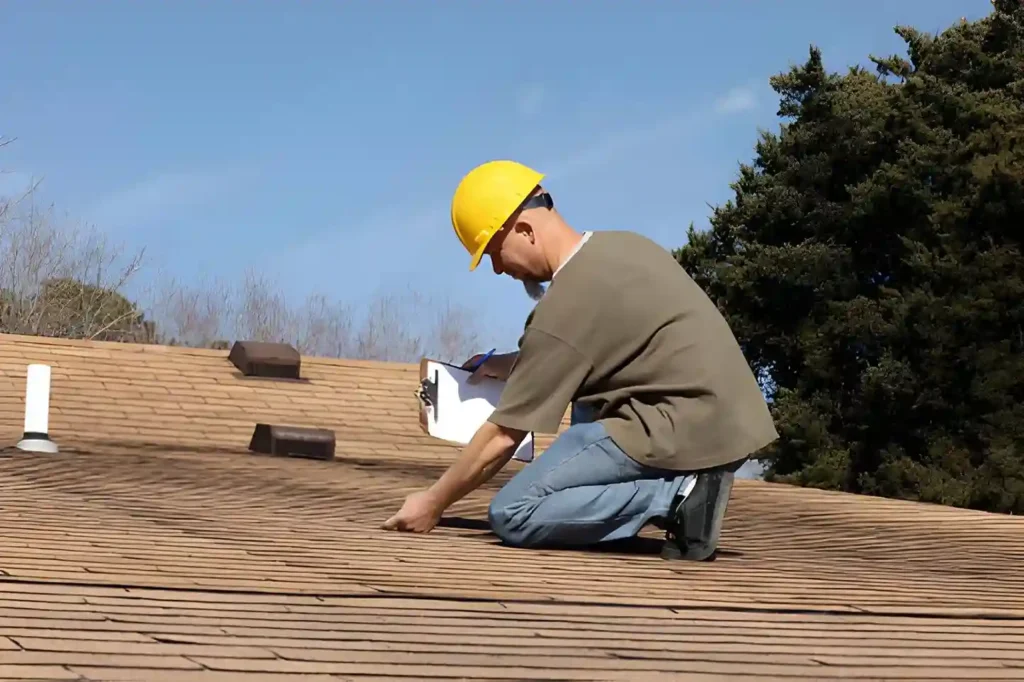
Roofing services in Lewisville, TX
Most of the work here is first-replacement work on 1990s housing, with a smaller share of repairs on the 2000s and 2010s houses and on the older streets near the centre. The visit decides which of those a roof is, and the deck usually decides the scope.
A local failure — a valley, a boot, a step flashing — is a roof repair job, and on a 1997 house the question is whether the deck around it is still sound. Where the shingle has gone thin across whole planes, roof replacement is the honest answer, and the scope covers the decking and ventilation the house actually has.
After a hail day, storm and hail damage repair starts with the slopes and the soft metals. A roof inspection documents a roof before a sale or a renewal, and the city’s subdivisions fall under residential roofing as a whole.
Between replacements, roof maintenance catches the cracked boot and the lifted cap before the next season. On a roof this age that visit is also how a homeowner finds out whether the deck is still dry, which is the difference between a shingle job and a carpentry job.
The 1990s subdivisions here also share a shingle line and a vent design, so the same detail tends to fail on several roofs in the same season. That makes a leak that is common on your street a known detail rather than a mystery.
Where a house is being sold, the inspection is the document that turns a question about roof age into a dated record of what was seen and when.
A second pattern is worth naming on 1990s housing. The ridge vent on these roofs was sized for the shingle of the time, and when it is undersized the deck stays hot and the shingle above it ages from underneath. That is why two houses of the same age on the same street can be years apart in condition.
A first replacement, done once
Why homeowners in Lewisville choose this crew
On a 1997 roof the expensive mistake is buying shingle for a deck that should have come out, so the visit starts in the attic and works outward: staining at the deck, daylight at the penetrations, granule depth on the sunward planes, and the state of the valley metal.
Those findings go in writing with photographs before a scope is proposed. If the roof can take one more repair, that is the recommendation even though a replacement is the larger job. The crew comes up from Plano on the tollway, which keeps a second look at a valley or a return visit for an inspection practical rather than a scheduled expedition.
That sequence is also what makes a first replacement predictable: the deck is read, the ventilation is checked, and the scope is written before the material is ordered.
Why now, with the 1990s roofs at the end of their life
- A roof from 1997 has passed its stated life, and the first replacement is cheaper before the deck is wet than after. A first replacement is also the one chance to correct the ventilation without paying for it twice.
- Denton County's hail record runs March to June. A roof closed in the cooler months is inspected before the season that fills the calendar. A roof this age also has boots that have been painted over rather than replaced, and those are a small repair now and a wet deck later.
- The city lists re-roofs and re-decks as permitted work, so the paperwork belongs in the schedule rather than at the end of it.
- Attic venting sized to a 1990s minimum keeps the deck hot, and heat is what ages a shingle from underneath. The city names a re-deck separately, which is the clearest sign that the deck is part of the decision rather than an afterthought.
- Matching a shingle that has been on a street for nearly thirty years gets harder each year, so a local repair is easier now than later. The shingle profile used in the late 1990s is being discontinued line by line, so a local repair is easier this year than next.
What a roof visit covers on 1990s housing
- The attic, for deck staining, daylight at penetrations and the vent openings. The ridge line, where a vent that was never cut through shows as a hot attic.
- The valleys, where a 1990s roof usually fails first. The ridge and soffit openings, so the attic can actually exhaust.
- Boots and appliance vents, checked by hand rather than from the ground. The garage ceiling, which often shows the first stain from a valley above it.
- The sunward planes, for granule loss and hail bruising. The eave line, for soft fascia behind the gutter.
- A written condition note with photographs, usable for a sale or a second opinion.

Frequently asked questions about roofing in Lewisville
Does a re-roof in Lewisville need a permit?
The city lists re-roofs and re-decks among the building permits it issues, and contractor registration runs through the city’s online portal without a roof-specific condition. Confirm the current requirement for the address before the crew is booked, and keep the permit number with the house papers. The deck question is worth asking before the covering is chosen, because it decides the scope. Ask which permit applies before the crew is booked, because a re-deck and a re-roof are named separately.
How old are the roofs here?
The median house was built in 1997 and 56.8% of the city’s 54,237 homes predate 2000, with 23.8% from the 1990s alone, according to the Census Bureau’s 2024 five-year estimate. Most of the city is therefore on its original shingle at close to thirty years. First-replacement work is the bulk of what a roofer sees on those streets.
How much hail does the county record?
NOAA’s Storm Events file records 373 hail reports in Denton County between 2016 and 2025, on 80 days, with 60 reports at two inches or larger across 16 days and a county maximum of 5.9 inches. The northern half of the city sits in that county.
Can a 1997 roof be repaired instead of replaced?
Sometimes. A valley, a boot or a flashing on a roof with shingle left is a repair. At nearly thirty years the shingle is usually thin across the field, and a repair that opens the roof tends to find more than it was sent to fix. The deck condition is the honest dividing line.
Does a 30-year shingle really last 30 years here?
The rating assumes maintained conditions. In North Texas the variables are ultraviolet light, summer attic heat and hail, and granule loss in the gutter is the practical measure of how much of the rating is left rather than the calendar. On a 1997 roof that measure is usually close to the end, and the deck is the next question.
Which county is Lewisville in?
Lewisville sits in Dallas County with a large northern portion in Denton County. Roof permits are issued by the city rather than by either county, so the county line matters for records and tax purposes more than for the work.
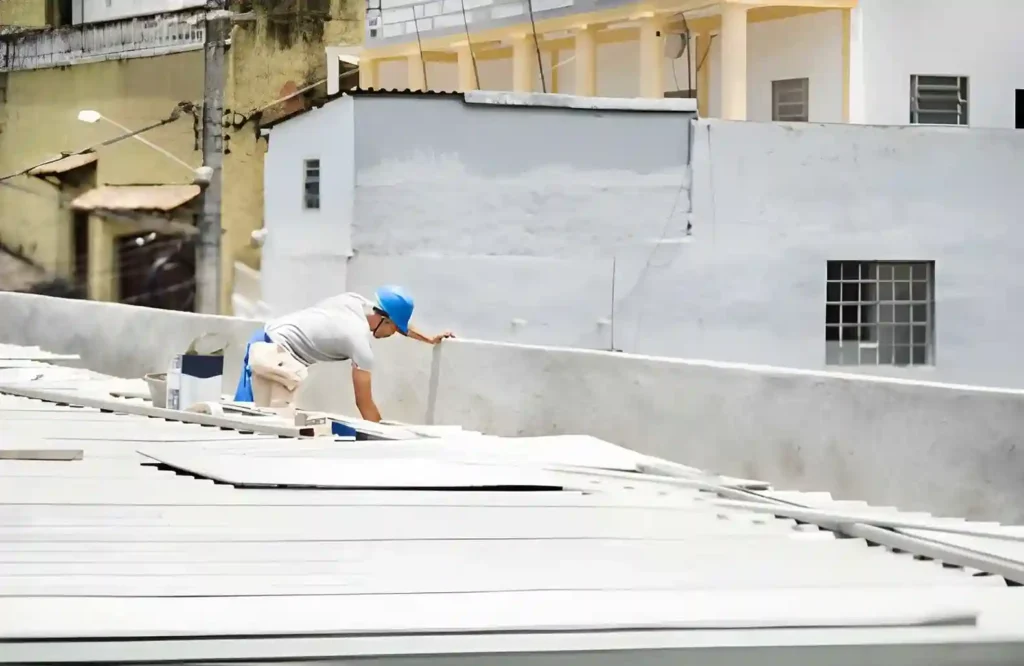
The permit and the deck on a Lewisville roof
Lewisville issues residential roof permits through the city, and re-roofs and re-decks are both on the list of work that needs one. Because a re-deck is named separately from a re-roof, the deck question is also the permit question, and it is settled by looking under the shingle rather than by the age of the house.
Ask which permit applies before the crew is booked, keep the number with the house papers, and confirm the current requirement with the city rather than relying on a contractor’s summary, because the scope can change once the old material is off.
Ask which inspection applies and keep the number with the property records, because the next owner will ask for exactly that.
Lewisville roofs, street by street
Next step: get a roof in Lewisville looked at
Call (214) 774-8818
Describe the leak and the year the house was built.
Name the symptom
A ceiling stain, granules in the gutter or a lifted cap each point somewhere different.
Have roof and attic seen
Planes, valleys, boots and the deck above the living space.
Get the findings written
What is worn, what is sound, and where the deck is soft.
Settle the permit question
Re-roof or re-deck is decided before the crew is booked.
Book the work
Roofing Repair Plano, 2715 Preston Meadow Dr, Plano, TX 75093.
Lewisville Storm Record: Big City, Same Spring Season
Across the Dallas–Fort Worth metroplex, hail is a spring certainty rather than a surprise: the storm record averages roughly 17 to 18 hail days a year (2010–2025), no year in that span came in under ten, and about 88 percent of hail reports fall between March and June, with April the peak month. The busiest single day in the record, May 27, 2024, produced 118 hail reports across the metroplex; a week later the season was still going, and June 1, 2025 brought 76 reports with stones up to 3 inches. Lewisville is the largest community in this group — about 43,900 households in Denton County — and it shares the county’s recent storm history, including the May 2024 system that produced a measured 95 mph gust in neighbouring The Colony and hail across the metroplex. Lewisville’s housing spans 1970s neighbourhoods near the old town to new construction still going up around the lake, so a single storm can bruise roofs of very different ages on the same street. The older the roof, the more a documented, dated inspection matters: it is the difference between a storm claim with evidence and a wear-and-tear argument. Call Roofing Repair Plano on (214) 774-8818.