
Roofing Company in Farmers Branch, TX
Phone
(214) 774-8818
Post-war core
Dallas County
Infill 2010s
and 2010s infill
A 1950s ranch and a 2015 build on the same street
Farmers Branch has an unusual roof stock for a Dallas County city: 12.9% of its homes were built before 1960 and 30.1% went up in the 2010s. That means a 1950s ranch with a low pitch and a fifty-year-old deck can sit a few doors from a new build on its first shingle, and the two need completely different answers. The median year built is 2001, but the median hides both ends.
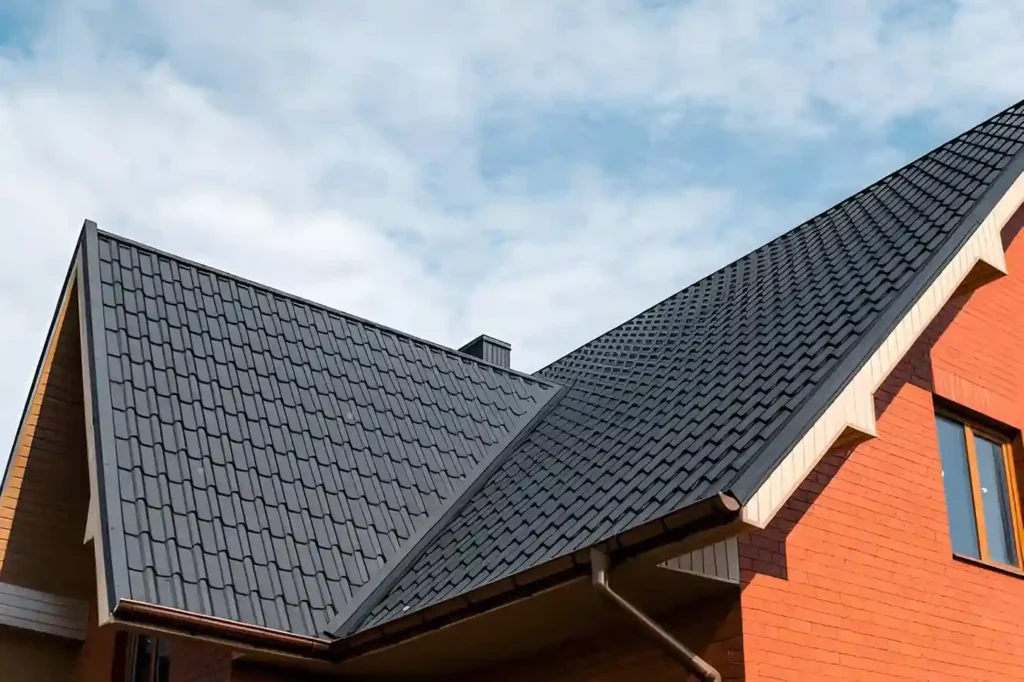
Homes in Farmers Branch: the local picture
Farmers Branch has 17,260 homes, a median year built of 2001 and a distribution that is genuinely two-ended: a post-war core from the 1950s and 1960s, and a large 2010s addition. 49.0% of the stock predates 2000.
Median year built 2001, with a 1950s and 1960s core
The Census Bureau’s 2024 five-year estimate puts the median year built at 2001, with 17.9% of homes from the 1960s, 12.3% from the 1950s and 9.4% completed after 2019. The post-war houses were built with low pitches, small attics and roof structures that were never designed for the ventilation a modern shingle needs.
On those houses the roof is a carpentry question before it is a shingle question. On the 2010s houses it is the reverse: the structure and the deck are sound, and the failures are boots, valleys and venting installed in a hurry. A visitor who assumes one or the other wastes the homeowner’s time.
The post-war houses were also built with smaller roof planes, so a replacement involves more detail work for each square of roof than a 2010s build.
Dallas County hail on both ends of the stock
NOAA’s Storm Events database records 196 hail reports in Dallas County between 2016 and 2025, on 64 days, with 23 reports at two inches or larger across nine days and a county maximum of 4.0 inches. On a 1950s roof that is enough to crack shingle that has already gone brittle; on a 2015 roof it usually shows as bruising on the soft metal.
Reporting density rises with population, so the count measures exposure rather than a schedule, and the season runs March to June with a second window in September. The practical reading is that both ends of this housing stock will meet hail, and the older end will show it first.
The county file is read by address here, because the city sits entirely inside one county while the housing dates differ by street.
515 feet, and small attics that cannot shed heat
The USGS Elevation Point Query Service returns 515.1 feet at the Census Bureau’s point for Farmers Branch. Elevation is not a factor at that height; the attic is. The granule layer protects the asphalt from ultraviolet light, and the Asphalt Roofing Manufacturers Association describes granule loss as the mechanism by which prolonged UV exposure degrades the shingle.
A 1950s ranch often has a shallow attic with limited vent area, so the deck stays hot and the shingle above it ages faster than its rating suggests. On the 2010s houses the venting was sized to the code minimum, and a blocked intake has the same effect from the other direction.
A shallow attic is also harder to inspect, which is why the deck is read from inside rather than assumed from the slope.
Dallas County, and a permit position that is not published
Farmers Branch sits in Dallas County, and roof permits are handled by the city rather than the county. The city’s building permit forms and permitting pages do not carry roofing text, and no re-roof requirement was found on the pages that could be read, so the position is not published in a form that can be quoted here.
That is a reason to ask rather than a reason to skip. Before work is scheduled, ask the city what it requires for the specific address, and get the answer for the address rather than for the city in general, because infill lots and original plat lots are often treated differently.
Because the answer has to come from the city, it is worth getting it for the lot rather than for the city in general.
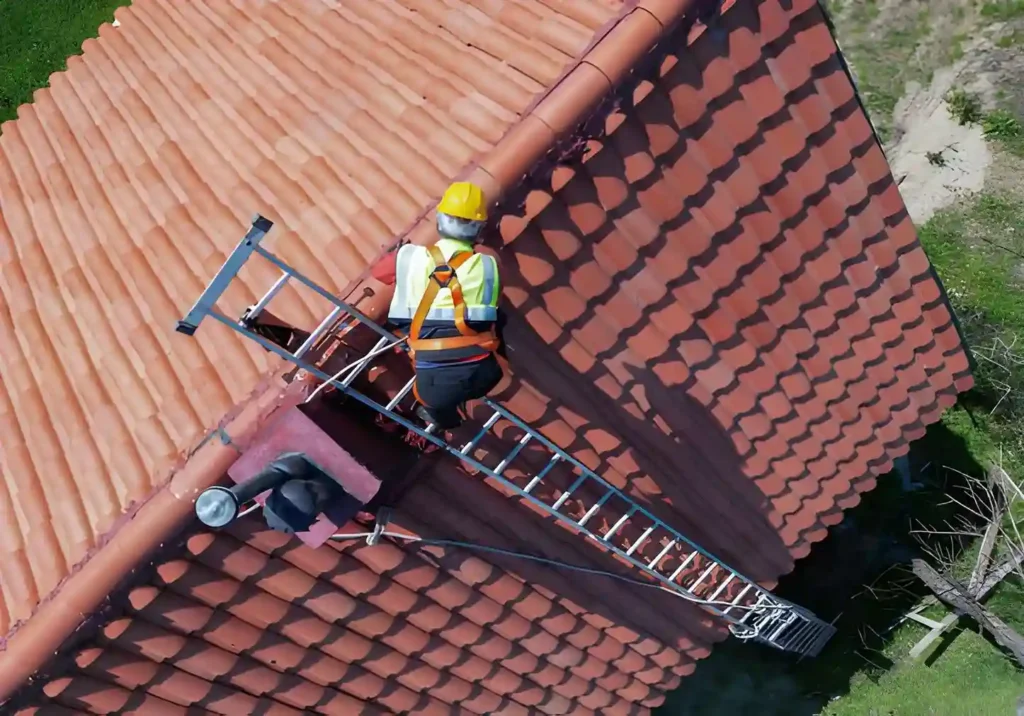
Roofing services in Farmers Branch, TX
Work in this city divides by the two ends of the stock. A post-war ranch usually needs a replacement that includes decking, fascia and ventilation; a 2010s build more often needs a detail repaired. Both are decided by the attic and the roof rather than by the year on the appraisal record.
A local failure — a valley, a boot, a step flashing — is a roof repair job, and on a 1950s house the question is whether the deck around it is still sound. Where the shingle has gone brittle across whole planes, roof replacement is the honest answer, and the scope covers the decking and ventilation the house actually has.
After a hail day, storm and hail damage repair starts with the slopes and the soft metals. A roof inspection puts a condition record on a house before a sale or a renewal, and both ends of the stock here fall under residential roofing.
Between replacements, roof maintenance catches the failed sealant and the lifted cap before the next storm. On a post-war house that visit is also where soft fascia and a shallow attic get noticed before they become a carpentry bill.
Where a house is being sold, the inspection is the document that separates a roof that has been maintained from one that has merely been patched, which is the question a buyer’s inspector asks first.
The post-war houses here also tend to have small, shallow attics, which is why ventilation comes up in almost every conversation about a roof on those streets. Correcting it while the roof is open is the only least costly moment to do it.
On the 2010s houses the picture is simpler: the structure is sound and the failures are details, so the scope is usually a repair with a written record of what was replaced.
Two eras, two answers, one visit
Why homeowners in Farmers Branch choose this crew
A city with a 1950s core and a 2010s addition needs a visit that can read both, so the roof and the attic are looked at before anything is proposed: granule depth on the sunward planes, deck condition at the valleys, and whether the boots and flashings were built or merely sealed.
Those findings go in writing with photographs. On the post-war houses the answer usually includes carpentry and ventilation; on the newer ones it is usually a detail. Both are named rather than assumed, and the crew comes up from Plano on the tollway, which keeps a return visit practical.
The written record matters at resale as much as at the time of the work, because a roof that has been documented is easier to price than one that has simply been lived under.
That is also why the two eras are quoted differently: one is a carpentry scope with shingle on top, and the other is shingle and a detail.
Why now, before another summer on a shallow attic
- The 2010s roofs here are at the age where builder details fail, and a repair is cheaper before the deck is wet. A shallow attic cannot shed heat, so the deck stays warm into the evening and the shingle above it ages faster than the rating suggests.
- Dallas County hail runs March to June. A roof closed in the cooler months is inspected before the season that fills the calendar.
- A 1950s attic with limited vent area keeps the deck hot, and heat is what ages a shingle from underneath. On the 2010s houses the failures are details, and a detail repair is a small job while the deck is dry.
- On the post-war houses the fascia and the deck are the variables, and both are least costly to deal with while the roof is open.
- The city's permit position has to be confirmed for the address, which is easier before a crew is booked than during a storm week. The permit answer has to come from the city for the address, so it is worth asking before the material is ordered.
What a roof visit covers on either era
- The attic, for deck staining, daylight at penetrations and the vent area.
- The valleys and step flashings, where water sits longest. The vent area at the soffit and ridge, which is limited on the post-war houses.
- Boots and appliance vents, checked by hand rather than from the ground. The attic above the garage, which is often where a shallow roof leaks first.
- Fascia and soffit behind the gutters on the post-war houses. The fascia at the eave, where soft wood shows as a wavy gutter line.
- A written condition note with photographs, usable for a sale or a second opinion.
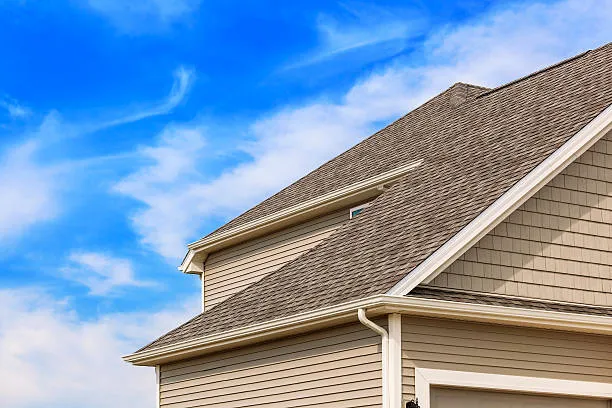
Frequently asked questions about roofing in Farmers Branch
Does a re-roof in Farmers Branch need a permit?
The city’s building permit forms and permitting pages do not carry roofing text, and no re-roof requirement was found on the pages that could be read, so the position is not published in a form that can be quoted. Ask the city about the specific address before work is scheduled and keep the answer with the house papers. Ask the city about the address before the crew is booked, because infill lots and original plat lots can be treated differently.
How old is the housing stock here?
The median house was built in 2001, with 17,260 homes split between a post-war core (17.9% from the 1960s and 12.3% from the 1950s), the 2010s (30.1%) and 9.4% completed after 2019, according to the Census Bureau’s 2024 five-year estimate. Nearly half the stock predates 2000. On the 2010s houses the written record is usually a repair note rather than a replacement scope. A shallow attic is worth inspecting before a covering is chosen.
How much hail does the county record?
NOAA’s Storm Events file records 196 hail reports in Dallas County between 2016 and 2025, on 64 days, with 23 reports at two inches or larger across nine days and a county maximum of 4.0 inches. On an older roof that is enough to crack shingle that has gone brittle.
Can a 1950s roof be repaired instead of replaced?
Sometimes. A valley, a boot or a flashing on a roof with sound shingle is a repair. On a post-war house the shingle is often brittle across the field and the deck is original, so a repair that opens the roof tends to find more than it was sent to fix.
Does a 30-year shingle really last 30 years here?
The rating assumes maintained conditions. A shallow 1950s attic keeps the deck hot, and granule loss in the gutter is the practical measure of how much of the rating is left rather than the calendar. A shallow attic is worth checking before a covering is chosen, because it decides whether the ventilation has to change. On the 1950s houses the deck and the fascia are the variables that decide the scope.
Which county is Farmers Branch in?
Farmers Branch sits in Dallas County, and roof permits are handled by the city rather than the county. The county matters for records and tax purposes; the city is who answers questions about a specific address.
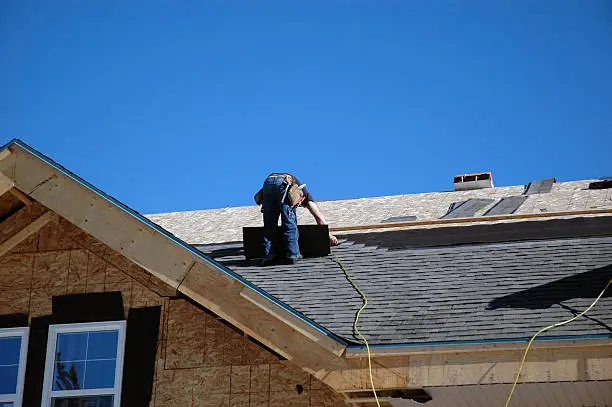
The permit question on a Farmers Branch roof
Farmers Branch does not publish a re-roofing requirement in a form that can be quoted here. The city’s building permit forms and permitting pages carry no roofing text, and no re-roof requirement was found on the pages that could be read, which is not the same as saying none applies.
Ask about the specific address before the crew is booked, because infill lots and original plat lots are often treated differently. Keep the answer, and the permit number if one is issued, with the house papers so the next owner’s inspector has something to read.
Ask which inspection applies and keep the paperwork with the property records, because the next owner will ask for exactly that.
Keep the permit number, and any inspection report, with the house papers so a later owner has the record.
Farmers Branch roofs, street by street
Next step: get a roof in Farmers Branch looked at
Call (214) 774-8818
Describe the leak and the year the house was built.
Say which era
A 1950s ranch and a 2015 build need different first questions.
Have roof and attic seen
Planes, valleys, boots and the deck above the living space.
Get the findings written
What is worn, what is sound, and where the deck is soft.
Ask the city about permits
The answer is taken for the address, not for the city.
Book the work
Roofing Repair Plano, 2715 Preston Meadow Dr, Plano, TX 75093.
Farmers Branch Storm Record: The Hail Season Is Local
Across the Dallas–Fort Worth metroplex, hail is a spring certainty rather than a surprise: the storm record averages roughly 17 to 18 hail days a year (2010–2025), no year in that span came in under ten, and about 88 percent of hail reports fall between March and June, with April the peak month. The busiest single day in the record, May 27, 2024, produced 118 hail reports across the metroplex; a week later the season was still going, and June 1, 2025 brought 76 reports with stones up to 3 inches. Farmers Branch sits in Dallas County, and the county has taken direct hits in that record — on May 28, 2024, a measured wind gust of 95 mph was recorded in Garland, on the other side of the county, in the same storm system that swept the metroplex. With about 16,000 households and a housing stock built out over decades along the I-35E corridor, Farmers Branch roofs span every age a roofer meets, and the older ones meet each spring hail season with less impact resistance than they had. After any spring storm, the check that matters is a documented inspection: photographs of the slopes, the soft metals and the vents, dated against the storm — the record your insurer will ask for. Call Roofing Repair Plano on (214) 774-8818.