
Roofing Company in Frisco, TX
Phone
(214) 774-8818
Newest stock
Collin and Denton
Builder shingles
first failures
When the newest roofs in the region start failing first
Frisco has the youngest housing in this part of the metro, and that is exactly why the calls here sound different: a roof from 2009 or 2014 should not be leaking, so the cause is usually a detail the builder left — a boot, a valley, a ridge vent — rather than a worn-out shingle. The median house dates from 2009 and 40% of the city went up in the 2010s. New roofs fail on workmanship and ventilation long before they fail on age.
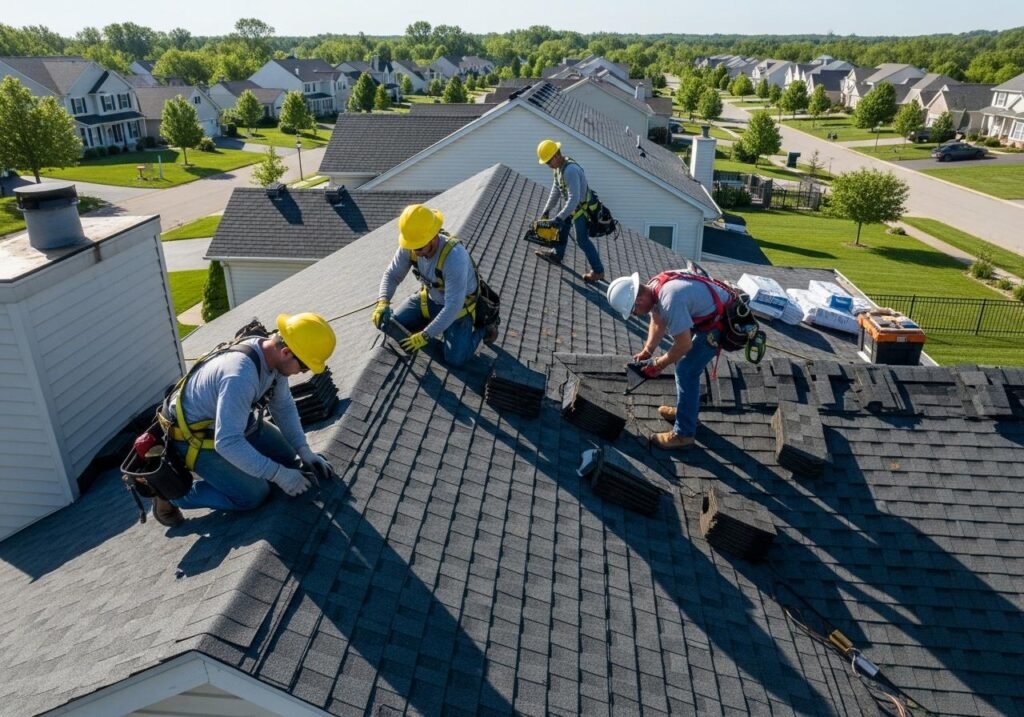
Homes in Frisco: the local picture
Frisco’s roof stock is the opposite of an old inner suburb: 80,353 homes, a median year built of 2009, and only 18.5% predating 2000. What a roofer meets here is warranty-era shingle over fast-built decking, and the failures track the order the houses went up in.
A median year built of 2009, with 40% from the 2010s
The Census Bureau’s 2024 five-year estimate puts the median year built at 2009, with 40.0% of homes completed between 2010 and 2019, 34.8% between 2000 and 2009 and only 6.7% after 2019. A roof from that period is typically fifteen to twenty-five years old, which is young for a shingle and old for a builder’s caulk joint. The common findings are pipe boots cracked at the collar, ridge vents never cut through, and valleys where the underlayment was lapped the quick way instead of the specified way.
None of those are wear failures. They are installation details that survive the first decade and then let water in at the exact place the roofer was in a hurry, which is why the same detail tends to fail on several roofs on a street within a season of each other.
Collin County hail on young shingles
NOAA’s Storm Events database records 310 hail reports in Collin County between 2016 and 2025, on 62 days, with 63 reports at two inches or larger across 17 days and a county maximum of 5.25 inches. A young shingle tolerates stones that would finish an old one, which is why damage here often shows as bruising and granule loss in a small area rather than as a leak into the living room.
Reporting density rises with population, so the count measures exposure rather than a schedule, and the season runs March to June with a second window in September. On a young roof the useful check after a hail day is the soft metal and the slope faces: a bruised mat can hold for a year before it shows as a stain, and by then the underlayment has been wet.
703 feet, and an attic that decides how long the shingle lasts
The USGS Elevation Point Query Service returns 703.3 feet at the Census Bureau’s point for Frisco. Elevation does nothing to a roof at that height; ventilation does. The granule layer protects the asphalt from ultraviolet light, and the Asphalt Roofing Manufacturers Association describes granule loss as the way prolonged UV exposure degrades the shingle, so an attic that holds heat accelerates the process from underneath.
On 2010s housing the vent openings are often sized to the minimum the code allows, and the sunward slope shows the consequence first. A ridge vent that was never cut through is worse than a small one, because it looks correct from the ground and does nothing at all. That is a ten-minute attic check rather than a roof inspection, and it is worth doing before the shingle is blamed.
Collin and Denton counties, with the city inspecting the work
Frisco sits mostly in Collin County with a portion in Denton County, and residential roof permits are issued by the city rather than by either county. The city’s residential permit page lists replacing a roof with the same material among the self-service permits that can be pulled online, and contractor registration status is checked through the eTrakit portal.
For a homeowner the paper trail is short but real, and a change of material takes the job out of the self-service lane entirely. The county line matters for records and tax purposes more than for the roof, but it does decide which appraisal district holds the file when the work is finished. Ask the question at permit time and the answer sits on the paperwork rather than in a later dispute.
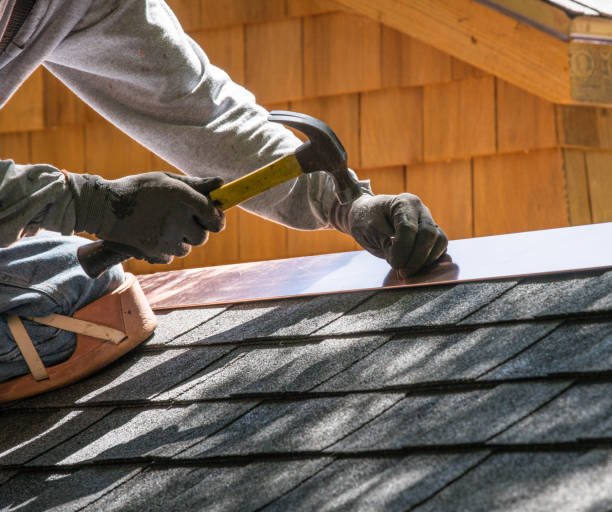
Roofing services in Frisco, TX
Work in this city divides cleanly: young roofs with a detail failure, young roofs with a ventilation problem, and storm damage on either. Because the shingles are usually still serviceable, the first visit is about finding the one thing that is wrong rather than pricing a whole roof, and the finding is often visible in the attic before it is visible on the slope.
A leak at a boot, a valley or a ridge on a fifteen-year-old roof is a roof repair job, and the repair should address the detail rather than smear sealant over it. Where a slope has been damaged by hail or wind across enough area that matching shingles is impossible, roof replacement becomes the practical answer, and the deck and ventilation get corrected at the same time.
After a hail day, storm and hail damage repair begins with the soft metals and the slope faces, since bruising on a young shingle is easy to miss from the ground. A roof inspection is the way to document a young roof before a warranty conversation or a sale, and the newer neighbourhoods here fall under residential roofing as a whole. Where the roof is sound but the details are aging, roof maintenance replaces the boots and re-seats the ridge before a small failure becomes a ceiling stain.
Two things are worth knowing before any of that work is quoted. A young roof with one wet ceiling usually has one wet detail rather than one wet slope, and replacing the boot and the underlayment around it protects the deck it sits on. Matching shingle is the other constraint: profile and colour have to come from the same product line, and on a discontinued shingle a small repair becomes a slope replacement.
Young roof, small failure, quick answer
Why homeowners in Frisco choose this crew
On a fifteen-year-old roof the expensive mistake is being sold a replacement for a failed boot, and the second most expensive is patching a valley that has been leaking into the deck for two seasons. The visit here is built to tell those apart: the attic is checked for staining and airflow, the penetrations are checked by hand, and the findings are photographed before anything is recommended.
If the shingle has life in it, the answer is a repair with the reason attached. Where the deck is wet or the venting is wrong, both get named in writing, because on this housing stock ventilation is usually the reason the shingle aged early. The crew comes down from Plano on the tollway, which keeps a second look at a ridge vent practical rather than a special trip.
Why now, while the shingles still have life
- A 2009 roof is old enough to have failed details and young enough that a repair still makes sense. Waiting until the shingle is bald turns a repair into a full replacement, and the difference in work is measured in slopes rather than in details.
- Hail season in Collin County runs March to June with a second window in September. A repaired detail is closed before the stones arrive rather than after them.
- Builder-era ridge vents that were never cut through leave the attic hot, and heat ages a young shingle faster than sun alone does. Finding one before a replacement is cheaper than discovering it in the attic two summers later.
- A ceiling stain on a 2010s house usually means the underlayment at a valley has already been wet for a season, which is when the decking starts to soften and the job grows.
- Documenting the roof now keeps a warranty conversation factual if a shingle failure turns out to be a manufacturing issue rather than an installation one.
What a roof visit covers on newer housing
- Attic airflow first, including whether the ridge vent was actually opened at installation.
- Every penetration: boots, appliance vents, dryer outlets and any solar mounts on the slope.
- Valleys and step flashings, where underlayment laps show up as staining rather than drips.
- The slope faces, for bruising and granule loss after the last hail day, read against the soft metal on the same slope and the splash marks below it.
- A photo set and a written note, useful for a warranty conversation or a sale.

Frequently asked questions about roofing in Frisco
Does a roof replacement in Frisco need a permit?
Yes. The city lists replacing a roof with the same material among the residential permits available through its self-service portal, and contractor registration is checked through eTrakit. A change of material, or structural work under the roof, moves the job out of the self-service lane, so confirm the route for the specific address before work starts. The permit is also what puts the inspection on record, which matters at resale.
Why is a fifteen-year-old roof leaking here?
Because the shingle is rarely the part that failed first. On housing built in the 2000s and 2010s the usual culprits are pipe boots cracked at the collar, valley underlayment lapped short, and ridge vents that were never cut through. Age matters less than which detail was installed quickly.
How old is the housing stock in this city?
The median house was built in 2009 and 40.0% of the city’s 80,353 homes went up between 2010 and 2019, per the Census Bureau’s 2024 five-year estimate. Only 18.5% predate 2000, which is why the roof problems here look like workmanship and ventilation rather than wear. It is also why a roof that is fifteen years old is worth repairing rather than retiring: most of its rated life is still ahead of it.
Can a roof be repaired instead of replaced?
On young housing, usually yes. A boot, a valley, a ridge cap or a flashing is a repair, and the shingle around it has decades left. The exception is a slope that has lost its granules or taken hail across a wide area, where matching the existing shingle becomes the problem rather than the repair itself.
Does a 30-year shingle really last 30 years here?
The figure assumes maintained conditions, and a roof in North Texas spends its life in ultraviolet light and summer attic heat. The Asphalt Roofing Manufacturers Association describes granule loss as the mechanism by which UV exposure degrades the shingle, so the practical measure is how much granule is left, not the calendar.
Which county is Frisco in?
Most of Frisco is in Collin County, with a portion extending into Denton County. Roof permits are issued by the city, not the county, so the county line matters for records and for tax purposes more than it matters for the roof itself.

Permits and inspections on a Frisco roof
Frisco runs residential roof permits through its own portal. Replacing a roof with the same material is listed among the self-service permits that can be issued immediately, and contractor registration status is verified through eTrakit when the permit is pulled. Inspections are scheduled through the same system, which keeps the record attached to the address rather than to a contractor’s file.
The practical consequence is that a same-material replacement can be paperworked quickly, while a change of material or any structural work needs a different route and more time. Ask which route the job takes before the crew is booked, and keep the permit number with the house papers. Requirements change, so confirm the current process with the city’s Building Inspections division.
Frisco roofs, street by street
Next step: get a roof in Frisco looked at
Call (214) 774-8818
Describe the leak and the year the house was built.
Point at the stain
A ceiling mark, a drip at a vent or granules in the gutter each implicate a different detail.
Have the attic checked
Deck stains and ridge airflow explain most young-roof failures.
Get a written finding
The detail that failed, the deck condition and photographs.
Choose repair or replace
On young housing the answer is usually the smaller job.
Pull the permit the right way
Same material or a change, decided before booking. Roofing Repair Plano, 2715 Preston Meadow Dr, Plano, TX 75093.