
Roofing Company in Allen, TX
Phone
(214) 774-8818
County hail record
Collin County
First-life roofs
repair or replace
When a 2003 roof reaches the end of its first shingles
The median house here went up in 2003, so the roof over a typical home in this city is now past the service life of the builder-grade shingle that went on it. That shows up as granules in the gutter, a ridge cap that lifts in a spring wind, or a brown ring on a ceiling under a valley. At twenty-two years the useful question is not which slope leaks but what the deck underneath looks like before the next hail season finds it.

Homes in Allen: the local picture
Allen was built in one long wave, and that wave set the age of almost every roof in the city. The median house here dates from 2003; 32.9% of Allen’s 39,094 homes went up between 2000 and 2009 and another 23.3% in the 1990s. Roofs on the same street therefore reach the end of their service life within a few years of each other.
A median year built of 2003 means first-life roofs are ending now
The Census Bureau’s 2024 five-year estimate puts the median year built at 2003, with 40.5% of housing predating 2000 and only 5.3% completed after 2019. What that era means for a roof is specific: a house finished in 2003 was shingled with the builder’s standard architectural product, nailed over original decking, and vented with the ridge and soffit design of that period. Twenty-two years on, the shingle is at or past its stated service life, the pipe boots have hardened, and the decking is still the original boards. Roofs here are failing on the calendar rather than on one storm, which is why a street tends to have the same conversation at the same time — and why the first replacement on a block usually reads as a warning to the rest of it.
Hail in Collin County, and the 2019 stone that named the city
NOAA’s Storm Events database records 310 hail reports in Collin County between 2016 and 2025, on 62 separate days, with 63 reports of stones two inches or larger across 17 days and a county maximum of 5.25 inches. One record names this city directly: 4.50-inch hail near Allen on 24 March 2019. Almost every two-inch day in that file falls between March and June or in September, so the exposure is seasonal rather than constant. The counts are reports, not a climatology, and reporting density rises with population, so read them as the scale of the risk rather than a schedule. For a roof, the practical reading is narrower: a hail day in that window is the moment shingle mats get bruised and ridge caps get cracked, and the damage is often clearer in the soft metal than on the slope.
At 654.8 feet, altitude is not what wears the shingle
The USGS Elevation Point Query Service returns 654.8 feet at the Census Bureau’s point for the city. At that height there is no altitude penalty on a roof assembly, no wind-zone adjustment to make and no special nailing pattern that low elevation would excuse, so elevation is a fact about the town rather than a variable in the roof’s life. What does wear the shingle is the ordinary North Texas summer. The granule layer is what shields the asphalt mat from ultraviolet light, and the Asphalt Roofing Manufacturers Association describes granule loss as the mechanism by which prolonged UV exposure degrades the shingle. Once the granules are gone from the sunward slope, the sun has the asphalt and the mat behind it, and the slope goes brittle enough that a footstep or a hailstorm cracks it.
Collin County is the county; the city’s own inspectors sign off
The city sits wholly in Collin County, and residential roof work is inspected by the municipal Building Inspections division rather than by the county. That matters at the end of the job as much as at the start: the city’s final roof installation affidavit asks for a permit number and the installer’s municipal contractor registration number, and it has to be on file before a roof final inspection is approved. Roofs here are therefore documented work, and the paperwork belongs to the address. Anyone quoting a roof in this city should be able to say how that affidavit gets filed and who signs it, and a homeowner should be able to find the permit record for their own address without asking twice.
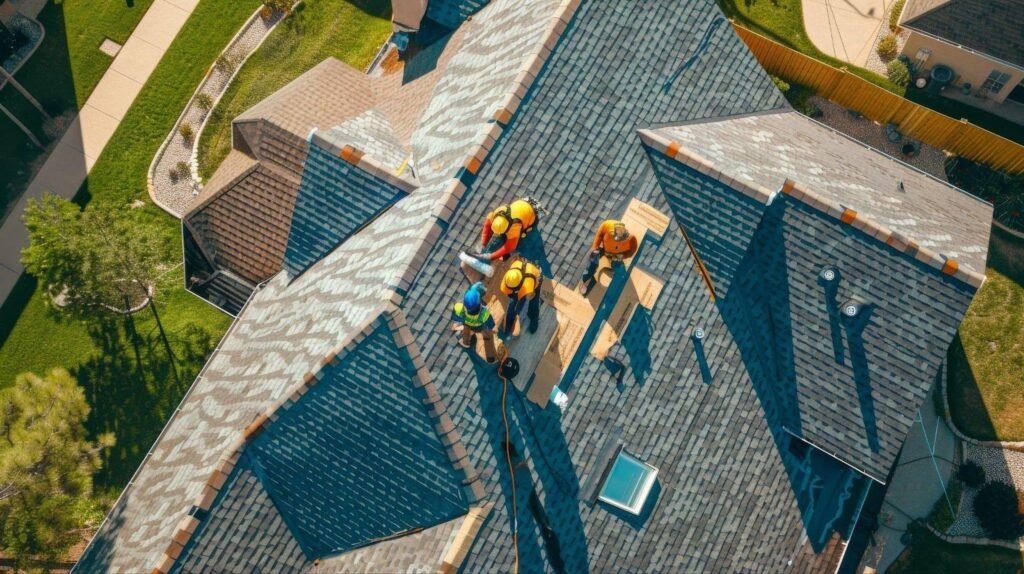
Roofing services in Allen, TX
Most roofs in this city need one of three things: a targeted repair on a roof that is still sound, a full replacement on a first-life roof that has run out of granules, or a storm claim documented before the damage spreads inward. Which one applies is decided by the deck and the shingle, not by the age on the tax record alone.
For a leak that is still local — a cracked pipe boot, a lifted ridge cap, a valley that has lost its seal — roof repair is the right first call, and the first question on a 2003 house is whether the deck under the leak is still solid. Where the shingle has reached the end of its life across whole slopes, roof replacement is the honest answer, and the job includes the decking and the ventilation the original build left in place.
After a hail day like the one that put 4.50-inch stones near the city in March 2019, the damage is often invisible from the ground, so storm and hail damage repair starts with the slopes, the soft metals and the ridge. A roof inspection puts a condition record on a house before it is listed or before another season passes. The 1990s and 2000s neighbourhoods here are covered by residential roofing, and a roof that is still sound is kept that way with roof maintenance — ridge, boots and flashings checked before the spring hail rather than after it. Where a slope has already shed its granules, the maintenance visit is the one that documents it, so the replacement argument rests on the roof rather than on a sales call.
A roof decision made on the deck, not the driveway
Why homeowners in Allen choose this crew
A roof in this city is a documented job, and the work is arranged around that. The conversation starts with what is actually on the roof: granule loss on the south slope, the condition of the deck at the valley, the age of the pipe boots. If a 2003 roof has life left in it, the answer is a repair and the reasons are written down. If it does not, the replacement is scoped to the decking and ventilation the house actually has rather than to a package. The crew works out of Plano, west along US 75, which matters when an inspection has to be met and a tarp has to come back off. The affidavit the city wants at the end is part of the job, not something the homeowner has to chase.
Why now, before the next Collin County hail season
- The median roof here is twenty-two years old. A shingle at the end of its stated life has already lost the granule armour that takes a hail hit, so the same stone that dents a new roof can fracture an old one.
- The county's hail record clusters in March to June and again in September. A roof replaced in the cooler months is closed and inspected before the season that fills the repair calendar.
- A lifted ridge cap or a failed pipe boot is small until water reaches the deck. Wet decking has to come out during a replacement, which turns a shingle job into a carpentry job.
- Attic ventilation on a 2003 house was sized for a 2003 shingle. The replacement is the moment to check ridge and soffit airflow, not a year later when the attic is hot again.
- The city's final inspection depends on an affidavit being on file. Starting before the spring rush keeps the permit, the inspection and the close-out in sequence instead of against a storm deadline.
What a roof visit looks at here
- The attic first: decking stains, daylight at a penetration, and the vent boots the original build installed.
- The gutters, for granule load — the plainest evidence of how far a shingle has worn.
- Ridge caps, valleys and step flashings, where wind and water do the first damage.
- Pipe boots and any satellite or solar penetration, the usual source of a small leak that shows up as a ceiling stain weeks later.
- A photo record of each slope, so the findings can be read after the visit rather than remembered.
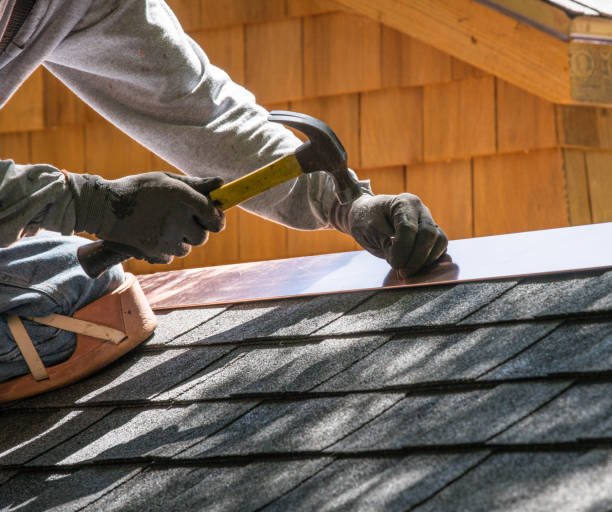
Frequently asked questions about roofing in Allen
Do I need a permit to re-roof a house in Allen?
The city’s final roof installation affidavit asks for a permit number and the installer’s municipal contractor registration number, which means the work is permitted and registered. The affidavit also states that the installation followed the manufacturer’s instructions and the 2021 International Residential Code, and it has to be on file before the roof final inspection is approved. Confirm the current requirement with the city’s Building Inspections division before work starts.
How old are the roofs here, and why does that matter?
The median house was built in 2003, and 32.9% of the city’s 39,094 homes went up between 2000 and 2009, according to the Census Bureau’s 2024 five-year estimate. Most roofs are therefore on their original shingle at twenty-plus years, which is the point where granule loss and brittle shingles matter more than any single storm.
Has the city had hail large enough to damage shingles?
Yes. NOAA’s Storm Events file records 4.50-inch hail near Allen on 24 March 2019, and 63 reports of two-inch or larger stones across Collin County between 2016 and 2025. Damage from stones that size is usually visible on the slopes and the soft metals, which is why an inspection after a hail day is worth doing even when the roof looks intact from the driveway.
Can a roof be repaired without replacing it?
Often, yes — but the answer depends on the roof’s age rather than on the leak. A single failed pipe boot on a 2010s house is a repair. The same leak on a 2003 roof that has lost granules across three slopes is a symptom, and patching it moves the water to the next weak point. The deck condition decides which conversation is honest.
Does a 30-year shingle really last 30 years in Allen?
A 30-year figure is a laboratory life under maintained conditions, not a promise about a specific roof. Here the variables are ultraviolet exposure, summer attic heat, hail and wind, and the slope that fails first is usually the one with the most sun. Granule loss in the gutters is the practical gauge of how much of that figure is left.
Does elevation affect how long a roof lasts here?
Not meaningfully. The USGS elevation at the Census point for the city is 654.8 feet, which carries no altitude-driven penalty for a roof assembly. The wear comes from sun, heat and hail, and from whether the attic is vented well enough to keep the deck dry. Elevation is a fact about the town, not a variable in the roof’s life.
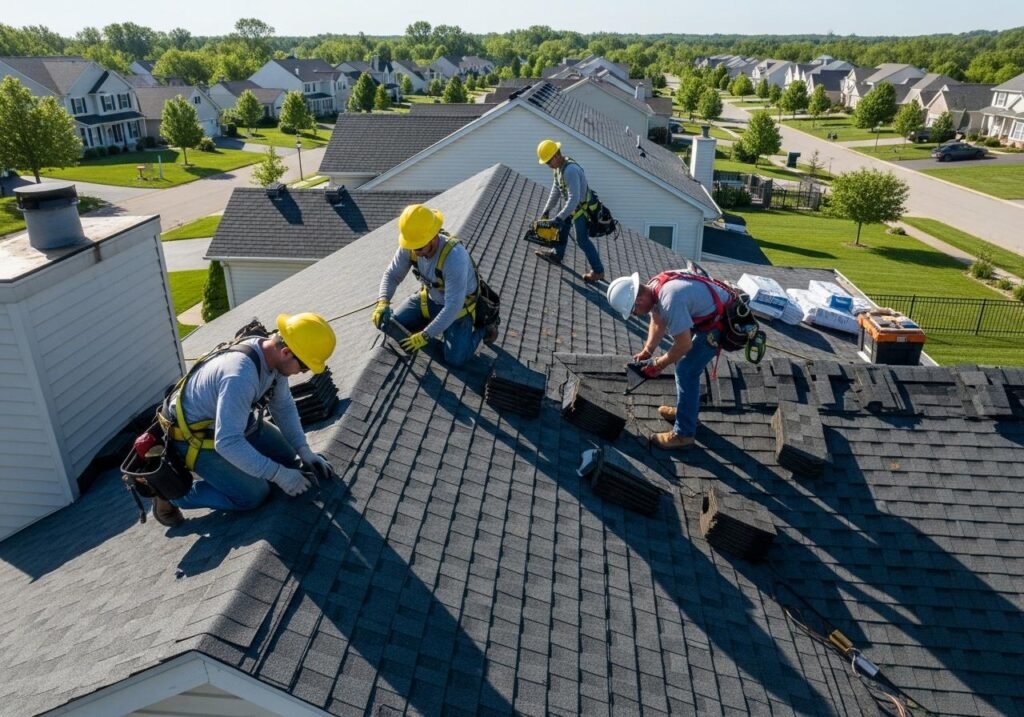
Permits and inspections for a roof in Allen
The city handles residential roofing as permitted work with a documented close-out, and the document that matters is the final roof installation affidavit. It records the permit number and the contractor’s municipal registration number, and the installer affirms that the roof went on to the manufacturer’s instructions and the 2021 International Residential Code, including a post-installation attic check of the appliance vents that pass through the roof. The affidavit has to be on file before the roof final inspection is approved.
For a homeowner the sequence is simple to verify: ask who pulls the permit, ask for the registration number before the crew arrives, and keep the affidavit with the house papers. Requirements and forms change, so confirm the current version with the city’s Building Inspections division rather than relying on a contractor’s summary.
Allen roofs, street by street
Next step: get a roof looked at in Allen
Call (214) 774-8818
Describe the leak or the storm day; the visit is booked against the roof’s age.
Say what it is doing
A stain, granules in the gutter or a missing ridge cap decides what is seen first.
Get roof and attic seen
Slopes, ridge, valleys, boots and the deck above the living space.
Read the findings
What is worn, what is sound, what is a repair and what a replacement.
Decide with the deck in view
A 2003 roof is judged on decking and granule loss.
Start the permit properly
The affidavit and registration number are handled first. Roofing Repair Plano, 2715 Preston Meadow Dr, Plano, TX 75093.