
Roofing Company in Dallas, TX
Phone
(214) 774-8818
Five-county city
590,237 homes
Pre-1960 core
16.4% of the city
In a city this size, the roof question depends on the block
Dallas has 590,237 homes and a median year built of 1981, but the median is the least useful number in the city: 16.4% of the stock predates 1960 and 73.9% predates 2000. A 1950s house near the centre and a 2010s build on the edge share a city and nothing else about their roofs. What they share is the hail file, which is why the inspection matters more than the year built.
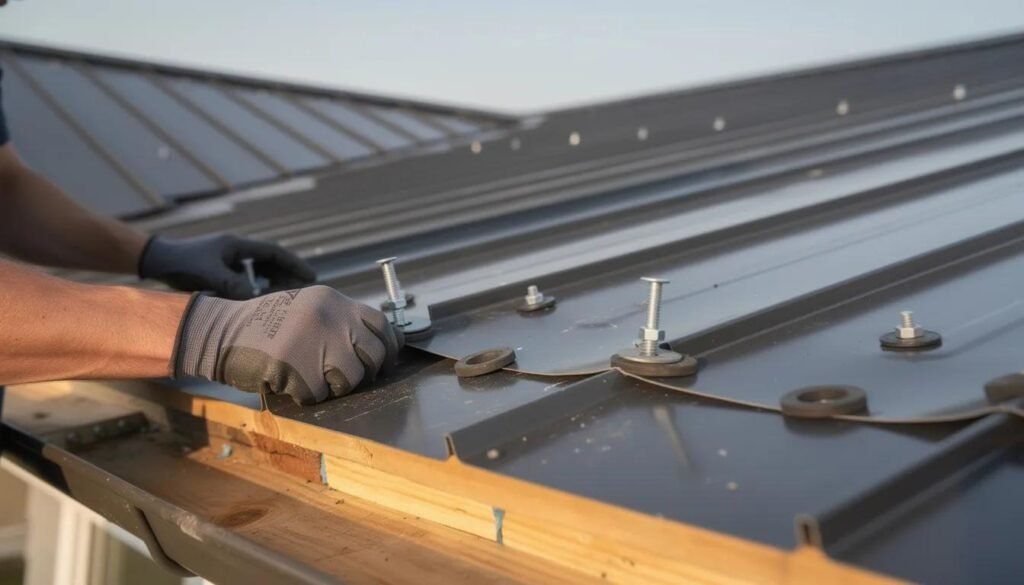
Homes in Dallas: the local picture
Dallas is the largest city in this group by a wide margin, with 590,237 homes, a median year built of 1981 and a stock that runs from pre-war houses to new construction inside one set of city limits.
Median year built 1981, with a pre-1960 core of 16.4%
The Census Bureau’s 2024 five-year estimate puts the median year built at 1981, with 16.2% of homes from the 1980s, 14.6% from the 1970s and 16.4% built before 1960. Those older houses carry original decking, low pitches and roof structures that were built before modern ventilation was standard.
On that housing the roof is a carpentry question: the deck, the fascia and the metal are as old as the house, and a shingle replacement that ignores them is a short-term fix. On the newer stock the structure is sound and the failures are details, which is a different job with a different schedule.
A pre-war house also carries smaller roof planes and more penetrations, so a replacement takes longer for each square of roof than a newer build does.
Dallas County hail across a very large stock
NOAA’s Storm Events database records 196 hail reports in Dallas County between 2016 and 2025, on 64 days, with 23 reports at two inches or larger across nine days and a county maximum of 4.0 inches. Those totals cover a county with more than half a million homes in it, which is why reporting density matters when reading them.
The season runs March to June with a second window in September. In a city this size, a single hail day produces work for hundreds of roofs at once, which is why the inspection queue lengthens faster here than anywhere else in the group.
The county total covers a very large housing stock, so the useful reading is the local storm history rather than the aggregate.
482 feet, and heat that varies street by street
The USGS Elevation Point Query Service returns 482.8 feet at the Census Bureau’s point for Dallas. Elevation is not a factor there; exposure is. The granule layer protects the asphalt from ultraviolet light, and the Asphalt Roofing Manufacturers Association describes granule loss as the mechanism by which prolonged UV exposure degrades the shingle.
In a city with this much tree cover and this many roof shapes, the sunward plane on one street may work all day while a shaded plane a mile away lasts years longer. That is why two roofs of the same age in Dallas can be in completely different condition.
Tree cover is the variable a homeowner can see, and it explains why two roofs of the same age in different neighbourhoods are years apart.
Five counties, and a permit tied to the size of the job
Dallas sits across Collin County, Dallas County, Denton County, Kaufman County and Rockwall County, and roof permits are issued by the city rather than by any of them. The city permits roof work on large areas or a whole roof, and minor repairs are exempt, so the size of the job decides the paperwork.
For a homeowner that means the permit question follows the scope rather than the address. Confirm the current threshold with the city before the crew is booked, keep the permit number with the house papers, and name the property type when the question is asked, because the answer can differ by property.
The city’s threshold follows the area replaced, which is why the scope is measured before the permit question is asked.
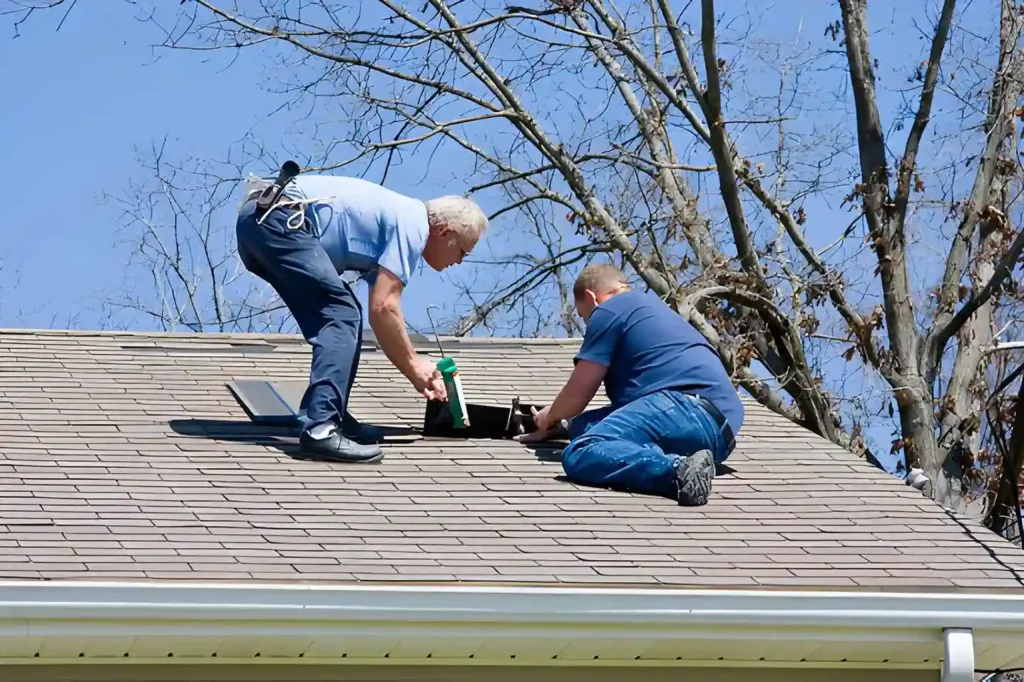
Roofing services in Dallas, TX
Work in this city spans the widest range in the group: pre-war houses with original decking, post-war ranches, 1980s subdivisions and new builds. The visit decides which of those a roof is, and the deck usually settles the scope.
A local failure — a valley, a boot, a step flashing — is a roof repair job, and on an older house the question is whether the deck around it is still sound. Where the shingle has gone brittle or bald across whole planes, roof replacement is the honest answer, and the scope covers the decking and ventilation the house actually has.
After a hail day, storm and hail damage repair starts with the slopes and the soft metals. A roof inspection puts a condition record on a house before a sale or a renewal, and the city’s housing stock as a whole falls under residential roofing.
Between replacements, roof maintenance catches the failed sealant and the lifted cap before the next storm. On older houses that visit is also where soft fascia and blocked soffit intakes get found before they become a carpentry bill.
Where a property is being sold, the inspection is the document that turns a question about roof age into a dated record, which in a city with this much turnover is worth more than a verbal opinion.
Within one zip code the work can range from a pre-war house with original decking to a 2010s build with a failed boot, and the scope is written after the attic rather than before it.
Where a property is being prepared for sale, the inspection is often the first document a buyer’s inspector will read, which makes it worth having before the listing rather than after the offer.
One city, many roof ages
Why homeowners in Dallas choose this crew
In a city where a 1950s house and a 2015 build sit inside the same zip code, the only useful approach is to look: the attic for deck staining and daylight, the valleys for soft boards, the sunward planes for granule loss, and the boots and flashings by hand.
Those findings go in writing with photographs before a scope is proposed. If the roof can take a repair, the recommendation is a repair even though a replacement is the larger job. Where the deck is wet, the scope names the area rather than the whole slope. The crew works from Plano, which keeps a return visit across the city practical.
That written record is also what makes the next decision cheaper, whether that is a sale, a renewal, or a second storm season.
That record is also what makes a second opinion possible, because a written scope can be compared with another written scope rather than with a verbal estimate.
Why now, before the spring queue in a city this size
- A hail day in a county with this many homes fills the repair calendar for weeks, and a roof closed before the season avoids the queue. Older houses here carry original decking, so a deck that has been wet for two seasons is the difference between a shingle job and a carpentry job.
- The city permits large areas or a whole roof and exempts minor repairs, so the scope decides the paperwork.
- Older houses here carry original decking, and a deck that has been wet for two seasons is the difference between a shingle job and a carpentry job. Tree cover varies street by street, so the sunward plane on one roof ages years faster than a shaded one a mile away.
- Tree cover varies street by street, so the sunward plane on one roof ages years faster than a shaded one a mile away.
- Matching a shingle that has been on a street since the 1980s gets harder each year as profiles are discontinued. In a city this size a hail day fills the repair calendar for weeks, which is why the inspection is worth doing before the queue forms.
What a roof visit covers across the city
- The attic, for deck staining, daylight at penetrations and the vent area.
- The valleys and step flashings, where water sits longest. The attic above the main living space, where deck staining shows first.
- Boots and appliance vents, checked by hand rather than from the ground. Any flat or low-slope section, which drains more slowly than a pitched plane.
- The sunward planes, for granule loss and hail bruising. The tree cover around the roof, which decides how much sun the planes actually get.
- A written condition note with photographs, usable for a sale or a second opinion.
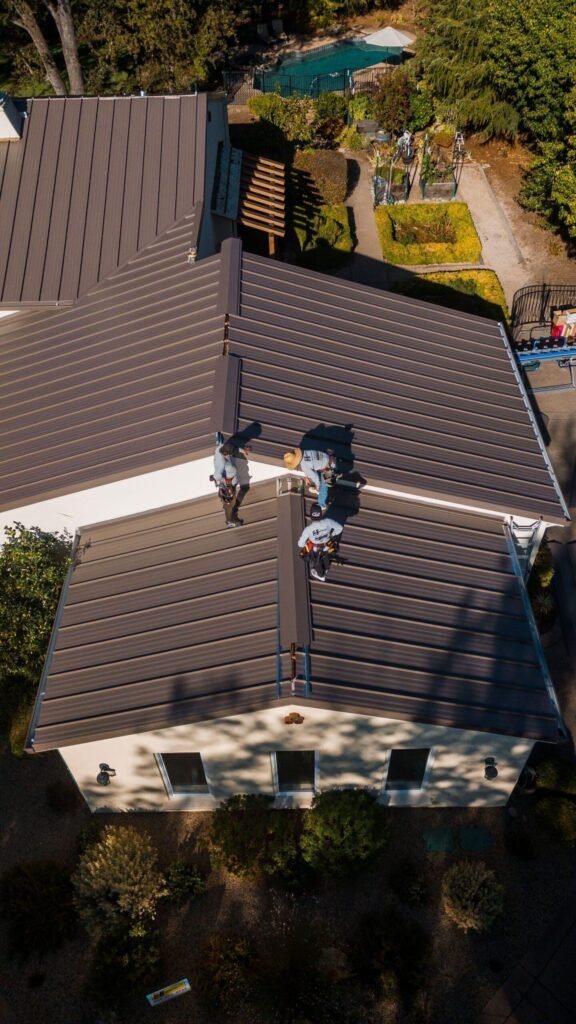
Frequently asked questions about roofing in Dallas
Does a re-roof in Dallas need a permit?
The city permits roof work on large areas or a whole roof, and minor repairs are exempt, so the size of the job decides the paperwork rather than the address. Confirm the current threshold with the city before the crew is booked, and keep the permit number with the house papers. The threshold follows the area being replaced, so the scope is worth measuring before the permit question is asked.
How old is the housing stock here?
The median house was built in 1981 and 73.9% of the city’s 590,237 homes predate 2000, with 16.4% built before 1960, according to the Census Bureau’s 2024 five-year estimate. That range is why two roofs in the same zip code can need completely different work. On pre-1960 housing the deck is usually the variable rather than the shingle. A written record also makes a second opinion comparable rather than verbal.
How much hail does the county record?
NOAA’s Storm Events file records 196 hail reports in Dallas County between 2016 and 2025, on 64 days, with 23 reports at two inches or larger across nine days and a county maximum of 4.0 inches. Reporting density rises with population, so the counts measure exposure rather than a schedule.
Can an older Dallas roof be repaired instead of replaced?
Sometimes. A valley, a boot or a flashing on a roof with sound shingle is a repair. On a pre-1960 house the shingle is often brittle across the field and the deck is original, so the deck condition is the honest dividing line rather than the age of the covering.
Does a 30-year shingle really last 30 years here?
The rating assumes maintained conditions. In this city the variables are ultraviolet light, summer heat, hail and tree cover, and granule loss in the gutter is the practical measure of how much of the rating is left. A written record is also what makes a second opinion comparable. The scope is measured before the permit question is asked, because the threshold follows the area.
Which county is Dallas in?
Dallas sits across Collin County, Dallas County, Denton County, Kaufman County and Rockwall County, and roof permits are issued by the city rather than by any of them. The county matters for records and tax purposes more than for the work.
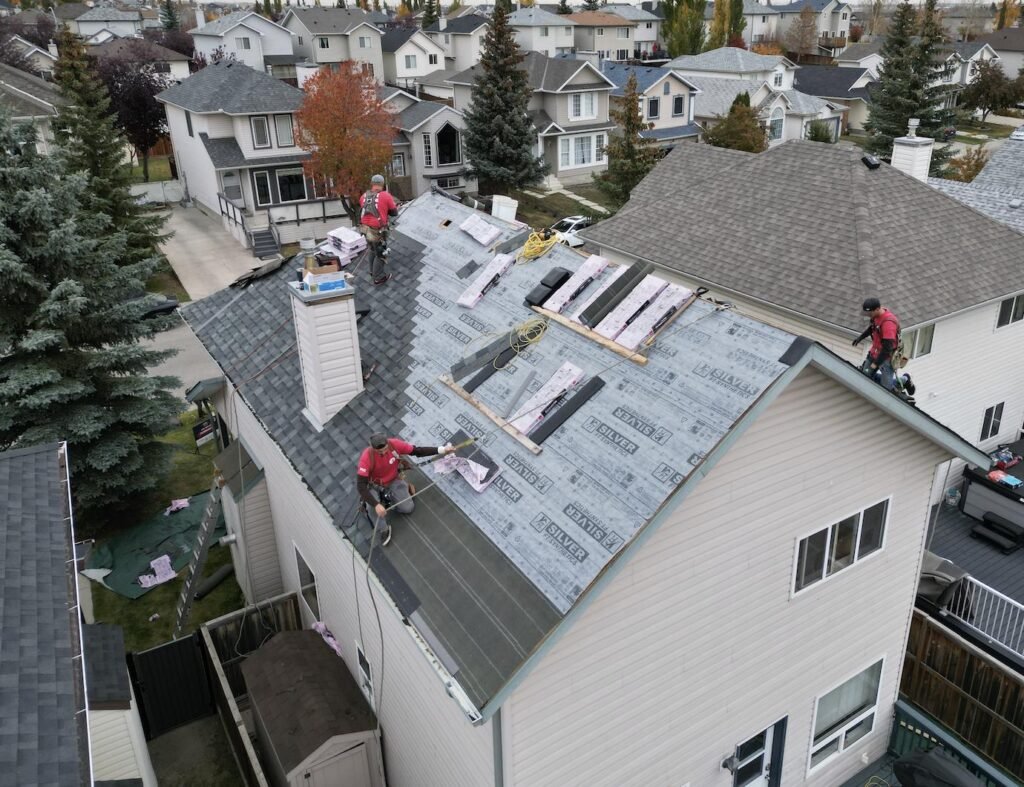
The permit and the scope on a Dallas roof
Dallas permits roof work on large areas or a whole roof, and minor repairs are exempt. That makes the scope the deciding document: the area being replaced, the deck being touched, and the inspection that follows.
Ask before the crew is booked, keep the permit number with the house papers, and confirm the current threshold with the city rather than relying on a contractor’s summary. In a city this size the answer can also vary with the property type, so the address is worth naming when the question is asked.
Ask which inspection applies and keep the paperwork with the property records, because the next owner will ask for exactly that.
Keep the permit number, and any inspection report, with the house papers so a later owner has the record.
Dallas roofs, street by street
Next step: get a roof in Dallas looked at
Call (214) 774-8818
Describe the leak and the decade the house was built.
Name the symptom
A ceiling stain, granules in the gutter or a lifted cap each point somewhere different.
Have roof and attic seen
Planes, valleys, boots and the deck above the living space.
Get the findings written
What is worn, what is sound, and where the deck is soft.
Settle the scope and permit
Area, deck and inspection are decided before booking.
Book the work
Roofing Repair Plano, 2715 Preston Meadow Dr, Plano, TX 75093.