
Roofing Company in Carrollton, TX
Phone
(214) 774-8818
County spread
Collin, Dallas, Denton
1980s peak
70% pre-2000
The city where re-roofing the covering needs no permit
Carrollton is one of the few cities here that separates a roof covering from a roof structure in its permit rules: replacing shingles, tiles, metal panels or underlayment does not require a permit, while replacing the deck or sheathing does. With a median year built of 1988 and 70.2% of homes predating 2000, that line matters, because on a 1980s house the deck is often the real question.
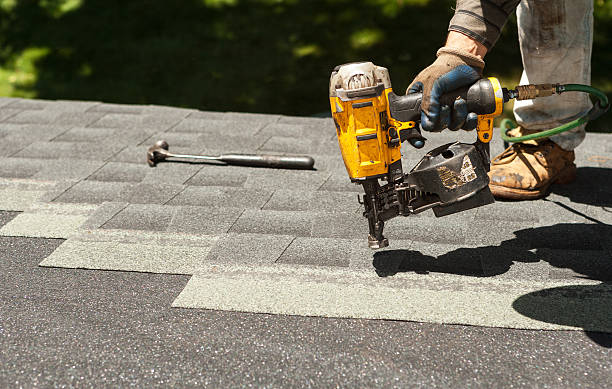
Homes in Carrollton: the local picture
Carrollton has 54,365 homes and a median year built of 1988, with 70.2% of the stock built before 2000. The 1980s account for 28.4% and the 1970s another 17.8%, so the city’s roof stock is largely on its second covering.
Median year built 1988, with a 1970s layer behind it
The Census Bureau’s 2024 five-year estimate puts the median year built at 1988, with 17.8% of homes from the 1970s and 15.8% from the 1990s. A house finished in 1988 was shingled with a twenty-year product in many cases, which means the covering has already been replaced at least once, and the deck under it has been through forty summers.
That is why decking comes up so often here. The shingle is the part that gets replaced; the boards are the part that has been quietly taking water at the valleys and the penetrations, and the first tear-off is when a homeowner finds out which of the two is the real job.
The 1980s shingle was often a twenty-year product, so a house of that age has usually been re-covered once and is now deciding on the second.
Denton County hail on second-covering roofs
NOAA’s Storm Events database records 373 hail reports in Denton County between 2016 and 2025, on 80 days, with 60 reports at two inches or larger across 16 days and a county maximum of 5.9 inches. Carrollton’s northern portion sits in that county, inside one of the heavier hail files in the region.
Reporting density rises with population, so the count measures exposure rather than a schedule, and the season runs March to June with a second window in September. On a second-covering roof the stone that matters is the one that lands where the shingle has already thinned.
The county file is one of the heavier ones in the region, which is why roofs here tend to be repaired after a storm rather than only when a ceiling stains.
481 feet, and heat that finds the valleys
The USGS Elevation Point Query Service returns 481.9 feet at the Census Bureau’s point for Carrollton. Elevation is not a factor there, but heat is. The granule layer protects the asphalt from ultraviolet light, and the Asphalt Roofing Manufacturers Association describes granule loss as the mechanism by which prolonged UV exposure degrades the shingle.
On a 1980s roof the same sun works on shingle that has been re-covered once, and the valleys are where water sits longest. That is why a Carrollton inspection spends more time at the valley metal and the step flashings than on the field of the roof.
Valleys are where a second covering hides its problems, because the metal under the shingle is rarely replaced when the covering is.
Three counties, and a permit tied to the deck
Carrollton sits across Collin County, Dallas County and Denton County, and roof permits are handled by the city. The city’s re-roofing page draws a clear line: replacing the covering does not require a permit, while replacing structural members that support the roof, such as deck or sheathing, does. Replacement decking may match the existing thickness regardless of how much is replaced, and the work is inspected on completion.
For a homeowner that is unusually practical: the covering is a maintenance decision and the deck is a permitted structural one. Confirm the current rule with the city before the crew is booked, and keep the permit number if one is issued.
That line is also useful at resale: a covering replacement with no permit is normal here, while deck work with a permit is the record a buyer wants to see.
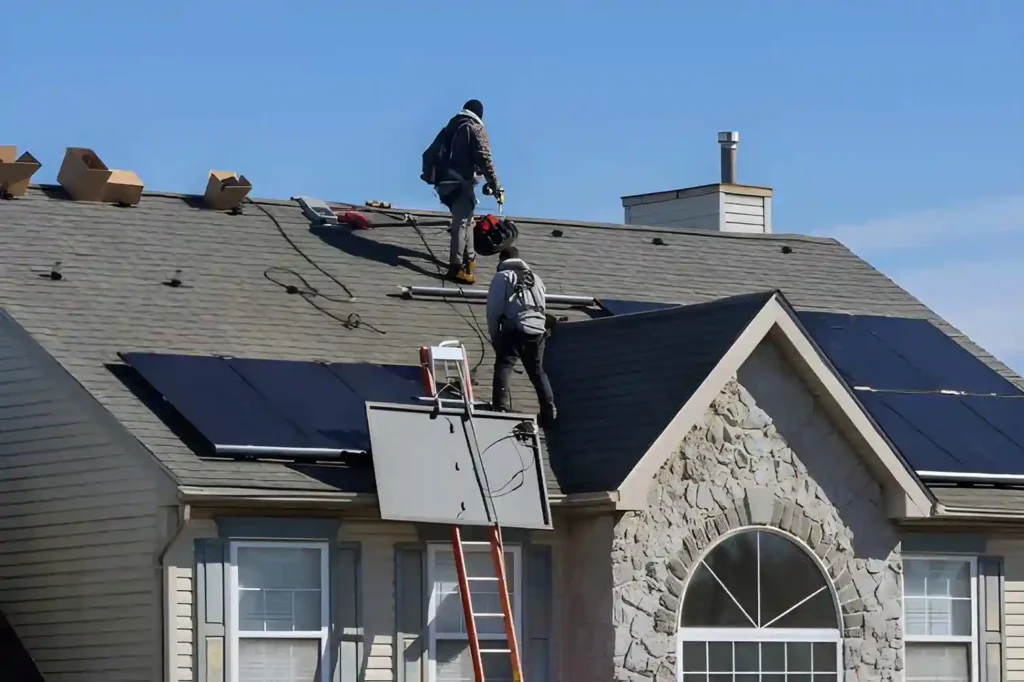
Roofing services in Carrollton, TX
Work in this city is mostly second-covering work on 1970s and 1980s housing, with a smaller share of repairs on the 1990s and 2000s streets. The visit settles whether the deck is being touched, because that is the question the city’s permit rule turns on.
A local failure — a valley, a boot, a step flashing — is a roof repair job, and on a 1988 house the question is whether the deck around it is still sound. Where the shingle has gone thin across whole planes, roof replacement is the honest answer, and the scope covers the decking and ventilation the house actually has.
After a hail day, storm and hail damage repair starts with the slopes and the soft metals. A roof inspection documents a roof before a sale or a renewal, and the city’s subdivisions fall under residential roofing as a whole.
Between replacements, roof maintenance catches the failed sealant and the lifted cap before the next storm. On a second-covering roof that visit is also how a homeowner keeps track of which valleys have been patched, which is the record that matters when the deck finally comes out.
On a second covering the useful question is what is under it, and that is answered by the attic and by lifting a valley rather than by looking at the slope. A scope written before that is a guess.
Where a house is being sold, the inspection is also the document that separates a covering that has been maintained from one that has merely been patched.
There is also a practical difference between a covering and a deck job that shows up at resale: the covering leaves no permit record here, while the deck work does. That is worth knowing before a sale rather than after a buyer asks.
Covering or deck: the line that matters
Why homeowners in Carrollton choose this crew
The expensive mistake on a 1980s roof is replacing the covering over a deck that should have come out, so the visit is built around the attic and the valleys: staining at the boards, daylight at the penetrations, and whether the valley metal has been sealed rather than replaced.
Those findings go in writing with photographs before a scope is proposed, and they decide whether the job is a covering, a covering with decking, or a repair. If the roof can take one more repair, that is the recommendation even though a replacement is the larger job. The crew comes up from Plano on the tollway, which keeps a return visit practical.
That is also why the covering-or-deck question is answered in writing rather than in conversation: it decides the paperwork, the inspection and the scope at once.
Why now, before a covering goes over a wet deck
- A 1980s roof has already been re-covered once, and the second covering is the point where the deck has to be looked at rather than assumed. On a house of this age the deck has been through forty summers, and the first covering replacement is when that shows.
- Denton County hail runs March to June. A roof closed in the cooler months is inspected before the queue that follows a big storm. A second covering over a wet valley hides the water rather than stopping it, and the deck is where that shows.
- The city permits deck and sheathing replacement but not a covering-only re-roof, so the scope decides the paperwork and the inspection.
- Water that has been sitting at a valley for two seasons does not show on the ceiling until the deck has softened, and by then the job is bigger. A covering replacement with no permit is normal here, so the deck is the part of the job that leaves a record.
- Matching a shingle that has been on a street since the 1980s gets harder every year as profiles are discontinued. A covering replacement is quick, which means the schedule is set by material rather than by inspection.
What a roof visit covers on a second-covering roof
- The attic, for deck staining, daylight at penetrations and the vent openings. The valley metal, which is rarely replaced when a covering is.
- The valleys and step flashings, where water sits longest. The step flashings at walls and chimneys, checked by hand.
- Boots and appliance vents, checked by hand rather than from the ground. The deck at the valleys, where a second covering hides its problems.
- The sunward planes, for granule loss and hail bruising. The eave line, where soft fascia shows as a wavy gutter.
- The deck, so the covering-or-deck question is answered before the work is scoped.
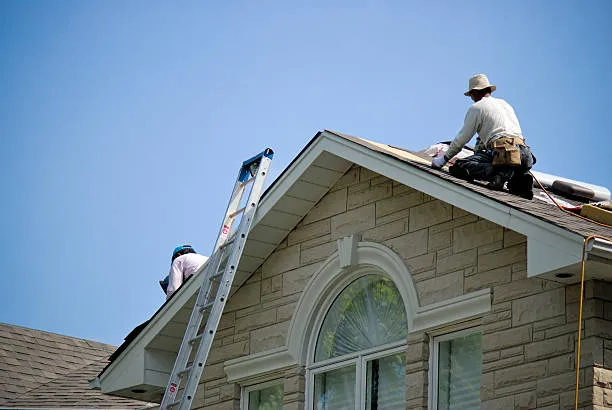
Frequently asked questions about roofing in Carrollton
Does re-roofing a house in Carrollton need a permit?
The city’s re-roofing page draws a clear line: replacing the covering does not require a permit, while replacing structural members that support the roof, such as deck or sheathing, does. Replacement decking may match the existing thickness regardless of how much is replaced, and the work is inspected on completion. That is also why the deck is worth inspecting before a covering is chosen. Ask whether the deck is being touched, because that is what decides the permit.
How old is the housing stock here?
The median house was built in 1988 and 70.2% of the city’s 54,365 homes predate 2000, with 28.4% from the 1980s and 17.8% from the 1970s, according to the Census Bureau’s 2024 five-year estimate. Most roofs here are on their second covering. The inspection on completion is the record that the deck work was seen. The covering is a maintenance decision and the deck is a structural one. The deck underneath is the variable that decides the scope.
How much hail does the county record?
NOAA’s Storm Events file records 373 hail reports in Denton County between 2016 and 2025, on 80 days, with 60 reports at two inches or larger across 16 days and a county maximum of 5.9 inches. The northern part of the city sits in that county.
Can a roof be repaired rather than re-covered?
Yes, when the failure is a detail: a valley, a boot, a flashing. On a 1980s roof with shingle that has thinned across the field, a repair buys time but does not restore the mat, and the next hail day will find the same roof. The deck condition decides which conversation is honest.
Does the city require a permit for new decking?
Yes. Deck and sheathing replacement is treated as structural work and needs a permit, while a covering-only replacement does not. That is also why the deck question is worth settling before the tear-off rather than during it.
Which county is Carrollton in?
Carrollton sits across Collin County, Dallas County and Denton County, and roof permits are handled by the city rather than by any of the three. The county matters for records and tax purposes more than for the roof.
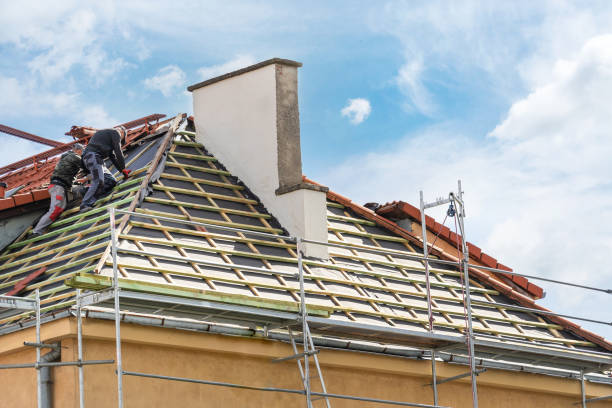
The permit line on a Carrollton roof
Carrollton separates the covering from the structure. Replacing shingles, tiles, metal panels, underlayment, membranes or insulation does not require a permit, while replacing the deck or sheathing that supports the roof does. Replacement decking may match the existing thickness, and the work is inspected on completion.
For a homeowner the practical step is to settle the scope before the crew is booked: if the deck is being touched, the permit and the inspection are part of the job, and if it is not, the job is a covering. Confirm the current rule with the city, because a contractor’s summary is not the source of record.
Ask which inspection applies and keep the number with the property records, because the next owner will ask for exactly that.
Carrollton roofs, street by street
Next step: get a roof in Carrollton looked at
Call (214) 774-8818
Describe the leak and the year the house was built.
Name the symptom
A ceiling stain, granules in the gutter or a soft eave each point somewhere different.
Have roof and attic seen
Planes, valleys, boots and the deck above the living space.
Get the findings written
What is worn, what is sound, and where the deck is soft.
Settle the scope
Covering or deck is decided before the crew is booked.
Book the work
Roofing Repair Plano, 2715 Preston Meadow Dr, Plano, TX 75093.