
Roofing Company in The Colony, TX
Phone
(214) 774-8818
Hail county
Denton County
Two waves
and 2000s fill
The county with the heaviest hail record in this group
Denton County’s hail file is the heaviest in this group: 373 reports on 80 days between 2016 and 2025, 60 of them at two inches or larger, with a maximum of 5.9 inches. The Colony sits inside that county with 19,388 homes and a median year built of 2001, so most roofs here are twenty years old and have been through the whole of that record.
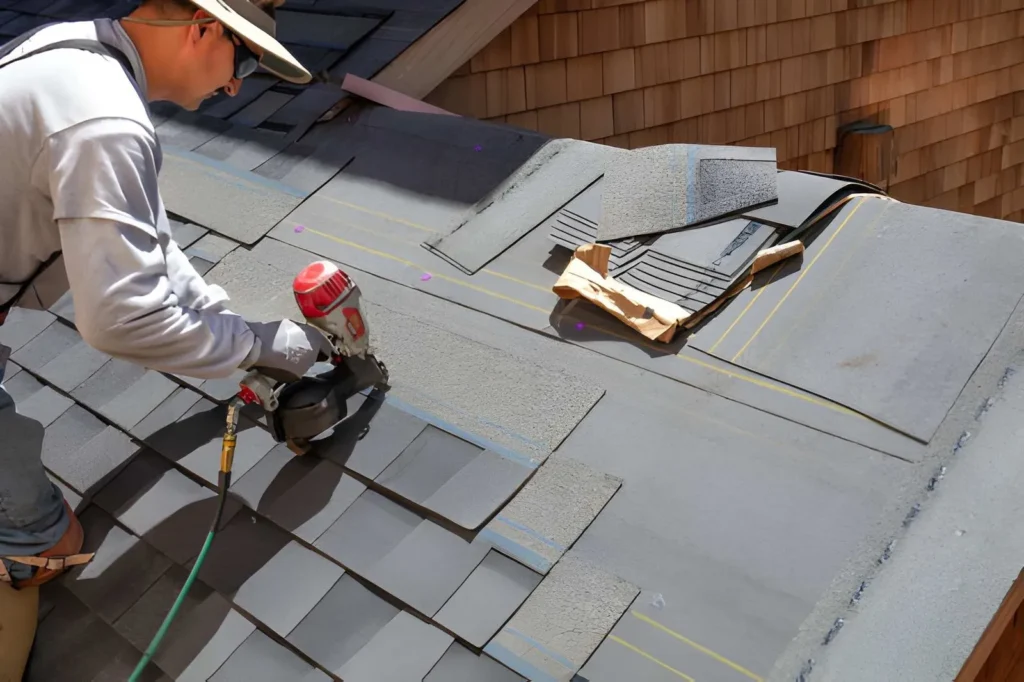
Homes in The Colony: the local picture
The Colony has 19,388 homes, a median year built of 2001 and a stock split between a 1970s core and a 2000s expansion. 46.9% of it predates 2000, so nearly half the roofs here have already been replaced once.
Median year built 2001, with a 1970s layer underneath
The Census Bureau’s 2024 five-year estimate puts the median year built at 2001, with 18.4% of homes from the 1970s, 23.8% from the 2000s and 25.9% from the 2010s. A 1970s house here has a low pitch and a deck that has been through fifty summers; a 2001 house has shingle at the end of its first life.
The two need different scopes, and the tell is in the attic rather than on the slope. Older homes show staining at the deck and soft boards at the eaves; newer ones usually show granule loss on the sunward planes and boots that have gone brittle at the collar.
The 1970s houses also carry garages and covered patios that were roofed at the same time, and those planes are usually where a low pitch shows its age first.
Denton County hail, the heaviest record in the group
NOAA’s Storm Events database records 373 hail reports in Denton County between 2016 and 2025, on 80 days, with 60 reports at two inches or larger across 16 days and a county maximum of 5.9 inches. Those numbers are higher than the Collin and Dallas county totals in the same file, on both reports and days.
Reporting density rises with population, so the count measures exposure rather than a schedule, and the season still runs March to June with a second window in September. What it means for a roof here is simply that the odds of meeting a damaging stone in a given spring are higher than in the counties to the east.
On a county file this heavy, the useful habit is a check after every spring storm rather than one inspection every few years.
522 feet, and heat off the lake plain
The USGS Elevation Point Query Service returns 522.1 feet at the Census Bureau’s point for The Colony. Elevation is not a factor at that height, but the summer is. The granule layer protects the asphalt from ultraviolet light, and the Asphalt Roofing Manufacturers Association describes granule loss as the mechanism by which prolonged UV exposure degrades the shingle.
On 2000s housing the venting was sized to the code minimum of the time, and a hot deck ages the shingle from underneath. That is why two roofs of the same age on the same street can be years apart in condition, and why the attic is always looked at before the slope.
Attic venting is the least costly item to correct while a roof is open and the most expensive thing to ignore, because a hot deck shortens every shingle above it.
Denton County, and a permit tied to sheathing or replacement
The Colony sits in Denton County, and roof permits are issued by the city rather than the county. The city’s residential re-roof requirements tie a permit to sheathing work and to roof replacement, which is a narrower trigger than some neighbouring cities use.
For a homeowner that means the question is not only how big the repair is but whether the deck is being touched. Confirm the current requirement with the city before the crew is booked, keep the permit number with the house papers, and ask which inspection applies while the deck is open.
That narrower trigger also means the deck is the question the city cares about, which happens to be the question that decides the scope of the job.
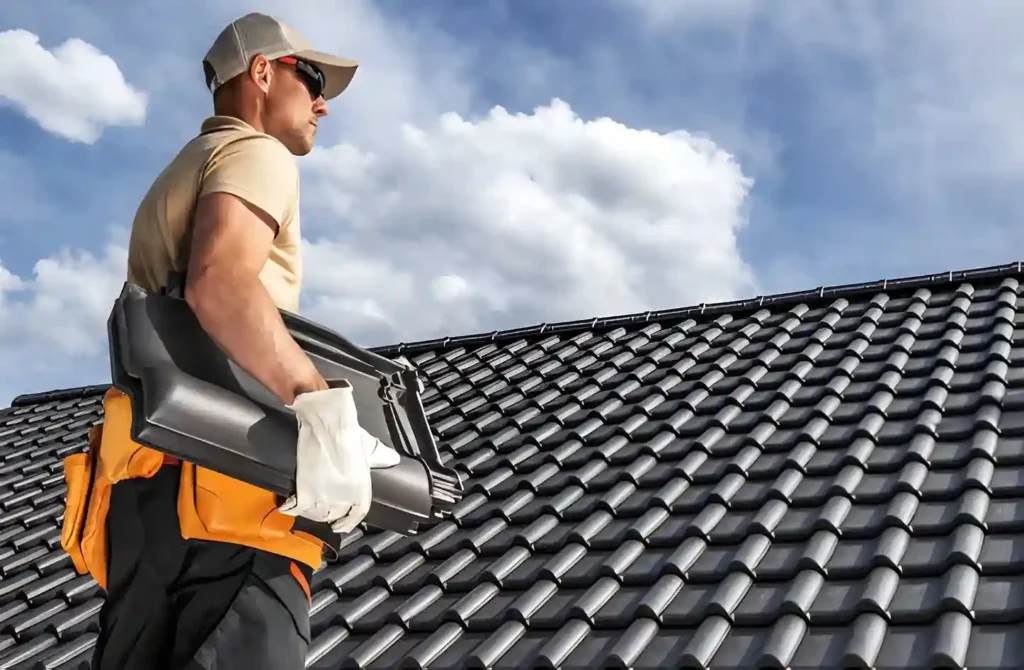
Roofing services in The Colony, TX
Work here divides by age: a 1970s roof heading for a replacement that includes carpentry, a 2001 roof at the end of its first shingle, and storm damage on either. The county’s hail record makes the storm question a regular one rather than an occasional one.
A local failure — a valley, a boot, a step flashing — is a roof repair job, and on the older houses the question is whether the deck around it is sound. Where the shingle has gone thin across whole planes, roof replacement is the honest answer, and the scope covers the decking and ventilation the house actually has.
After a hail day, storm and hail damage repair starts with the slopes and the soft metals. A roof inspection documents a roof before a sale or a renewal, and both waves here fall under residential roofing as a whole.
Between replacements, roof maintenance catches the cracked boot and the lifted cap before the next season. In a county with this hail record that visit is less about cosmetics and more about finding impact damage while it is still a bruise.
The county’s hail record also shapes the maintenance conversation. A roof that has met a damaging stone and been repaired is a different proposition from one that has met several, and the record of which planes were repaired is what makes the next decision factual rather than a guess.
That is also why the first visit is a reading exercise rather than a quote: the soft metal, the ridge and the sunward planes tell you what the roof has been through, and the attic tells you what it has let in.
A hail county needs a roof that is read
Why homeowners in The Colony choose this crew
In a county with 373 hail reports in ten years, a roof is judged on evidence rather than on age. The visit reads the soft metal for impact, the sunward planes for granule loss, and the attic for the staining that tells you whether water has already been in.
Those findings go in writing with photographs. Where the shingle is still doing its job the answer is a repair, and where the deck is wet the scope names the area rather than the whole slope. The crew comes up from Plano on the tollway, which keeps a return visit to a ridge or a valley practical.
In a county with this record the second visit is usually the useful one, because it is the visit that checks whether a repaired slope has held.
Why now, in the county with the heaviest hail file
- Denton County recorded 60 hail reports at two inches or larger in ten years, so a roof here is likely to meet a damaging stone more than once in its life.
- The season runs March to June. A roof closed in the cooler months is inspected before the queue that follows a big hail day. A repair that is documented now is easier to defend at a sale than a roof that was patched quietly.
- A bruised mat can hold for a season before it leaks, and by then the underlayment has been wet and the deck has started to soften. On a roof of this age that difference is measured in seasons.
- The city ties a permit to sheathing work and replacement, so the deck question is worth settling before the tear-off rather than during it. Sheathing and replacement are what trigger the permit, so settling the deck question early keeps the schedule honest.
- Attic venting sized to the 2000s minimum keeps the deck hot, and heat is what makes two identical roofs age differently.
What a roof visit covers in a hail county
- The soft metals first, where a stone leaves a mark that is easy to read.
- The sunward planes, for granule loss and bruising. The garage and patio roofs that share the house's shingle and age.
- The attic, for deck staining and daylight at penetrations. Both are checked by hand rather than from the ground.
- Boots, flues and any valley metal that has been sealed rather than replaced. The western planes, where the afternoon sun lands hardest.
- A written note with photographs, usable for a sale or a second opinion.

Frequently asked questions about roofing in The Colony
When does a re-roof need a permit in The Colony?
The city’s residential re-roof requirements tie a permit to sheathing work and to roof replacement, which is a narrower trigger than some neighbouring cities use. Confirm the current requirement for the address with the city before the crew is booked, and keep the permit number with the house papers. That pair is what a buyer’s inspector asks for first.
How old is the housing stock here?
The median house was built in 2001, with 19,388 homes split between the 1970s (18.4%), the 2000s (23.8%) and the 2010s (25.9%), according to the Census Bureau’s 2024 five-year estimate. 46.9% predates 2000, so nearly half the roofs here have been replaced once already. Keep the repair record with the permit number, because the pair is what a later buyer’s inspector will want to read.
How does the county’s hail record compare?
NOAA’s Storm Events file records 373 hail reports in Denton County between 2016 and 2025, on 80 days, with 60 reports at two inches or larger across 16 days and a county maximum of 5.9 inches. That is a heavier file than the Collin and Dallas county totals for the same period, on both reports and days.
Can a roof here be repaired instead of replaced?
Often, yes. A boot, a valley or a ridge cap is a repair, and where the shingle still has granule the repair is worth doing. On a 2001 roof that has lost granule across a slope, a repair moves the water to the next weak point, and the deck condition is the honest dividing line.
Does a 30-year shingle really last 30 years here?
The rating assumes maintained conditions. In this county hail is the variable that matters most, alongside ultraviolet light and summer attic heat, and granule loss in the gutter is the practical measure of what is left, and after a spring storm the soft metal tells you whether the roof has already met a stone this year.
Which county is The Colony in?
The Colony sits in Denton County, and roof permits are issued by the city rather than the county. The county matters for records and tax purposes; the city is who answers questions about a specific address.
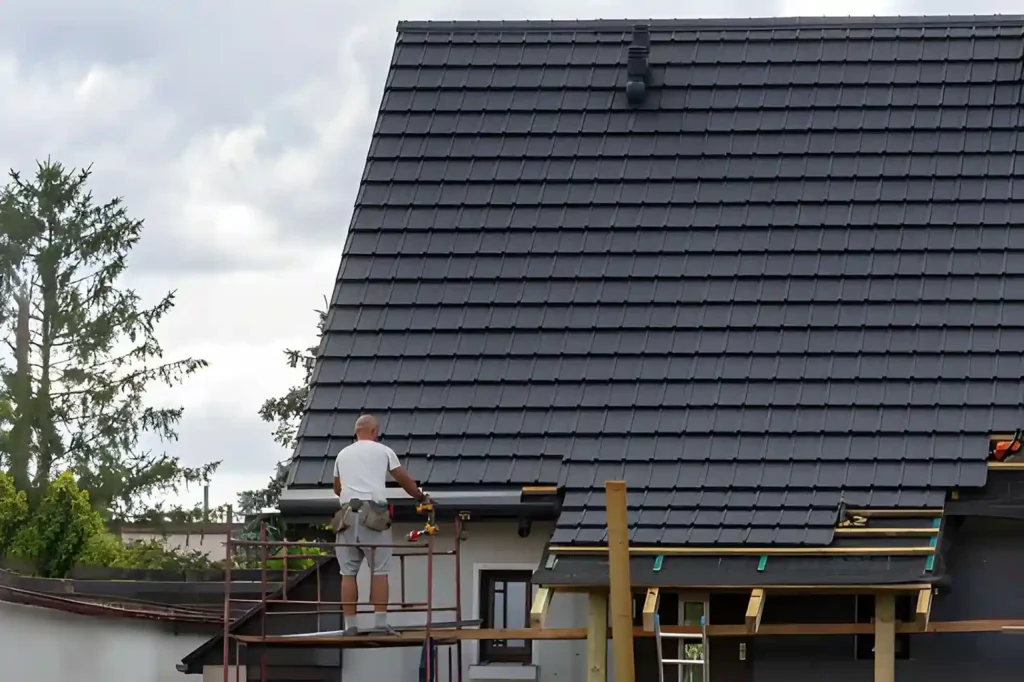
The permit and the deck question on a roof here
The Colony issues residential roof permits through the city, and the trigger is tied to sheathing work and to roof replacement rather than to any repair of any size. For a homeowner that makes the deck the deciding question: if the sheathing is being replaced, the permit is part of the job.
Ask before the crew is booked rather than during the tear-off, when the deck is open and the schedule is already tight. Keep the permit number with the house papers, and confirm the current requirement with the city, because a contractor’s summary is not the source of record.
The deck question is also the permit question, so it is worth settling both before the tear-off rather than during it.
The Colony roofs, street by street
Next step: get a roof in The Colony looked at
Call (214) 774-8818
Describe the leak or the hail day and the year the house was built.
Say what the roof is doing
A stain, granules in the gutter or a dented vent each point somewhere different.
Have roof and attic seen
Soft metals, slopes, valleys, boots and the deck.
Get the findings written
What is worn, what is sound, and what the deck is doing.
Settle the permit question
Sheathing or replacement decides whether a permit applies.
Book the work
Roofing Repair Plano, 2715 Preston Meadow Dr, Plano, TX 75093.
The Colony Storm Record: A Measured 95 mph Gust
The Colony owns one of the most concrete storm data points in this part of Texas: on May 28, 2024, the city’s emergency manager reported a measured wind gust of 95 mph during the storm system that swept the metroplex that week — the same week that opened with the busiest hail day in the record, 118 reports on May 27. The Colony’s roughly 17,700 households sit along the Lewisville Lake shore in Denton County, where storm wind arrives over open water. Wind that strong does not need to remove shingles to damage a roof: it creases tabs, breaks sealant bonds and lifts edges, and the leaks show up months later. If your roof went through that May 2024 system — or any storm since — a documented inspection separates storm damage from ordinary wear while the dates still line up. Call us on (214) 774-8818.