A standing seam roof and an exposed-fastener metal roof can look similar from a distance, but they are built in very different ways. One hides its fasteners under raised seams. The other is held down by hundreds of screws driven through the face of the metal, each sealed by a small rubber washer.
That difference decides most of what a Plano homeowner will deal with later: leaks, upkeep, slope limits, repairs and appearance. This guide explains how each system works and what each one needs over time. It draws on the Metal Construction Association, the Metal Roofing Alliance and a fastener manufacturer’s published guidance. There are no prices.
How does a standing seam roof work?
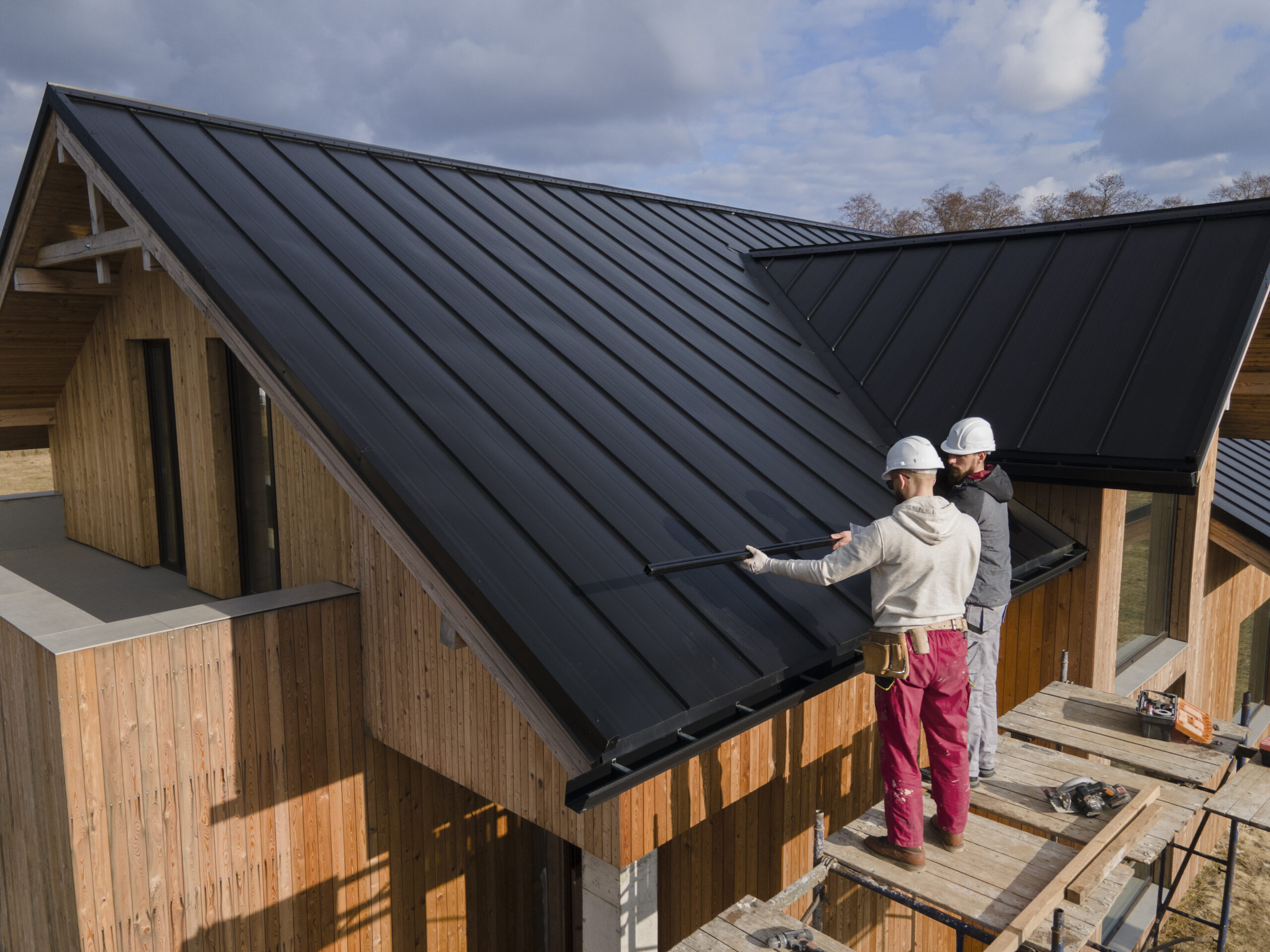
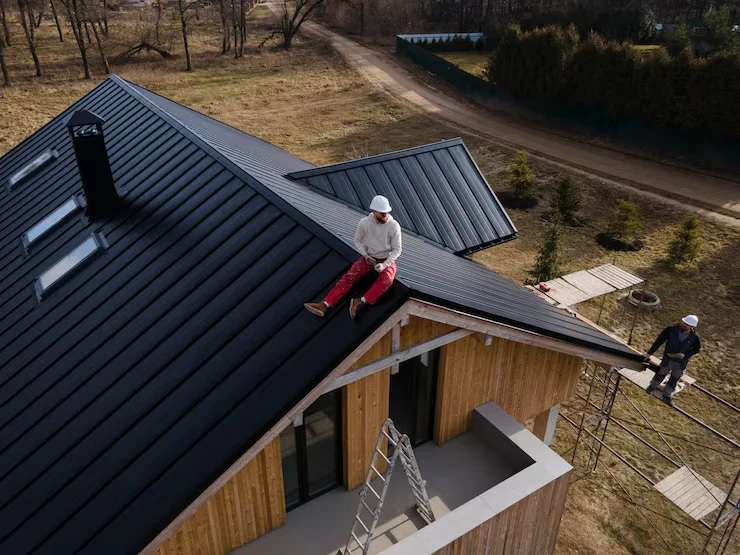
A standing seam roof uses long metal panels that run from ridge to eave. Their edges rise into vertical seams that lock together above the water line. Clips hidden beneath the seams fasten the panels to the deck, so no screws pierce the visible surface. The panels can move slightly with heat.
The Metal Construction Association (MCA) describes this on its steep slope roofing page. Vertical standing seam systems are fastened with hidden clips or fastening flanges. The MCA separates “structural” systems, which can span open framing, from “architectural” systems, which always need a solid substrate such as plywood or oriented strand board beneath them.
SFS, a fastener manufacturer, explains the installation in its guide to exposed and concealed roofing fasteners. Panels are clamped to the deck with specialised clips. Installers lay out the panels, attach clips, fix the clips to the deck and, for some systems, seam the panels together. SFS notes the clips are panel-specific and cannot be used with different profiles.
The Metal Roofing Alliance (MRA) lists vertical or standing seam panels among its residential styles, with a wide range of rib shapes and colours.
How does an exposed-fastener metal roof work?
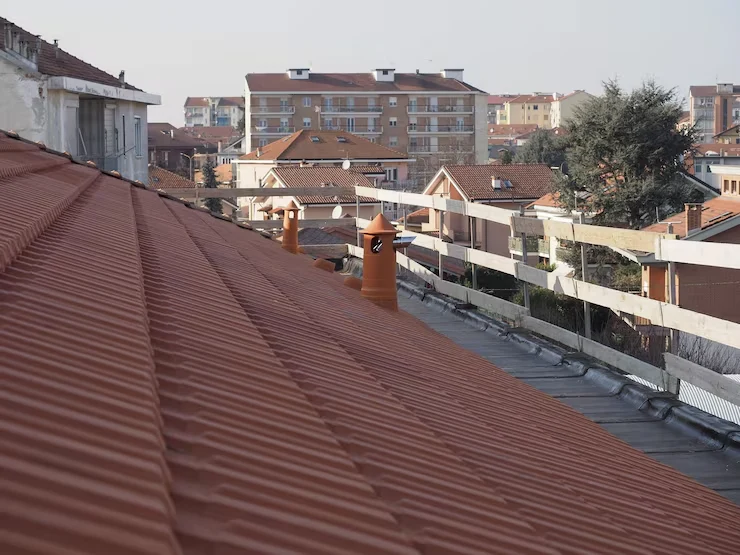
An exposed-fastener roof uses corrugated or ribbed panels that overlap at the sides and ends. Screws go straight through the panel face into the deck or framing, and a rubber washer under each screw head seals the hole. The screw heads stay visible, often painted to match the panel colour.
The MCA describes corrugated or tile-facsimile metal roofs attached with exposed fasteners directly through the panels. These products overlap or interlock at their side and end laps for a watertight fit.
SFS’s guide to replacing metal roof screws explains the seal. Roofing screws use a rubber washer at the base of the screw head to keep moisture out, and their performance depends on how they are installed. A screw driven too deep crushes the washer so it bulges out. One driven at an angle does not seal fully. One that is under-driven never seats properly. All three can leak.
Every screw is a planned hole in the roof, sealed by a washer. That is why exposed-fastener roofs need more attention over time.
Standing seam vs exposed fastener: how do they compare?
Exposed-fastener panels are the lower-cost, simpler system and are easier to repair, but they have more leak points and need more upkeep. Standing seam costs more and takes more skilled labour, but it hides its fasteners, allows more panel movement and needs less maintenance. Standing seam is much harder to repair when it fails.
SFS sets out the trade-offs in its comparison of exposed and concealed fasteners:
| Factor | Exposed fastener | Standing seam |
|---|---|---|
| Upfront cost | Least expensive option | Most expensive option |
| Labour | Minimal; easier installation | Labour intensive |
| Leak risk | Prone to leaks | Limited risk if properly installed |
| Panel movement | Can be damaged by movement | Allows more movement before failure |
| Corrosion | Larger risk from rusting fasteners | Low risk |
| Maintenance | More required | Less required |
| Repairs | Less difficult | More difficult; may need panels, clips and fasteners |
| Minimum slope | Not below 3:12 | Suitable below 3:12 |
| Long panel runs | Performance issues | Better suited |
SFS adds one point in exposed fastener’s favour. Some standing seam systems are rated lower than exposed systems for wind uplift, so the uplift rating should be checked for the job.
For the wider family of metal products, including metal shingles and stone-coated steel, see the types of metal roofing guide.
Why do exposed-fastener screws need replacing?
The screws and washers on an exposed-fastener roof wear faster than the metal panels. Washers degrade, screws can back out as panels expand and contract, and a fastener with weaker corrosion resistance than the panel can rust first. SFS says screws older than 20 years should be treated as on borrowed time.
SFS’s screw replacement guide gives the reasons. It says the movement of a metal roof can push screws out of their seat or damage the rubber washer, letting water in. A fastener with inadequate corrosion resistance will rust through long before the panels deteriorate. Mismatched metals, such as a zinc-coated screw in an aluminum panel, accelerate galvanic corrosion.
On timing, SFS says to assume fasteners older than 20 years are on borrowed time, and that most will not safely make it past 30 years. It recommends inspections twice a year and after any severe weather, such as hail or high wind. Those are a fastener maker’s recommendations, so treat them as guidance rather than a rule.
When a screw does fail, SFS says the replacement should be one size wider than the original so it cuts new threads in the existing hole. The same-size screw cannot grip and leaves a loose connection. This is work for a roofer, not a homeowner on a ladder.
Heat makes the movement problem real in North Texas. The MCA’s oil canning bulletin treats thermal movement and fastening as part of controlling panel waviness.
What are the downsides of a standing seam roof?
The main downsides of a standing seam roof are higher upfront cost, labour-intensive installation and difficult repairs. It can also show oil canning, a visible waviness in the flat parts of the panel that no installer can promise to prevent. Some systems carry lower wind uplift ratings than exposed-fastener panels, so check the rating.
SFS lists standing seam as the most expensive option and labour intensive. It says failures are exceptionally difficult to repair and may require extensive replacement of panels, clips and fasteners.
Oil canning affects any metal panel with flat areas. The MCA defines it as visible waviness in the flat areas of metal roofing and wall panels, technically elastic buckling or stress wrinkling. It says many uncontrollable factors contribute and no panel manufacturer, fabricator or installer can assure total prevention. Careful attention to material, panel design and installation can reduce it. The MCA adds that the waviness may be most apparent under specific lighting.
The MCA describes oil canning as something seen, not as a leak. If it would bother you, ask the installer what panel width, metal thickness and profile they recommend, and ask to see a finished roof in low sun.
Noise is a separate worry many people raise about any metal roof. The metal roof noise and lightning guide looks at what is myth and what is real.
How do the two systems handle Plano-area hail?
Both are metal, so both resist puncture better than asphalt in the metal industry’s account, and both can dent. Exposed-fastener roofs also carry hundreds of sealed screw holes, which is why their screws belong in any post-storm check. Check the impact rating of the exact panel, because thickness and profile vary between products.
Hail here is frequent enough to matter. According to the NOAA National Centers for Environmental Information Storm Events Database, the Plano area logged 310 hail reports on 62 separate days between 2016 and 2025. Hail of 2 inches or larger was reported on 17 of those days. The counts come from the raw Storm Events data files and record reports, not every storm.
The MRA’s hail page says the majority of metal roofing earns a UL 2218 Class 4 rating, and that hail will typically not penetrate a metal roof. It admits all roof types can sustain cosmetic damage in severe storms. UL’s scope for standard 2218 cautions that there is no established direct correlation between performance against hailstones and against the test’s steel balls.
SFS recommends inspecting a metal roof after any extreme weather event, including hail. For an exposed-fastener roof, that inspection should include the screws.
How long does a standing seam roof last?
No independent source we could fetch publishes a lifespan for standing seam specifically. The Metal Roofing Alliance says homeowners can count on a metal roof lasting 30 to 50 or more years. SFS says a metal roof’s lifespan is projected between 40 and 70 years. Both are industry figures, and fasteners and installation shape the real result.
The MRA figure comes from its FAQ, a document that argues for metal. The SFS figure comes from its screw replacement guide. Neither separates standing seam from exposed-fastener panels.
The fastener detail matters here. On an exposed-fastener roof, the screws can need attention long before the panels do, according to SFS. On standing seam, the hidden clips are protected from weather, which is why SFS lists lower maintenance as an advantage.
Warranties are a separate question. The MCA says manufacturers typically warrant steep slope metal products for 20 to 40 years. Read the terms, because a warranty is a contract, not a forecast.
Which system is right for a Plano home?
Choose by slope, budget and how much upkeep you will accept. On low-slope sections below 3:12, standing seam is the option SFS recognises. On a steep, simple roof, exposed-fastener panels cost less but need fastener checks. Standing seam suits homeowners who want less upkeep and a cleaner look and can accept harder repairs.
Questions to ask each installer:
- What is the slope of every section? SFS says exposed-fastener panels cannot go below 3:12.
- What screws and washers will you use? Ask about corrosion resistance and compatibility with the panel metal. The MCA publishes a fastener compatibility bulletin for exposed fasteners.
- How will the panels move with heat? Ask how clips or fastening allow for it.
- What are the impact and wind ratings? Ask for the UL 2218 class and the uplift rating.
- What upkeep will it need, and who does it? Fastener checks are professional work.
- Who installs it? The MRA says installers should have experience with the chosen style.
In Plano, a reroof is done under the city’s adopted building code. Ordinance No. 2025-6-15 adopted the 2024 International Residential Code with local amendments.
To see how metal compares with shingles and flat roof systems, read the guide to roofing materials for Plano homes. If you want either system priced for your house, Roofing Repair Plano handles that through our metal roofing service.
Frequently asked questions
How does a standing seam roof work?
Long metal panels run from ridge to eave, and their raised edges lock together into vertical seams. Clips hidden under the seams hold the panels to the deck, so no screws go through the visible surface. The Metal Construction Association describes these hidden clips and fastening flanges, and the panels can move slightly with heat.
What are the downsides of a standing seam roof?
It costs more than exposed-fastener panels and takes more skilled labour. Repairs are difficult and can mean replacing panels, clips and fasteners. Flat areas can show oil canning, a visible waviness the Metal Construction Association says no installer can fully prevent. Some systems also carry lower wind uplift ratings than exposed-fastener panels.
Can I install my own standing seam roof?
We do not recommend it. Standing seam uses panel-specific clips and, for some systems, seaming tools, and the work happens at height on a steep surface. The Metal Roofing Alliance says installation should be done by a professional experienced in the chosen style. SFS says the leak risk is limited only if the system is properly installed.
How long does standing seam roofing last?
The Metal Roofing Alliance claims metal roofs last 30 to 50 or more years, and fastener maker SFS projects 40 to 70 years for metal roofs. Neither figure is specific to standing seam, and both are industry figures. Hidden clips avoid the screw wear that shortens upkeep cycles on exposed-fastener roofs.
What goes under a standing seam roof?
The Metal Construction Association says architectural standing seam systems always need a solid substrate, typically plywood, oriented strand board, concrete or a metal deck. Structural systems can span open framing. The exact underlayment and clip layout depend on the panel maker’s instructions, so ask the installer to show you the specified build-up.