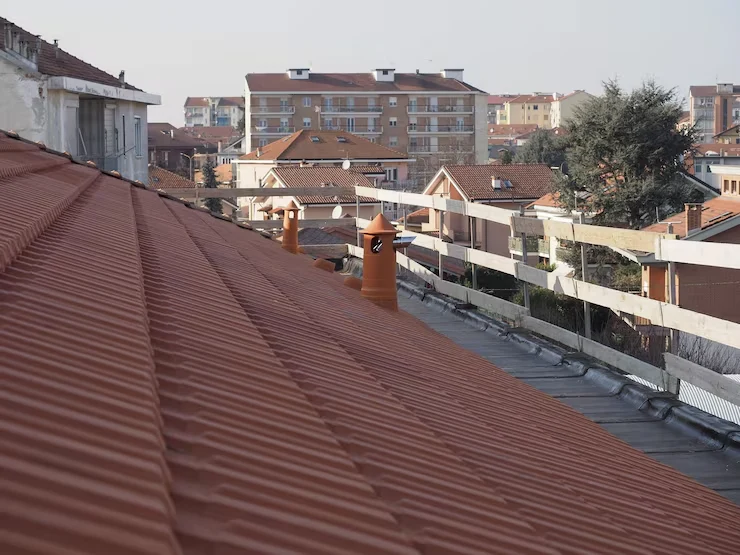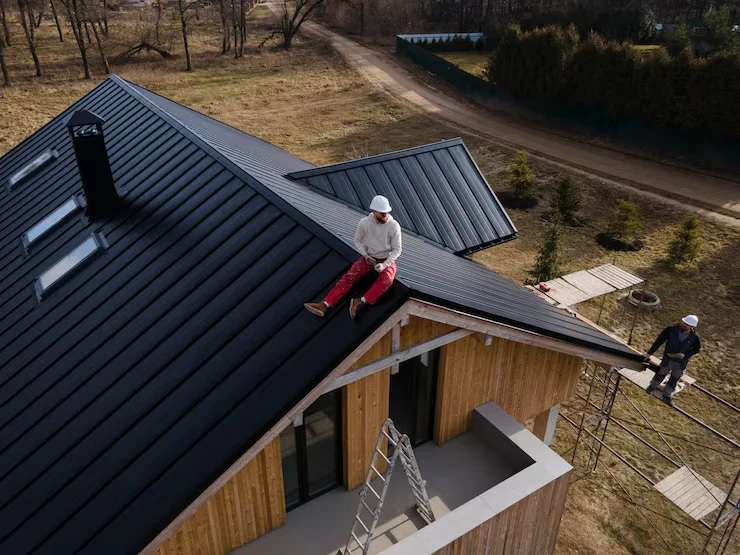
Most Plano homes wear asphalt shingles, but they are not the only choice, and many houses also hide a flat section over a porch, patio or addition that needs a different material altogether. This guide walks through the main types of roof materials a North Texas homeowner meets: asphalt shingles, metal, and the membranes and coatings used on flat and low-slope sections.
It sticks to what manufacturers, trade associations and independent testing bodies actually publish. There are no prices here and no invented lifespans. Where a source makes a claim about how long a material lasts, the claim is named and attributed so you can judge it for yourself.
What are the main types of roof materials for a Plano home?
The main types of roof materials on Plano-area homes fall into two families. Pitched roofs use asphalt shingles or metal (panels, standing seam, metal shingles and stone-coated steel). Flat and low-slope sections use membranes such as TPO, EPDM or modified bitumen, sometimes protected by a roof coating.
Slope separates the two families. Shingles shed water by overlapping, which needs gravity. A flat section cannot rely on overlap, so it needs a continuous waterproof sheet.
The testing standard for hail resistance draws the same line. UL’s standard 2218 covers “prepared” roof coverings installed in overlapping rows on slopes of 2:12 and greater, and it sends low-slope roofing systems to a separate standard, UL 2218A. A single house can therefore need two different material decisions.
| Material family | Where it goes on a house | How it keeps water out | Cluster guide |
|---|---|---|---|
| Asphalt shingles | Pitched main roof | Overlapping courses | Asphalt shingles explained |
| Metal panels and shingles | Pitched main roof | Interlocking or lapped panels | Types of metal roofing |
| TPO membrane | Flat or low-slope sections | Heat-welded single sheet | TPO roofing for homes |
| EPDM membrane | Flat or low-slope sections | Rubber sheet with taped seams | EPDM rubber roofs |
| Modified bitumen | Flat or low-slope sections | Layered asphalt sheets | Modified bitumen roofing |
| Roof coatings | Over an existing low-slope roof | Elastic surface film | Elastomeric roof coatings |
Why do Plano-area hail and heat matter when choosing a roof material?
Hail and heat are the two conditions that separate roofing materials most clearly in North Texas. Hail tests how a material resists impact. Summer sun tests how a material handles heat and whether it reflects or absorbs it. A material that suits a cool, calm climate is not automatically the right one here.
Start with hail. According to the NOAA National Centers for Environmental Information Storm Events Database, the Plano area logged 310 hail reports on 62 separate days between 2016 and 2025. Hail of 2 inches or larger was reported on 17 of those days. The counts come from the raw Storm Events data files. They record reports, not every storm, so treat them as a sign of how often damaging hail reaches the area rather than an exact tally.
The largest stone in that decade was a 5.25-inch report near Wylie on 11 April 2016. Every day with hail of 2 inches or more fell between March and June, or in September.
The Insurance Institute for Business & Home Safety (IBHS) has studied this risk locally. After hail crossed Dallas-Fort Worth on 24 May 2011, IBHS evaluated claim and policy data for more than 67,000 homes in 20 ZIP codes, looking at how roofing material and roof age affected hail damage.
Heat is the second factor. The Cool Roof Rating Council explains that a cool roof strongly reflects sunlight and efficiently emits the heat it does absorb, so less heat conducts into the building and air conditioning does not have to work as hard. Colour and finish therefore matter as much as the material name.
Asphalt shingles: what grades are there, and how do they differ?
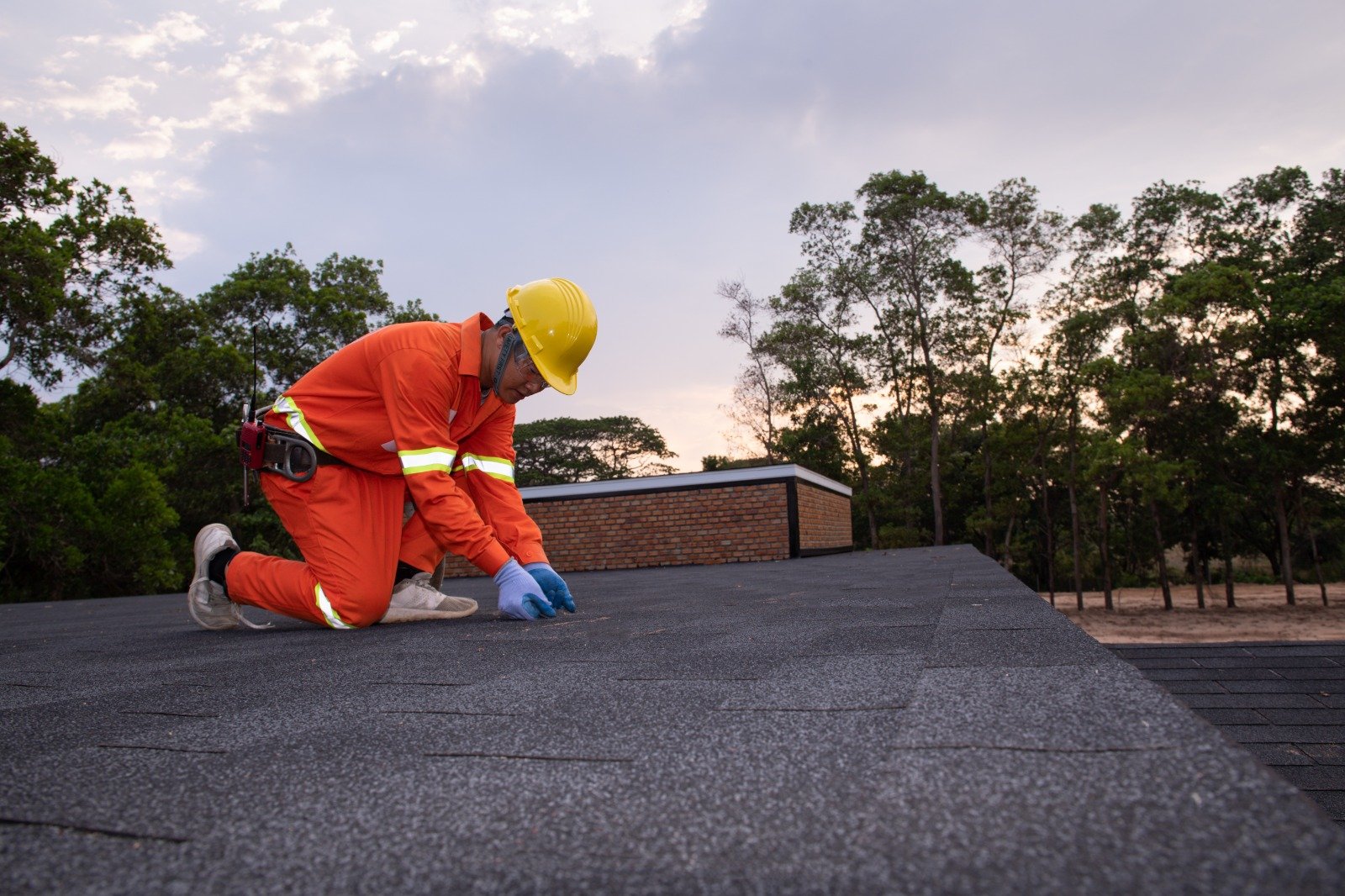
Asphalt shingles come in three broad grades. Three-tab strip shingles are the basic single-layer product. Laminated (architectural) shingles are thicker, two-piece shingles and the most common type. Premium or designer shingles mimic slate or shake and can include higher performance features such as impact resistance.
Asphalt is the default for a reason. The Asphalt Roofing Manufacturers Association (ARMA) says in its frequently asked questions that four out of five homes in the United States are roofed with asphalt shingles. IBHS gives a similar picture, noting in its synthetic shingle research that asphalt shingles are used on about 80% of installed residential roofs.
ARMA’s guide to the asphalt shingle roofing system describes the core ingredients found in every type: a fiberglass mat as the reinforcing backbone, asphalt as the waterproofing agent, and mineral granules on the surface.
The same ARMA guide also defines the grades:
- Three-tab shingles. A single layer with cut-outs forming three tabs. ARMA calls it the least expensive asphalt shingle product and says it is common in new construction.
- Laminated shingles. ARMA calls these the most common type of asphalt shingle. They are two-piece shingles, also called architectural or dimensional, and they give the roof visual depth.
- Premium or designer shingles. These mimic the look of shake, tile or slate, and ARMA notes this category can contain shingles with increased performance characteristics such as impact resistance.
A shingle is only one part of the system. ARMA lists starter strips at the eaves, which help prevent blow-offs, and purpose-made hip and ridge shingles as separate components. For the full picture of how shingles are built and rated, see asphalt shingles explained.
Is an architectural shingle better than a 3-tab shingle?
For most Plano reroofs, an architectural (laminated) shingle is the more common choice, and ARMA describes it as the most common type of asphalt shingle. A three-tab shingle is a single layer and the least expensive asphalt product. The better choice depends on the specific product’s ratings, not the label alone.
The difference is construction. ARMA’s FAQ describes laminated shingles as having more than one layer of tabs to create extra thickness and a shadowed, textured look.
Thickness alone does not make a shingle hail-proof. IBHS runs independent hail impact-resistant shingle ratings, buying shingles from retail stores and firing realistic hail impacts at them. IBHS says plainly that not all impact-resistant asphalt shingles perform the same. Its ratings assess damage from granule loss and dents to surface cracks and a fully compromised shingle.
Wind is the other test. IBHS research on asphalt shingle durability found that the strength of the sealant bonding shingles together is a critical factor in resisting wind damage. That is a property of the installed roof, not only the grade printed on the bundle.
Compare named products, not categories. The architectural vs 3-tab shingles guide covers the comparison in detail.
What does Class 4 mean on a roofing product?
Class 4 is the highest impact-resistance class under UL 2218, a laboratory test in which steel balls are dropped onto a roofing sample. It tells you a product resisted cracking in that test. It does not promise the roof will survive every hailstorm, and UL says so in the standard itself.
UL describes what the test does and does not cover. According to the scope of UL 2218, the steel balls are aimed at the spots most likely to be vulnerable, such as edges, corners and joints. The standard does not evaluate weathering, temperature or ageing. UL also states there is no currently established direct correlation between how a product performs against hailstones and how it performs against steel balls.
That is why IBHS built its own impact-resistance ratings using impacts designed to mimic natural hail. A Class 4 label and a strong IBHS rating are two separate pieces of evidence, and the second is the more realistic.
Whether a rated roof changes your premium is decided by your policy and insurer, so confirm it with them.
What types of metal roofing are used on homes?
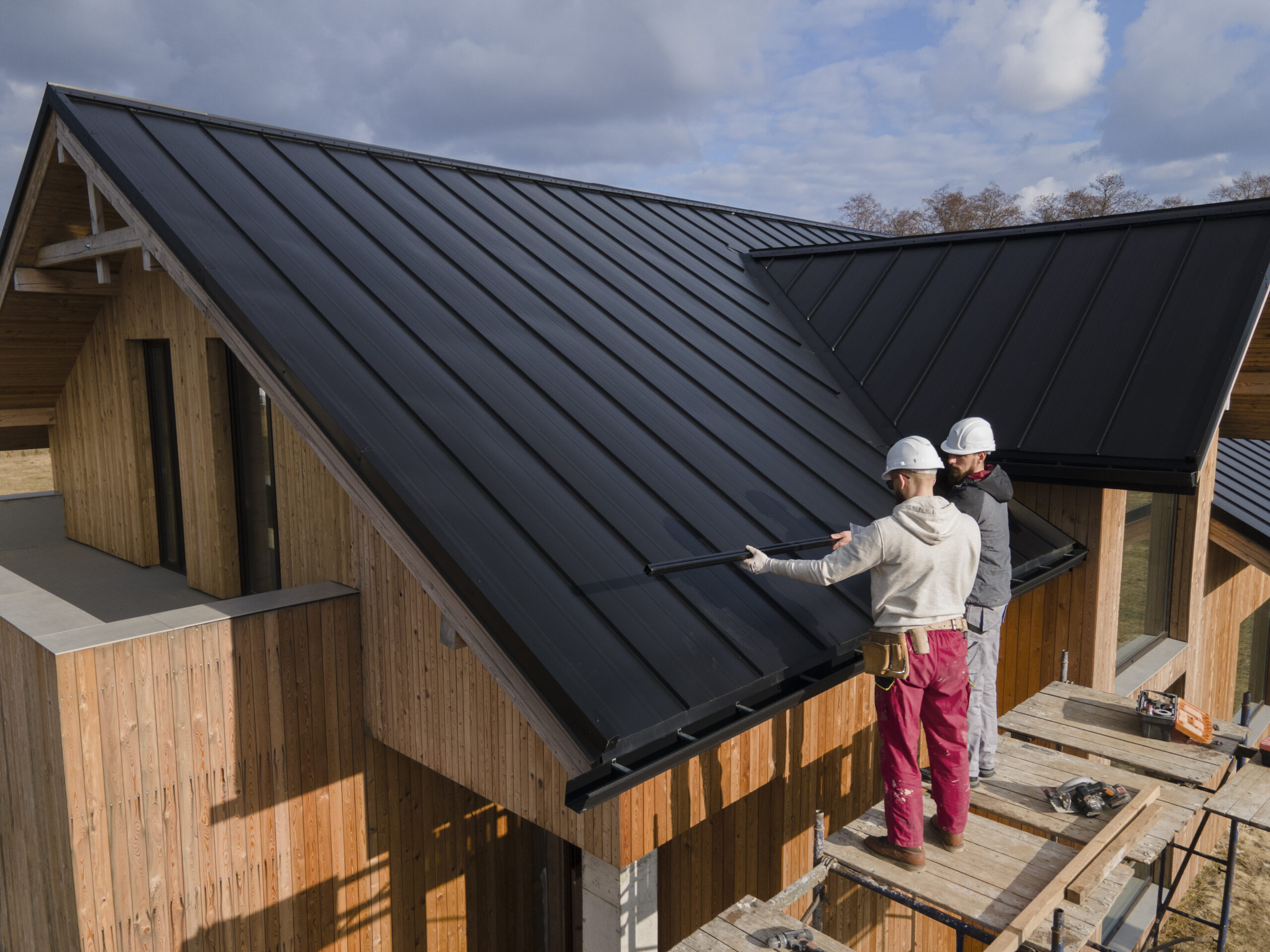
Residential metal roofing comes as vertical panels (standing seam or exposed-fastener), metal shingles, and profiles shaped like slate, tile or shake. Some metal shingles and tiles are stone-coated, using granules like those on asphalt. Steel is the most common metal, with aluminum, copper and zinc also available.
The Metal Roofing Alliance (MRA) lists the residential styles: vertical or standing seam panels, metal shingles, metal slate, metal tile, metal shake and custom profiles. It notes that a metal shingle can look like asphalt and can be ordered stone-coated, and that a stone-coated steel tile is also available.
On materials, the MRA says steel is the most common metal roofing material because of its strength, low weight and durability, and that it is typically the most affordable. All steel roofing carries a metallic coating to help prevent rust. Aluminum is lighter and more corrosion-resistant. Copper and zinc develop a protective patina with age.
The Metal Construction Association (MCA) explains the two ways steep-slope metal is built. Its steep slope roofing page describes “structural” systems, including standing seam panels fastened with hidden clips, and corrugated or tile-look panels attached with exposed fasteners through the panel. “Architectural” systems always need a solid deck beneath them, such as plywood or oriented strand board.
| Metal type | How it is fastened | Looks like | Cluster guide |
|---|---|---|---|
| Standing seam panel | Hidden clips or flanges | Clean vertical ribs | Standing seam vs exposed fastener |
| Exposed-fastener panel | Screws through the panel | Corrugated or ribbed | Standing seam vs exposed fastener |
| Metal shingle, slate, shake or tile | Interlocking units | Asphalt, slate, shake or tile | Types of metal roofing |
| Stone-coated steel | Interlocking units with granule surface | Shingle, shake or tile | Stone-coated steel roofing |
If you are already leaning towards metal and want an installed system priced and specified, that is a job for our metal roofing service page rather than this guide. The informational detail sits in the types of metal roofing cluster.
Is a metal roof better than shingles in Texas?
Neither material wins on every count. Metal tends to resist puncture from hail and can reflect more heat, while asphalt shingles are the most widely used, easiest to install and lowest in upfront cost. The right answer depends on the product, the installation, the roof’s shape and how long you plan to stay.
Here is what each side’s own trade body says, so you can weigh it as advocacy rather than neutral fact:
- Metal. The MRA’s hail page says hail will typically not penetrate a metal roof. It also cites IBHS studies in which metal was much less likely to puncture than asphalt. The MRA concedes that all roof types can sustain some cosmetic damage, depending on how severe the storm is. A dent that does not leak can still matter for appearance, and how a policy treats cosmetic damage is for your insurer to confirm.
- Asphalt. ARMA’s FAQ says asphalt shingles perform well in extreme temperatures. It calls them the easiest standard roofing material to apply, and says their production and application costs give a value other materials find hard to match.
Heat performance depends on the finish. The MRA’s energy savings page says unpainted metal reflects more solar radiation than asphalt. It adds that highly reflective, highly emissive painted or granular-coated metal can re-emit up to 90% of absorbed solar radiation. That figure is the MRA’s claim for its best finishes, not a property of every metal roof.
Independent evidence on hail is narrower than either side suggests. IBHS has studied low-slope metal roofing with the Metal Building Manufacturers Association, but the full report is for members only. We have not seen its findings, so we do not quote them.
The metal roof vs shingles in Texas guide works through this trade-off in depth. Two practical worries come up often enough to have their own guide, metal roof noise and lightning.
Which roof type lasts the longest?
No independent source we could fetch publishes a single, reliable lifespan for each material. The figures that do exist come from trade associations promoting their own product. Metal’s trade body claims the longest life. Asphalt’s trade body says a home roof over 20 years old is a prime candidate for reroofing. Real life depends on installation and weather.
The two claims, stated by their sources:
- The MRA FAQ says homeowners can count on a metal roof lasting 30 to 50 or more years. It puts the average asphalt roof at 12 to 20 years. This is the metal industry’s estimate, made in a document that argues for metal.
- ARMA’s FAQ says that if a residential roof is more than 20 years old, it is a prime candidate for reroofing.
IBHS research gives a reason to be careful with any fixed number. Its shingle durability work found that sealant strength is a critical factor in resisting wind damage, particularly after hail impact. Two roofs of the same age can therefore be in very different condition, so judge yours by an inspection, not by its birthday.
What materials work on the flat parts of a house?
Flat and low-slope sections, such as porch roofs, patio covers and some additions, need a continuous membrane rather than shingles. The common choices are TPO and PVC (heat-welded thermoplastics), EPDM (synthetic rubber) and modified bitumen (polymer-modified asphalt sheets). Roof coatings can protect some existing low-slope roofs.
SPRI, the single-ply roofing industry association, sets out the families in its single-ply roofing overview. There are two kinds of single-ply material. Thermoplastics are TPO and PVC, and their seams are joined with hot-air welders. Thermosets are typically EPDM rubber, and their seams are joined with pressure-sensitive tape.
| Membrane | What it is | How seams are joined | Usual colour | Cluster guide |
|---|---|---|---|---|
| TPO | Thermoplastic polyolefin | Hot-air welded | Mostly white | TPO roofing for homes |
| EPDM | Synthetic rubber | Tape or liquid adhesive | Black, also grey and white | EPDM rubber roofs |
| Modified bitumen | Asphalt modified with SBS or APP | Torch, hot asphalt or cold adhesive | Granule or foil surfaced | Modified bitumen roofing |
Flat roofs have a weakness of their own: water that does not drain. If water sits on a flat section after rain, the flat roof ponding water guide explains what it means and when to call someone.
Flat and low-slope roofing on business premises is a separate job. For a shop, office or multi-unit building, see our commercial roofing page.
What is TPO, and why is it common in hot climates?
TPO (thermoplastic polyolefin) is a single-ply membrane whose seams are welded with hot air. SPRI calls it the fastest-growing segment of commercial roofing. It links that growth to southern climates, where cooling costs significantly outweigh heating costs. Most light-coloured TPO is ENERGY STAR qualified and Cool Roof Rating Council certified.
SPRI’s overview says thermoplastic membranes give excellent weathering performance and are highly resistant to UV, tears, punctures and most chemicals. White is the predominant TPO colour, though others are available. PVC is the other thermoplastic, and SPRI notes that most PVC membranes are also ENERGY STAR qualified and CRRC certified.
The welded seam is the critical detail on a home, and the TPO roofing for homes guide covers what to ask an installer.
What is EPDM rubber roofing?
EPDM is a synthetic rubber membrane, made from ethylene and propylene, used widely on low-slope buildings. The EPDM Roofing Association says it comes in black, grey and white, in thicknesses of 45, 60 and 90 mils. It can be fully adhered, mechanically attached or ballasted, with seams sealed by adhesive or tape.
Those details come from the association’s What is EPDM? page. It also says EPDM has been an appealing choice for low-slope commercial roofing for over 40 years. SPRI describes EPDM as extremely resistant to ozone, ultraviolet light, weathering, high heat and abrasion. It adds that EPDM has a reputation for low maintenance and easy repair.
Colour matters here. SPRI notes that black EPDM absorbs solar energy, which helps in northern climates; white EPDM is also available. The EPDM rubber roof guide covers the choice.
What is modified bitumen roofing?
Modified bitumen is asphalt improved with polymers, usually SBS or APP, and reinforced with polyester or fiberglass. It is made in the factory as sheets and installed in two to four plies. ARMA says it combines the features of a built-up roof with added tensile strength, and that it suits certain residential uses.
ARMA’s low-slope FAQs explain the two modifiers. SBS gives the asphalt rubber-like properties and better resistance to ageing and weathering. SBS sheets are set in hot asphalt, torch-applied or cold-adhered. APP improves UV resistance, flexibility in cold and resistance to flow in heat, and APP sheets are generally applied with a propane torch.
Torch application puts an open flame on the roof, so it is work for a trained crew. The modified bitumen roofing guide covers surfacing and repair questions.
Can a roof coating replace a roof?
No. A roof coating protects an existing low-slope roof that is still sound. It does not replace a failed one. The Roof Coatings Manufacturers Association says coatings are designed to protect and extend the useful service life of roofs such as built-up, metal, modified bitumen and single-ply membranes.
The association’s About Roof Coatings page explains that coatings are thicker than paint and higher in solids. They are elastic, and once cured they form a film that can bridge small cracks and membrane seams. The most common types are acrylic, asphalt, polyurethane and silicone.
A coating is only as good as the roof beneath it, and the work happens on the roof, so it belongs with a professional. The elastomeric roof coating guide explains when a coating is worth considering.
How do you choose the right roofing material for your home?
Start with the roof’s slope and shape, then weigh hail resistance, heat performance, appearance, any HOA rules and how long you plan to stay. Compare specific named products with their test ratings, not broad categories. A good installation of a modest material often outperforms a poor installation of a premium one.
A practical order of questions:
- What slope is each section? Pitched areas take shingles or metal. Flat or low-slope areas need a membrane.
- What impact evidence does the exact product have? Ask for the UL 2218 class and check the IBHS ratings for shingles.
- How does the finish handle heat? Ask whether the colour or membrane is rated as a cool roof.
- What does the system include? Underlayment, starter strips, ridge products, flashing and seam methods matter as much as the surface.
- What do your insurer and HOA say? Your policy and insurer decide coverage questions. Some HOAs restrict colours or materials.
- Who installs it, and what is written down? The warranty terms and the installer’s workmanship terms should be in writing.
In Plano, a reroof is done under the city’s adopted building code. Ordinance No. 2025-6-15 adopted the 2024 International Residential Code with local amendments. We found no local amendment requiring impact-resistant shingles.
When you are ready to plan the job itself, our guide to planning a reroof covers the sequence from inspection to final walk-through. If you would like a material recommendation for your own house, Roofing Repair Plano can assess the roof through our residential roofing service.
Frequently asked questions
What are the top roofing materials for homes?
For North Texas homes, the main materials most often discussed are asphalt shingles, metal panels or metal shingles, stone-coated steel, and membranes such as TPO or EPDM for flat sections. ARMA says four out of five US homes are roofed with asphalt shingles, which makes them the default option.
What type of roof is the cheapest?
Among asphalt products, ARMA calls the three-tab shingle the least expensive. Among metals, the Metal Roofing Alliance says steel is typically the most affordable. This guide gives no prices, because cost depends on roof size, slope, tear-off, decking and the exact product. A written, itemised quote is the only reliable figure.
What is the best roofing material for hail?
No material is hail-proof. Look for the specific product’s UL 2218 impact class and, for asphalt shingles, its IBHS hail rating, because IBHS says impact-resistant shingles do not all perform the same. Metal’s trade body says metal rarely punctures, but it can still dent. Compare named products, not material types.
How long do metal and shingle roofs last?
The Metal Roofing Alliance claims metal roofs last 30 to 50 or more years and puts asphalt at 12 to 20 years. ARMA says a home roof over 20 years old is a prime candidate for reroofing. Both are trade association figures. Installation quality and hail exposure decide how long your particular roof lasts.
Can I put shingles on a flat roof?
Not on a truly flat section. Shingles shed water by overlapping, and UL’s impact standard for shingles applies to slopes of 2:12 and steeper. Flat and very low-slope sections need a continuous membrane such as TPO, EPDM or modified bitumen. Ask a roofer to confirm the slope of each part of your roof.