Asphalt shingles cover most houses in Plano and across North Texas, yet the label on the bundle says little about how a roof will cope with hail, wind and a long summer. Two shingles that look alike from the street can carry very different test ratings.
This guide explains how asphalt shingles are built, what the grades and ratings mean, and what heat and hail do to them. It uses what the manufacturers’ trade body, independent testers and the city’s adopted code actually publish. There are no prices and no invented lifespans.
What are asphalt shingles made of?
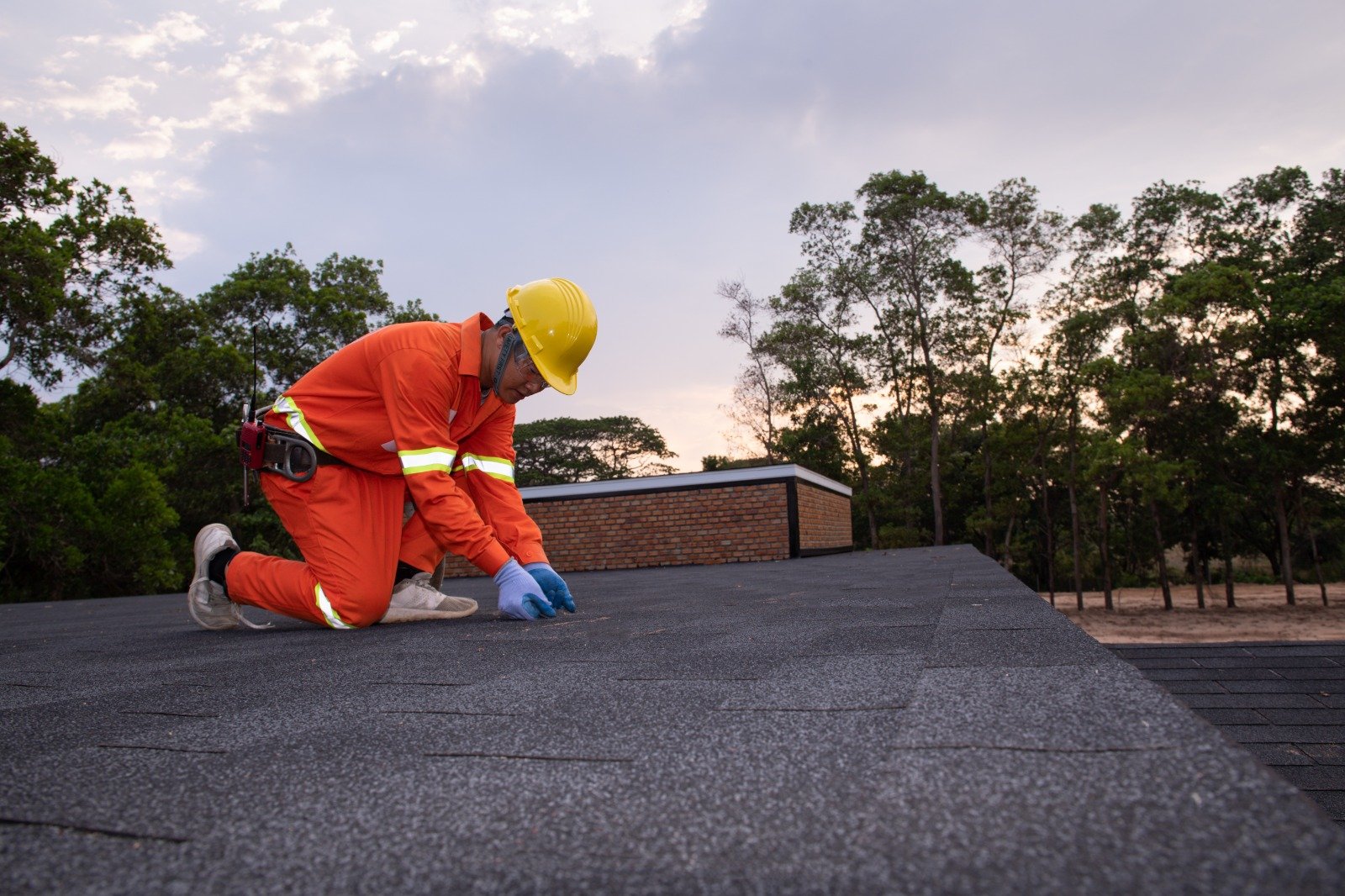
Asphalt shingles are built from a fiberglass mat, asphalt, mineral fillers and a surface of ceramic-coated granules. The mat gives strength, the asphalt sheds water and holds the granules, and the granules supply colour and shield the asphalt from ultraviolet light. Every grade, from basic to premium, shares these core layers.
The Asphalt Roofing Manufacturers Association (ARMA) sets this out in its guide to the asphalt shingle roofing system. It calls the fiberglass mat the backbone of the shingle. Fillers, or mineral stabilizers, are added to the asphalt to help it resist fire and can improve weathering, flexibility and durability.
The granules matter more than most people expect. ARMA says they protect the asphalt from the degradation that prolonged ultraviolet exposure would otherwise cause. When granules wear away, the asphalt underneath is exposed to the sun. That is why granules in a gutter are worth noticing.
Asphalt is the default material for a reason. ARMA’s frequently asked questions say four out of five homes in the United States are roofed with asphalt shingles. In the United States they are predominantly fiberglass-based.
What grades of asphalt shingles are there?
ARMA groups asphalt shingles into three grades. Three-tab shingles are a single layer with cut-outs forming three tabs. Laminated shingles, also called architectural or dimensional, are two-piece shingles and the most common type. Premium or designer shingles mimic slate, shake or tile and can include extra performance features.
The three grades side by side, as ARMA describes them:
| Grade | How it is built | What ARMA says about it |
|---|---|---|
| Three-tab | Single layer, three tabs | Basic type; least expensive asphalt product; common in new construction |
| Laminated (architectural) | Two-piece, more than one layer of tabs | Most common type; adds thickness and visual depth |
| Premium or designer | Shaped or layered to mimic other materials | Can include higher performance, such as impact resistance |
ARMA’s FAQ adds that laminated shingles continue to be a favourite among builders, roofing contractors and homebuyers. They are thicker, and the layered tabs create a shadowed look.
Grade is not the same as performance. A shingle’s test ratings, covered below, say more about how it resists wind and hail than its grade name does. The architectural vs 3-tab shingles guide compares the two most common grades in detail.
How do asphalt shingles hold up to Plano-area hail?
Asphalt shingles can be damaged by hail, and some resist it far better than others. The standard test is UL 2218, which rates impact resistance from Class 1 to Class 4. Independent IBHS ratings add a more realistic test. For a North Texas roof, the product’s impact evidence matters more than its grade or brand name.
Hail is a real, repeated risk here. According to the NOAA National Centers for Environmental Information Storm Events Database, the Plano area logged 310 hail reports on 62 separate days between 2016 and 2025. Hail of 2 inches or larger was reported on 17 of those days. The counts come from the raw Storm Events data files. They record reports, not every storm.
ARMA’s system guide explains the rating. When tested to UL 2218, shingles can reach Class 1 through Class 4, and Class 4 is the highest. The scope of UL 2218 shows its limits. Steel balls are dropped on the most vulnerable spots, the standard does not evaluate weathering or ageing, and UL states there is no established direct correlation between performance against hailstones and against steel balls.
The Insurance Institute for Business & Home Safety (IBHS) built its own hail impact-resistant shingle ratings for that reason. IBHS buys shingles from retail stores and fires impacts designed to mimic natural hail. It assesses damage from granule loss and dents to surface cracks and a fully compromised shingle. IBHS says plainly that not all impact-resistant asphalt shingles perform the same.
If hail resistance is your top priority and you are weighing a different material, the stone-coated steel roofing guide looks at what the tests show for that option.
ARMA notes that some insurance companies may offer premium discounts for Class 4 shingles. Whether yours does is decided by your policy and insurer, so confirm it with them.
What do the wind ratings on a shingle bundle mean?
All asphalt shingles resist wind to some degree, but the level varies. Two test standards are common: ASTM D3161, where Class F is the highest rating, and ASTM D7158, where Class H is the highest. ARMA says proper nailing, fastener pull-through resistance and a strong sealant bond are what provide wind resistance.
ARMA’s system guide names both tests. D3161 is a fan-induced method. D7158 measures uplift force and uplift resistance. A bundle may carry one rating, the other or both.
The sealant strip deserves attention. IBHS research on asphalt shingle durability found that sealant strength is a critical factor in resisting wind damage, particularly after hail impact. In North Texas, where spring storms bring wind and hail together, that finding links the two risks.
The edges matter as well. ARMA lists starter strip products at the eaves, which help prevent blow-offs, and purpose-made hip and ridge shingles. A high wind rating on the field shingles does not help if the edges are poorly detailed. Ask how the installer will handle both.
What does North Texas heat do to asphalt shingles?
Heat works on shingles from above and below. The sun’s ultraviolet light breaks down asphalt that has lost its granule cover, and a hot attic adds heat from underneath. ARMA says balanced attic ventilation helps extend the service life of an asphalt shingle roof. Solar-reflective shingles reflect some of the sun’s energy.
On ventilation, ARMA’s system guide is direct. Proper ventilation, with balanced intake and exhaust, reduces attic temperature and removes condensation. ARMA’s FAQ adds that moving heat out of the attic helps prolong the roof’s service life and can ease the load on air conditioning.
Colour and granules play a part too. ARMA describes solar-reflective shingles that use special granules to reflect some of the sun’s energy and keep roof temperatures cooler, which can reduce air conditioning use in hot climates. The Cool Roof Rating Council explains that a cool roof strongly reflects sunlight and efficiently emits the heat it absorbs. ARMA says the council independently rates the solar reflectance of roofing products.
ARMA’s own position is that asphalt shingles perform well in extreme temperatures. That is the manufacturers’ trade body speaking, so weigh it as such. The practical point stands either way: a shingle on a badly ventilated attic is working harder than it should.
Do fire and algae ratings matter for a Plano roof?
Fire and algae ratings are secondary to hail and wind here, but both are printed on the bundle and worth reading. ARMA says most asphalt shingle roof assemblies carry a Class A fire rating, the highest of three levels. Algae-resistant shingles use copper in the granules to limit dark streaking.
Fire resistance is tested under UL 790 and ASTM E 108, according to ARMA’s system guide. Class A is effective against severe test exposure, Class B against moderate exposure and Class C against light exposure.
Algae is cosmetic. ARMA states that algae does not damage asphalt shingles but may affect a roof’s appearance. Many manufacturers offer AR (algae resistant) shingles with a special copper composition in the granules. If streaks do appear, the cleaning method matters, because harsh methods can strip granules, and any cleaning on the roof belongs with a professional.
How long do asphalt shingles last in North Texas?
No independent source we could fetch publishes a reliable lifespan for asphalt shingles in this climate. ARMA says a home roof more than 20 years old is a prime candidate for reroofing. The Metal Roofing Alliance, a competing trade body, puts the average asphalt roof at 12 to 20 years.
Both figures come from trade associations. ARMA’s FAQ gives the 20-year reroofing guidance. The Metal Roofing Alliance FAQ gives the 12-to-20-year figure in a document that argues for metal, and it says the lifespan can be shorter depending on roof pitch and climate.
Neither figure is a promise for your roof. IBHS found that sealant strength is a critical factor in resisting wind damage after hail. Two roofs of the same age can therefore be in very different condition after the same storm season. Judge yours by an inspection from a professional, not by the date on the paperwork.
Signs worth noticing from the ground or from inside include granules collecting in gutters, missing or lifted shingles after wind, and water stains on ceilings. None of these needs a ladder to spot. If you see them, have the roof looked at.
What should you ask before choosing an asphalt shingle?
Ask for the exact product name, then check its UL 2218 impact class, its IBHS hail rating if it has one, its wind classification under ASTM D3161 or D7158, and its fire class. Ask how the starter strip, ridge, underlayment and ventilation will be handled. The system matters as much as the shingle.
A practical checklist for a quote:
- Which named product is it? A grade such as “architectural” is not enough. Ask for the manufacturer and product line.
- What is its impact evidence? Ask for the UL 2218 class and look the product up in the IBHS ratings.
- What are its wind ratings? Ask which ASTM test it passed and at what class.
- How will the edges be detailed? ARMA lists starter strips and hip and ridge shingles as separate components.
- What is under the shingles? ARMA describes underlayment as a secondary barrier between the deck and the shingles.
- How is the attic ventilated? Balanced intake and exhaust, according to ARMA.
- What is written down? Product warranty and workmanship terms should both be in writing.
In Plano, a reroof is done under the city’s adopted building code. Ordinance No. 2025-6-15 adopted the 2024 International Residential Code with local amendments. We found no local amendment requiring impact-resistant shingles, so the product choice is yours.
Asphalt is one option among several. The guide to roofing materials for Plano homes compares shingles with metal and flat roof systems. If you would like a shingle recommendation for your own house, Roofing Repair Plano can assess the roof through our residential roofing service.
Frequently asked questions
What are the top roofing materials for homes?
Asphalt shingles lead by a wide margin. ARMA says four out of five US homes are roofed with them. The other common choices for a pitched roof are metal panels, metal shingles and stone-coated steel. Flat sections use membranes such as TPO or EPDM. The best fit depends on slope, hail exposure and budget.
What type of asphalt shingle is the cheapest?
ARMA calls the three-tab shingle the least expensive asphalt shingle product. This guide gives no prices, because the cost of a roof depends on its size, slope, tear-off, decking repairs and the exact product chosen. A written, itemised quote for your own house is the only figure you can rely on.
Are Class 4 asphalt shingles worth it in Plano?
They can be, given how often the Plano area sees hail. Class 4 is the highest UL 2218 impact class, but UL says the steel-ball test does not directly predict hail performance. Check the product’s IBHS rating too, and ask your insurer whether a rated roof changes your premium.
Do dark shingles make a house hotter?
Shingle colour and granules affect how much sunlight a roof reflects. ARMA says solar-reflective shingles use special granules to keep roof temperatures cooler, which can reduce air conditioning use in hot climates. Attic ventilation also matters. Ask whether the product is rated by the Cool Roof Rating Council.
How long do asphalt shingles last?
There is no single reliable figure. ARMA says a home roof over 20 years old is a prime candidate for reroofing, and the Metal Roofing Alliance puts the average asphalt roof at 12 to 20 years. Both are trade association figures. Installation, ventilation and hail exposure decide how long yours lasts.