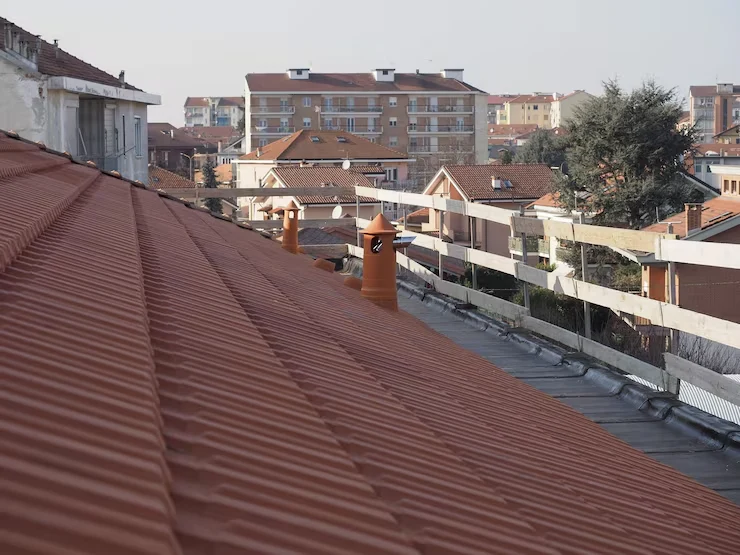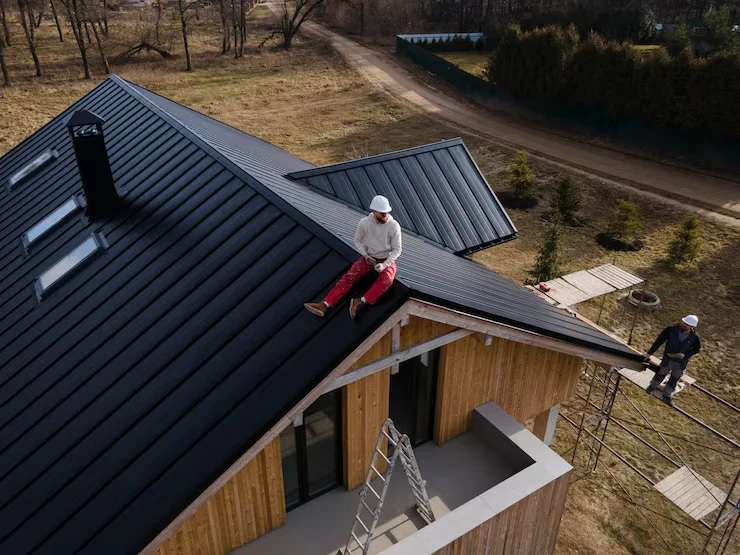
Stone coated metal roofing is steel formed to look like shingles, tile or shake, then finished with a layer of crushed stone granules. It is marketed hard in hail country, and Plano sits squarely in hail country. The question most homeowners have is simple: does it actually hold up better than asphalt when the ice falls?
This guide answers that from what manufacturers, trade associations and testing bodies publish, and it says plainly where the evidence stops. There are no prices here and no invented lifespans. Where a claim comes from someone selling the product, it is labelled that way.
What is stone coated metal roofing?
Stone coated metal roofing is a steel roof panel that has been stamped into the shape of shingles, tiles or shakes and coated with natural stone granules. Underneath, it is metal. On top, it looks like a textured traditional roof. The granules give colour and protect the coatings beneath them from sunlight.
The Metal Roofing Alliance (MRA), the trade body for residential metal roofing, lists stone-coated finishes among its metal roofing styles. It describes metal shingles that “can look just like asphalt” and notes that a stone-coated version uses the same type of granules as regular asphalt. It also lists a stone-coated steel tile.
That makes stone-coated steel different from the metal most people picture. A standing seam roof shows long vertical panels and raised seams. A stone-coated roof shows small interlocking panels with a gritty surface, so from the street it can pass for a shingle or tile roof.
It also sits on the pitched part of a house, not the flat parts. Our guide to roofing materials for Plano homes explains how pitched and low-slope sections need different material decisions.
How is stone-coated steel made, layer by layer?
Stone-coated steel is built in layers. A steel sheet is cut and stamped into a profile, then dipped in protective coatings, then covered with an acrylic base and stone granules. Each layer does a separate job: the steel gives strength, the metallic coating resists corrosion, and the granules carry colour and shield the resin underneath from the sun.
DECRA, one of the best-known manufacturers, sets out its own process in a description of stone-coated metal roofing. It says its steel is dipped in three coatings:
- A zinc-aluminium alloy, to resist corrosion.
- Silicon, for more corrosion resistance and flexibility.
- Acrylic resin, to protect against UV weathering and give the granules a surface to hold.
A layer of natural quarry stone granules is then applied over the resin. That is one manufacturer’s recipe. Other brands use their own coatings, so ask for the product data sheet of the exact panel you are quoted.
McElroy Metal publishes specifications for its Tilcor stone-coated steel shingle. It lists the coating as natural stone granules in an acrylic base coat, a panel weight of 7.05 lbs per tile, 20 panels per square and 141 lbs per square. It also describes a concealed fastening system and interlocking panels designed to resist wind uplift.
Those figures belong to one product. They are useful as a sense of scale, not as a rule for every brand.
What does a Class 4 rating mean for stone-coated steel?
A Class 4 rating is the top result under UL 2218, the main impact test for steep-slope roof coverings. The Metal Roofing Alliance explains it as a sample that did not crack when hit twice in the same spot by a 2-inch steel ball. Many metal products carry it, but you must check the exact product.
The MRA’s hail performance page says the majority of metal roofing earns a UL 2218 Class 4 rating. “The majority” is not “all”. A stone-coated panel only carries the rating if that specific product was tested and listed.
The test itself has limits, and UL states them in the scope of standard 2218. The method does not evaluate weathering, temperature or ageing. UL also says there is no established direct correlation between how roofing performs when struck by hailstones and when struck by steel balls. A Class 4 label is a comparison under laboratory conditions, not a promise about a real storm.
If your question is about Class 4 asphalt shingles rather than metal, it has its own answer. Our guide to Class 4 impact-resistant shingles in Plano covers what the rating means for shingles, how to prove you have it and what it can and cannot do for insurance. This post does not repeat it.
Why does hail matter so much in the Plano area?
Hail matters because it reaches the Plano area most years, and some of it is very large. NOAA records show hundreds of hail reports nearby over the last decade, including stones well above 2 inches. Any roof here will be tested by hail repeatedly, so impact performance is a practical question, not a marketing one.
According to the NOAA National Centers for Environmental Information Storm Events Database, the Plano area logged 310 hail reports on 62 separate days between 2016 and 2025. Hail of 2 inches or larger was reported on 17 of those days. The counts come from the raw Storm Events data files, which record reports rather than every storm.
The largest stone in that decade was a 5.25-inch report near Wylie on 11 April 2016. Every day with hail of 2 inches or more fell between March and June, or in September.
The Insurance Institute for Business & Home Safety (IBHS) has studied this risk in North Texas directly. After hail crossed Dallas-Fort Worth on 24 May 2011, IBHS evaluated claim and policy data for more than 67,000 homes in 20 ZIP codes. The study looked at how roofing material type and roof age affected resilience to hail.
Is stone-coated steel better than asphalt shingles for hail?
Stone-coated steel is generally harder to puncture than asphalt, according to the metal industry’s own summary of IBHS research. That does not make every stone-coated roof better than every shingle roof. Impact ratings vary by product on both sides, and a high-rated shingle can outperform a poorly specified metal panel.
The MRA’s hail page says that in IBHS studies, all roof types could sustain some cosmetic damage depending on storm severity. It says metal performed best and was much less likely to puncture than asphalt. That is the trade association’s reading of the research, so treat it as a summary from an interested party.
On the asphalt side, the materials differ widely too. Our guide to asphalt shingles explained covers shingle grades and how IBHS rates impact-resistant shingles. The broader trade-offs, including heat, noise and resale, are in metal roof vs shingles in North Texas.
| Question | Stone-coated steel | Asphalt shingles |
|---|---|---|
| What resists the hail? | Steel panel under a granule coat | Asphalt mat and granules |
| Common failure from hail | Dents, granule loss, cosmetic marks | Bruising, cracking, granule loss |
| Impact rating to check | UL 2218 class of that product | UL 2218 class and IBHS rating |
| Where it can go | Pitched roofs of 3:12 or steeper | Pitched roofs |
| Who says it does better | The metal trade body, citing IBHS | Depends on the shingle tested |
The fairest way to compare is product against product. Ask each roofer for the UL 2218 listing of the exact panel or shingle they are quoting, then compare those.
What are the disadvantages of a stone-coated metal roof?
The main disadvantages are that it can still show hail damage, its test rating does not predict every storm, it only suits pitched roofs, and its warranty and performance are specific to each brand. Each of these is manageable, but each is a reason to read the paperwork closely before you sign.
It can still be marked by hail. The MRA itself says all roof types can sustain some cosmetic damage in severe hail. Whether a policy pays for cosmetic damage is set by the policy and the insurer, not by the roof. Confirm with your insurer before you assume a metal roof changes your coverage.
A lab rating is not a storm. As UL notes, the impact test does not measure ageing or weathering, and steel balls are not hailstones.
It is for pitched roofs only. Plano has adopted the 2024 International Residential Code through Ordinance 2025-6-15. The 2024 IRC text, shown on UpCodes, says metal roof shingles shall not be installed on slopes below 3 units in 12. A low porch or patio section needs a membrane instead.
The panel must be fastened to suitable sheathing. The same chapter says metal roof shingles are fastened to wood structural panels or solid or closely fitted sheathing, unless the product is designed for spaced sheathing. Your roofer should confirm the deck before quoting.
It is brand-specific. Coatings, granules, fastening and warranties differ between manufacturers. A claim one brand makes does not transfer to another.
Walking on it is a job for a professional. Do not climb onto any roof to inspect it. Check from the ground with binoculars or from an attic hatch, and leave anything on the roof surface to a roofer with fall protection.
How long does stone-coated steel roofing last?
No independent source we fetched gives a measured lifespan for stone-coated steel specifically. What exists are warranty terms and trade association claims. Those tell you what a manufacturer will stand behind on paper, which is useful, but they are not the same as a measured service life on a North Texas house.
The Metal Construction Association says, in its overview of steep slope metal roofs, that manufacturers typically warranty their products for 20 to 40 years. That is a warranty range for steep-slope metal roofing in general, not a figure for any stone-coated brand.
So the useful question is not “how many years?” but “what does this warranty cover?” Ask whether it covers the coating, the granules, the steel, or only manufacturing defects. Ask whether hail is excluded, and whether the installer’s workmanship is covered separately.
What drives the cost of a stone-coated steel roof?
The cost of a stone-coated steel roof is driven by the roof’s size and shape, the condition of the deck, whether the old roof is removed, the profile chosen and the trim details. This guide gives no prices, because those factors vary from house to house. A written, itemised quote is the only reliable figure for your home.
The factors to look for on a quote:
- Roof area and complexity. Hips, valleys, dormers and penetrations add trim and labour.
- Tear-off or recover. McElroy lists reroofing over existing shingles as an application for its panel. Whether that is allowed on your house depends on the product, the code and the existing roof.
- Deck condition. Damaged sheathing must be replaced before any new roof goes on.
- Profile and trim. Shake, tile and shingle profiles use different accessories.
- Permits. In Plano, Ordinance 2025-6-15 requires a contractor to be registered with the city to obtain a permit. Homeowners may pull permits for work on their own residence.
Ask for each of these as a separate line, so you can compare quotes like for like.
What should you ask before choosing stone-coated steel?
Before choosing stone-coated steel, ask for the product’s UL 2218 class, its warranty in writing, the manufacturer’s installation requirements and the roofer’s experience with that exact brand. Those four answers tell you more than any brochure, and they let you compare a stone-coated quote fairly against a shingle or standing seam quote.
A short checklist:
- Which exact product is being quoted, and is it listed as UL 2218 Class 4?
- What does the warranty cover, and does it exclude hail or cosmetic damage?
- Does the manufacturer allow installation over existing shingles, and will the roofer do that or tear off?
- Is every part of my roof at least 3:12, or do some sections need a different material?
- How will the roofer protect the granule surface while working?
- Will the roofer handle the permit and city registration?
If you would like a second opinion on whether stone-coated steel suits your house, Roofing Repair Plano can look at the roof and talk through options on our metal roofing service page.
Frequently asked questions
How long does stone coated steel roofing last?
We found no independent measured lifespan for stone-coated steel. The Metal Construction Association says steep-slope metal roofs are typically warranted for 20 to 40 years, which is a warranty range, not a tested service life. Read the warranty of the exact product, including what it covers and whether hail is excluded.
What are the disadvantages of a stone coated metal roof?
It can still show cosmetic hail damage, according to the metal trade body itself. Its impact test does not measure ageing. Under the 2024 IRC that Plano adopted, metal roof shingles need a slope of at least 3:12. Warranties and coatings also differ by brand, so read the paperwork before signing.
Are stone coated metal roofs better than asphalt shingles?
For puncture resistance in hail, the Metal Roofing Alliance says IBHS research found metal much less likely to puncture than asphalt. Ratings still vary by product on both sides. Compare the UL 2218 listing of the exact panel against the exact shingle you are quoted, rather than comparing material names.
Does stone-coated steel need a Class 4 rating?
We found no Class 4 requirement in Plano’s local amendments to the 2024 IRC, but the rating is the main evidence of impact resistance. The Metal Roofing Alliance says most metal roofing earns UL 2218 Class 4. Check that the specific stone-coated product you are quoted is listed, rather than assuming it from the material.