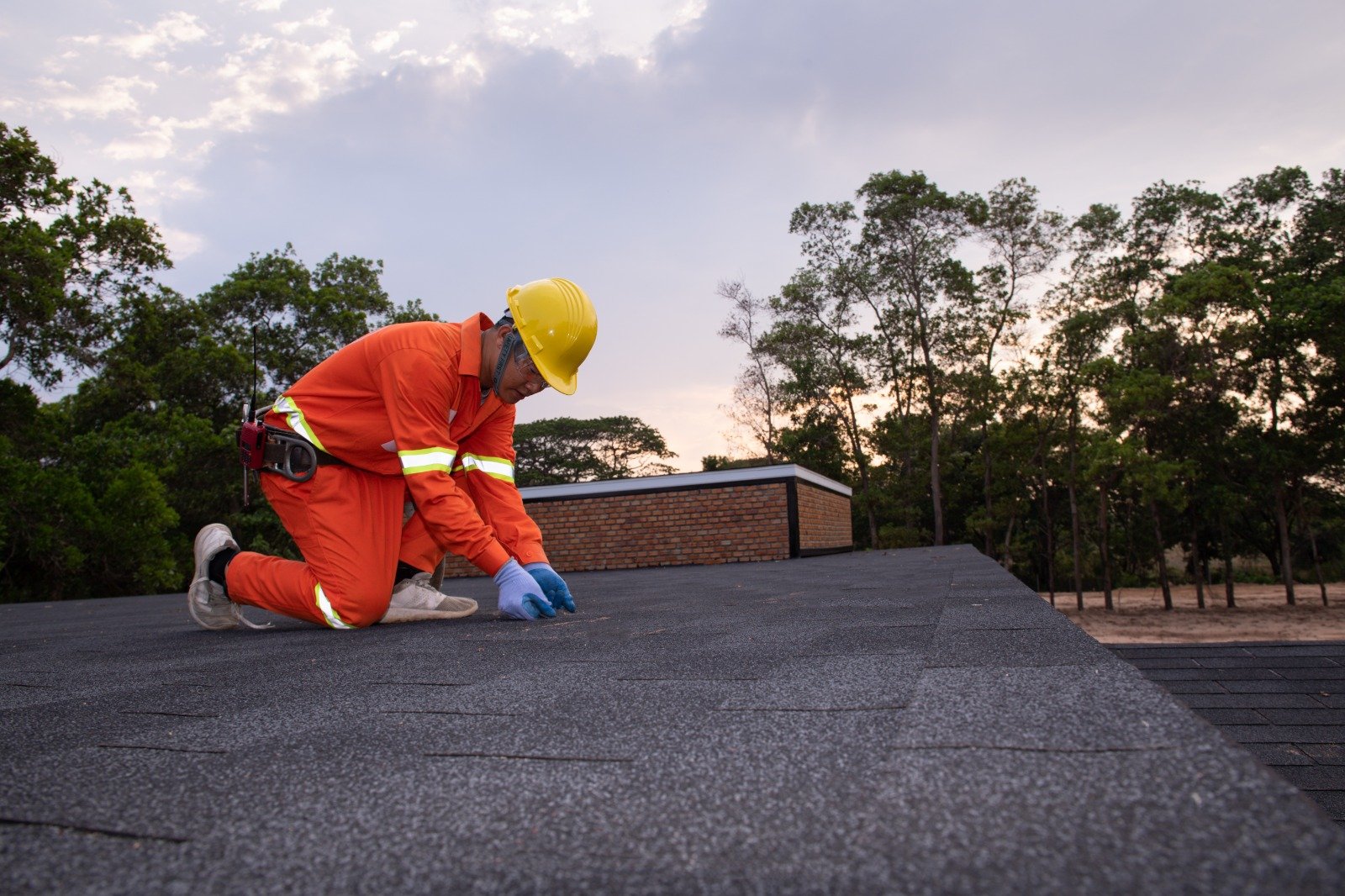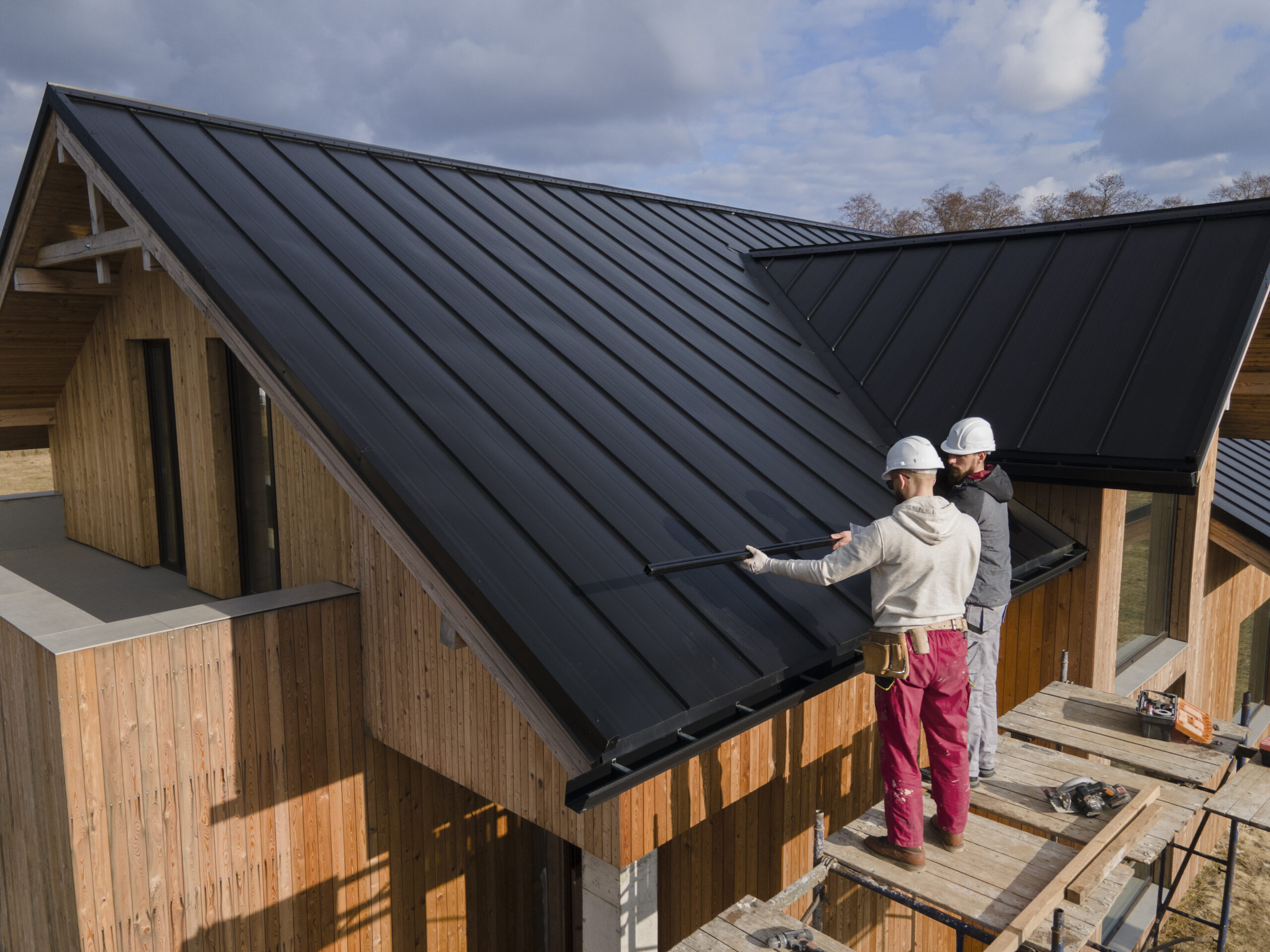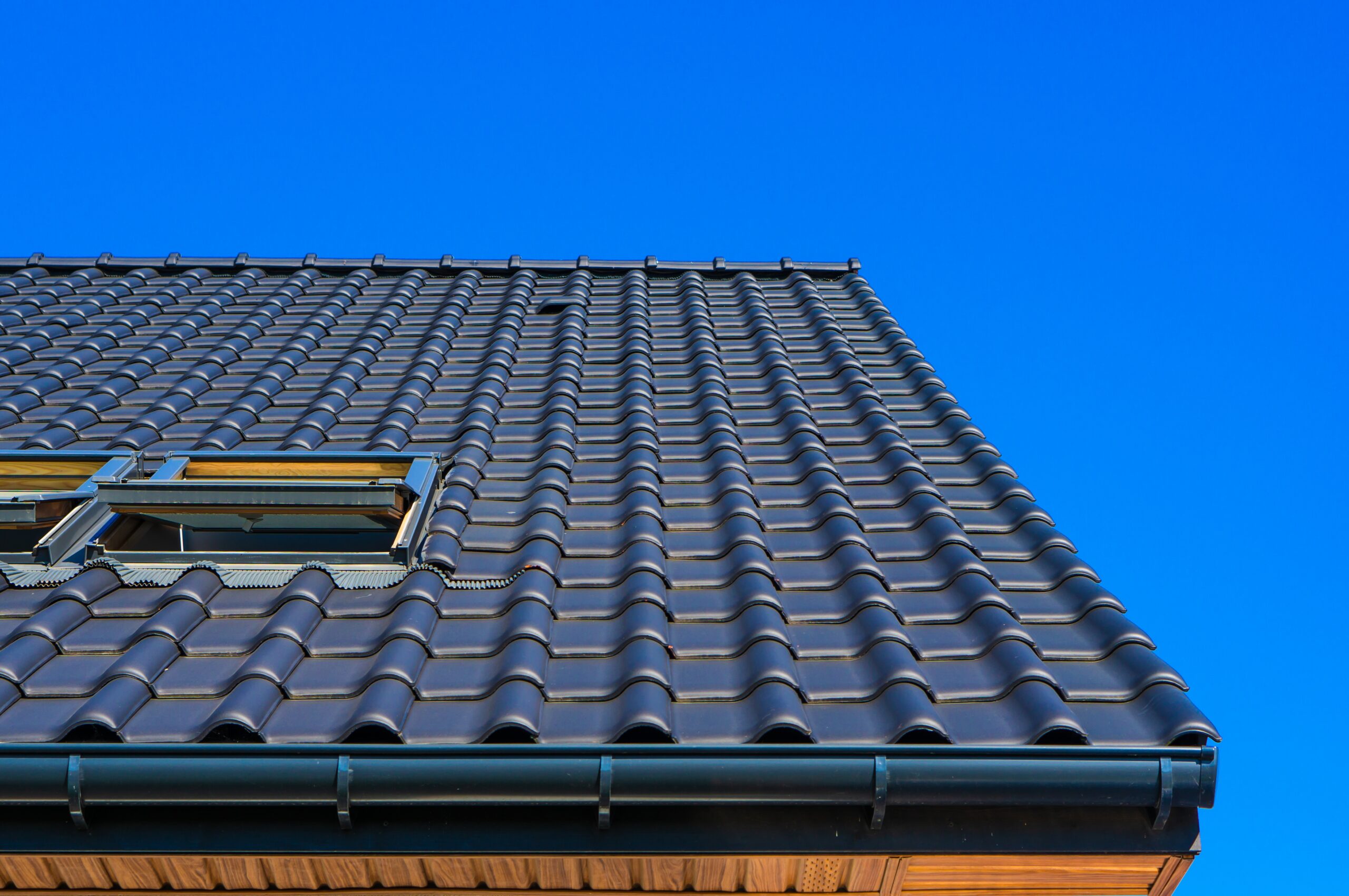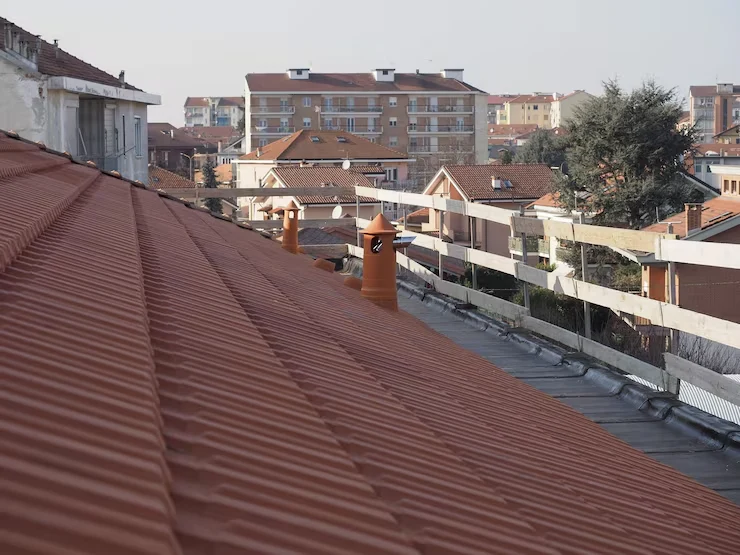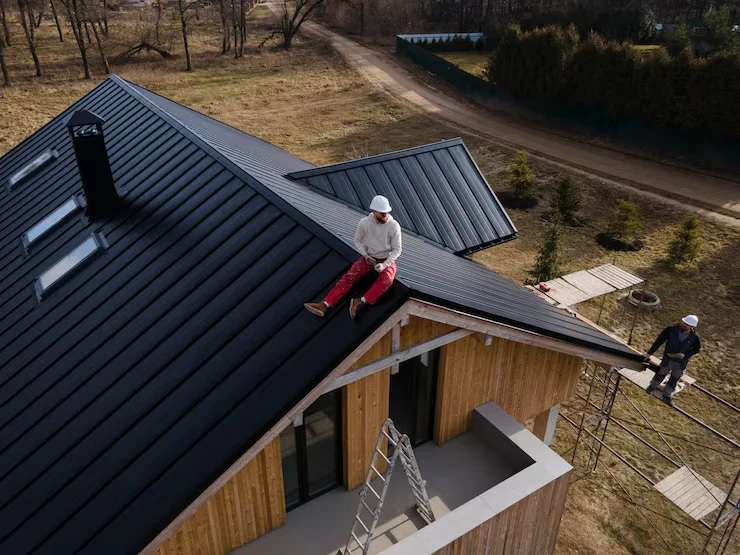
Plenty of Plano houses have a pitched shingle roof with one awkward exception: a flat or nearly flat section over a back porch, a patio cover, a garage addition or a sunroom. Shingles cannot keep water out there. TPO roofing is one of the membranes most often proposed for those sections.
Almost everything written about TPO is aimed at warehouses and shopping centres. This guide looks at it from the homeowner’s side: what it is, why it suits hot climates, where the seams come in, and what its honest downsides are. There are no prices here and no invented lifespans.
What is TPO roofing?
TPO roofing is a single-ply membrane made of thermoplastic polyolefin, laid as wide sheets over a flat or low-slope roof. The sheets are joined by melting their edges together with hot air, so the finished roof acts as one continuous waterproof skin. It is usually white, which helps it reflect sunlight.
SPRI, the trade association for single-ply roofing manufacturers, explains the basics in Single-Ply Roofing 101. It splits single-ply membranes into two families. Thermoplastics, which include TPO and PVC, are seamed with hot air welders that melt the plastic, with pressure to join the sheets. Thermosets, mainly EPDM rubber, are seamed with tapes instead.
Johns Manville, a large membrane manufacturer, describes its TPO roofing systems as reinforced with a polyester fabric and made with an ultraviolet-resistant thermoplastic polyolefin formulation. It says the formulation is designed for pliability, flexibility and weldability during installation.
In short, TPO is a reinforced plastic sheet that is welded, not glued, at its seams. That single fact explains most of its strengths and most of its risks.
Where does TPO go on a pitched house?
TPO goes on the parts of a house that are too flat for shingles: porch roofs, patio covers, low additions, garage roofs and the flat areas between gables. The main roof usually stays in shingles or metal. A single house can therefore need two roofing materials, each chosen for the slope it covers.
Slope decides it. Plano has adopted the 2024 International Residential Code through Ordinance 2025-6-15. The 2024 IRC text, shown on UpCodes, says single-ply membrane roof coverings, a group that includes TPO, shall have a design slope of not less than one-fourth unit vertical in 12 horizontal for drainage.
So “flat” in a roofing sense still means a small fall towards a gutter or drain. A section that is dead level, or that has sagged, holds water no matter which membrane is on it.
Shingles sit at the other end. UL’s standard 2218 covers roof coverings installed in overlapping rows on slopes of 2:12 and steeper, and sends low-slope systems to a separate standard, UL 2218A. Our guide to roofing materials for Plano homes shows how each part of a roof maps to a material family.
Why is TPO popular in hot climates?
TPO is popular in hot climates because most of it is light-coloured and reflective, so it absorbs less of the sun’s heat than a dark surface. SPRI says TPO’s growth is driven by its use in southern climates where cooling costs outweigh heating costs. For a room under a flat roof in a North Texas summer, that matters.
SPRI says most light-coloured TPO membranes are ENERGY STAR qualified and certified by the Cool Roof Rating Council (CRRC), and that white is the predominant colour, though others are available.
The CRRC explains what “cool” means in its guide to what a cool roof is. A cool roof strongly reflects sunlight and efficiently emits any heat it does absorb. Less heat is conducted into the building, so air conditioning does not have to work as hard.
That benefit depends on the exact product and how clean the surface stays. If cooling is part of your reason for choosing TPO, ask for the CRRC rating of the specific membrane in the quote.
Reflectivity is only half of it. Plano’s energy code, adopted as Ordinance 2025-6-10, writes its local insulation amendments for Climate Zone 3. If a flat section over a living space is being rebuilt down to the deck, ask whether insulation will be added under the new membrane and how it meets the city’s energy code.
How are TPO seams made, and why do they matter?
TPO seams are made by heating the overlapping edges of two sheets with a hot air welder and pressing them together, so the plastic fuses. A poor weld is the most likely place for a TPO roof to leak, which is why seam quality is the first thing to ask about.
SPRI describes the method: hot air welders melt the plastic and pressure joins the sheets. Johns Manville’s product range includes heat-weldable cover tape and prefabricated TPO pipe boots and corners, which are used where the field sheet cannot be detailed cleanly around penetrations and corners.
On a house, the critical spots are usually the edges, not the middle:
- Where the flat section meets a wall of the main house.
- Where it ties into the pitched roof above or beside it.
- Around pipes, vents and skylights that pass through it.
- At the drip edge or gutter, where water leaves the roof.
Those transitions need careful flashing. If a TPO section leaks, a roofer will usually look at the seams and these details first. Do not walk on the membrane yourself to look. Check for staining from inside, or from a window that overlooks the section.
What are TPO’s honest drawbacks on a house?
TPO’s main downsides are that it is a thin single layer, its seams depend heavily on the installer’s welding, its hail rating is judged under a different standard from shingles, and some competing manufacturers question its long-term weathering. None of these rules it out, but each is worth understanding before you choose it for your house.
It is thin. CertainTeed, which makes modified bitumen roofing, says in a comparison of self-adhered modified bitumen and TPO that TPO single-ply membranes range from 40 to 80 mils thick. It says most self-adhered modified bitumen systems range from 180 to 380 mils and are less susceptible to puncture from foot traffic. That is a competitor’s comparison, so weigh it accordingly.
It is one layer. CertainTeed also notes that self-adhered systems are typically installed in two or three layers, which it says reduces leak risk compared with a single layer.
Workmanship shows at the seams. Welding is a skill. The same membrane can perform very differently in different hands.
Hail is tested differently. UL 2218, the familiar shingle impact test, does not cover low-slope systems. Ask what impact testing the specific membrane has under UL 2218A or another standard. The Plano area logged 310 hail reports on 62 days between 2016 and 2025, according to the NOAA Storm Events Database.
It cannot fix poor drainage. The code minimum slope exists so water drains away. A section that holds water needs better slope or drains, whichever membrane is on it.
TPO vs EPDM vs modified bitumen: which suits a house?
All three can work on the flat part of a house. TPO is usually white, welded and reflective. EPDM is rubber, usually black, with taped seams and a long track record. Modified bitumen is asphalt-based, often multi-layer and thicker. The right choice depends on the section’s size, use, sun exposure and the installer’s experience.
| Feature | TPO | EPDM | Modified bitumen |
|---|---|---|---|
| Material | Thermoplastic polyolefin | Synthetic rubber | Polymer-modified asphalt |
| Usual colour | White | Black, also white | Often granule-surfaced |
| How seams are joined | Hot air welded | Tape or adhesive | Torch, hot, cold or self-adhered |
| Layers | Single ply | Single ply | Often two or three |
| Sources | SPRI; Johns Manville | SPRI; EPDM Roofing Association | CertainTeed; Johns Manville |
If you already have a flat section and do not know what it is, colour is a first clue, not a final answer. SPRI says white is the predominant colour for TPO and that most PVC is white too, while EPDM is traditionally black but also comes in white. A gritty, granule-covered surface points to an asphalt-based product. Before any patch, a roofer should confirm the membrane, because each one is repaired with different materials.
Our guide to EPDM rubber roofing on homes covers the rubber option, including patching and ponding. Our explainer on modified bitumen roofs covers the asphalt-based option and its common problems.
How long does a TPO roof last?
No independent source we fetched gives a measured lifespan for TPO on a house. The figures that exist are warranty terms, and the useful ones come from the manufacturer of the exact membrane. Installation quality, drainage and sun exposure will decide how long a particular TPO section lasts more than any average.
The one figure in our sources comes from a competitor. CertainTeed says TPO membranes are typically offered with 20-year warranties, and it claims cracking and erosion concerns can occur before that mark. CertainTeed sells a competing product, so read that as one side of a commercial argument, not a measured result.
The practical step is to ask for the warranty in writing. Check what it covers: the membrane only, or the membrane and the seams and flashing. Check whether the installer gives a separate workmanship warranty, and for how long.
What drives the cost of a TPO section?
The cost of a TPO section is driven by its size, how many walls and penetrations it meets, the condition of the deck underneath, whether insulation or tapered fill is added for drainage, and whether the old roof is removed. This guide gives no prices. A written, itemised quote is the only reliable figure for your house.
Items to look for on a quote:
- Area of the flat section, measured separately from the pitched roof.
- Tear-off of the existing covering, and any damaged deck replacement.
- Insulation or tapered boards, if the section needs a better fall.
- Flashing details at walls, the main roof and every penetration.
- Membrane thickness and colour, named by product.
- Permits. In Plano, Ordinance 2025-6-15 requires a contractor to be registered with the city to obtain a permit. Homeowners may pull permits for their own residence.
What should you ask before choosing TPO?
Ask which exact membrane and thickness will be used, how the seams will be welded and checked, how the section will drain, and how it will tie into the main roof. Ask for the warranty and the cool roof rating in writing. Those answers show whether the installer is treating your porch as a real roof.
A short checklist:
- Which TPO product and thickness is quoted, and is it CRRC rated?
- Who will weld the seams, and how will they be tested?
- Does the section have at least the code minimum slope, and where does the water go?
- How will the membrane be flashed where it meets the house wall and main roof?
- What does the warranty cover, and is workmanship covered separately?
If you are weighing membranes for a flat section of your home, Roofing Repair Plano can talk through options on our flat and commercial roofing service page.
Frequently asked questions
What is TPO in roofing?
TPO stands for thermoplastic polyolefin. It is a single-ply roofing membrane laid in wide sheets on flat and low-slope roofs, with seams joined by hot air welding, according to the single-ply trade association SPRI. Most TPO is white and reflective, which is why it is common in hot southern climates.
What are the downsides of TPO roofing?
It is a single thin layer, and its seams depend on the installer’s welding skill. CertainTeed, which sells competing modified bitumen, says TPO is 40 to 80 mils thick and more prone to puncture from foot traffic. Shingle hail tests do not cover it, so ask about low-slope impact testing.
What’s better, TPO or EPDM?
Neither is better everywhere. TPO is usually white, reflective and welded at the seams, which suits hot climates. EPDM is rubber, traditionally black, with taped seams and a long record on low-slope roofs. The section’s size, sun exposure and the installer’s experience with each membrane matter more than the label.
What’s the life expectancy of a TPO roof?
We found no independent measured lifespan for TPO on homes. CertainTeed, a competitor, says TPO is typically offered with 20-year warranties. Treat that as a warranty term, not a tested service life. Ask for the exact product’s warranty in writing, and check whether seams, flashing and workmanship are covered.