Planning a roof replacement involves more than choosing a shingle colour. Before the first bundle goes up, a Plano homeowner has to settle what goes under the shingles, what happens to solar panels and skylights, what the warranties really cover, how the cost is treated at tax time, and when in the year the work should happen.
This guide walks through each of those decisions in the order they usually come up. Each section gives the short answer and points to a detailed guide. It relies on code bodies, the IRS, ENERGY STAR, NOAA and the roofing trade associations. There are no prices here and no invented lifespans.
What does planning a roof replacement involve?
Planning a roof replacement means making a short list of decisions before the crew arrives: whether to replace at all, which materials and underlayment to use, what to do about solar, skylights and gutters, how the warranty and permit will work, and when to schedule it. Getting those settled first avoids most mid-job surprises.
The decisions fall into a natural sequence. The table maps each one to the guide that covers it in depth.
| Decision | Why it matters | Detailed guide |
|---|---|---|
| Underlayment type | The hidden layer that backs up the shingles | Roof underlayment explained |
| Felt or synthetic | The most common underlayment line on a quote | Synthetic underlayment vs felt |
| Rain during the job | What protects the deck mid-tear-off | Underlayment exposed to rain |
| Warranties | What is covered, by whom, and registration | Roof warranty types |
| Solar before or after | Avoiding a second removal later | Solar panels and roof replacement |
| Existing panels | Who removes and reinstalls them | Solar panel removal for a reroof |
| Tax treatment | What IRS Publication 523 says | Is a new roof tax deductible? |
| Timing | Hail season, heat and scheduling | Best time to replace a roof |
| The day itself | What happens from tear-off to clean-up | The roof replacement process |
| Structural warning signs | A sag changes the whole plan | A sagging roofline |
| Skylights | Replace, reflash or remove | Skylights and a new roof |
| Gutters and drainage | Where roof water ends up | Gutters, downspouts and clay soil |
If you are still choosing the roofing material itself, start with our guide to roofing materials for Plano homes, which compares shingles, metal and flat roof membranes.
Should you replace, recover or repair first?
Start by confirming that replacement is the right job. The Asphalt Roofing Manufacturers Association says a single flat layer of shingles over a sound deck can sometimes be recovered, but rotted decking, more than two layers, a sagging structure or badly distorted shingles mean a tear-off. A roofer’s inspection settles which case you are in.
ARMA’s technical bulletin on replacement versus recover defines the terms. A roof recover installs a new covering over the existing one. A roof replacement removes the old covering, repairs any damaged substrate and installs a new roof. ARMA notes that most building codes do not allow more than two roof coverings on a building.
ARMA lists the cases where the old shingles will probably have to come off:
- the deck shows rotted or warped wood or large gaps between boards;
- there are more than two layers of existing shingles;
- the structure sags across the ridge or truss lines;
- the old shingles are so uneven that a new layer could not lie flat.
The sag item deserves its own warning. ARMA says that if the roof does not look straight and feel solid, a licensed structural engineer should inspect it. Our guide to a sagging roofline explains the warning signs to look for from the ground and who to call first.
Many roofers prefer a full tear-off because it lets them see and repair the deck. Whichever route you take, ask the roofer to explain it in writing.
How should hail shape the material choice?
In North Texas, hail resistance is the first filter for a new roof covering. Compare named products by their UL 2218 impact class and, for asphalt shingles, by independent IBHS hail ratings, because products with the same class do not all perform alike. Then weigh heat, appearance, HOA rules and budget among the products that pass.
UL’s standard 2218 tests prepared roof coverings on slopes of 2:12 and greater for impact resistance. It sends low-slope roofing systems to a separate standard, UL 2218A, so a porch or patio membrane is rated differently from the main roof.
IBHS publishes its own hail ratings for impact-resistant shingles because, as it explains, impact-resistant shingles do not all perform the same in its testing. Looking up the exact product on that list takes a few minutes and can change a decision.
Three questions narrow the field quickly:
- What is the product’s impact class, and does IBHS rate it?
- Does your HOA restrict colour or material? Get approval before ordering.
- Does your insurer treat the product differently? Your policy and insurer decide that, so ask them directly.
What goes under the new shingles?
Underneath the shingles sits the underlayment, a water-resistant sheet that ARMA describes as secondary protection from water intrusion. A quote should name it by product and type, show where self-adhering membrane goes, and say whether a sealed roof deck is included. This is the part of the roof you will never see again, so it deserves attention now.
ARMA’s guide to the asphalt shingle roofing system separates standard underlayment from ice and water barriers. The barrier is a self-adhered underlayment used in vulnerable areas such as eaves, valleys and flashings.
The choice most homeowners face is felt or synthetic. Felt is the traditional asphalt-saturated product. Synthetic is a woven polymer sheet and the common choice on current replacements. Both can meet code when the product carries the right standard.
The bigger upgrade is often a sealed roof deck. The Insurance Institute for Business & Home Safety warns in its sealed roof deck guidance that in high winds, standard underlayment alone may not be enough. It recommends one of three methods for new roofs and reroofs:
- self-adhering tape over all deck seams, then #30 felt or reinforced synthetic over the whole deck;
- a fully adhered membrane over the entire deck;
- two layers of #30 felt or synthetic with a 50% overlap, fastened with 1-inch button cap nails.
A sealed deck is not a code minimum, so it should appear on the quote as its own line if it is included.
What should you do about solar panels?
If solar is coming, replace the roof first. ENERGY STAR says that if a roof needs renovation, it makes sense to replace it before installing solar panels, so the panels do not have to be removed and reinstalled later. If panels are already up, their removal and reinstallation become part of the reroof plan.
ENERGY STAR’s rooftop solar guidance gives two practical steps. Tell your roofing company that solar is planned. Ask whether it will come back after the panels go on to confirm the installation did not damage the roof. ENERGY STAR also suggests asking each solar provider whether the home needs a new roof first.
ENERGY STAR gives no roof-age cut-off, and neither do we. The question is the roof’s condition, which an inspection answers.
When panels are already installed, the order of work matters:
- the solar installer, or a qualified electrician, disconnects and removes the panels and racking;
- the roofer replaces the roof and flashes the mounting points;
- the panels go back on and the system is recommissioned.
Who handles each step, and whose warranty covers leaks at the mounts afterwards, should be agreed before work starts. Our guides to solar panels and roof replacement and to removing solar panels for a reroof cover each decision in detail. Panel removal is electrical work, so it is never a homeowner task.
How do roof warranties work, and what should you get in writing?
Roof warranties come in two main kinds. A manufacturer warranty covers defects in the materials. A workmanship warranty from the installer covers how the roof was put on. Many manufacturer warranties also need to be registered after installation. Get both warranties in writing before final payment, and confirm the registration was actually filed.
The two warranties answer different questions:
| Warranty | Who stands behind it | What to ask |
|---|---|---|
| Manufacturer (material) | The shingle or membrane maker | What does it cover, for how long, and on what terms? Is it prorated? |
| Workmanship | The roofing contractor | How long, what installation faults are covered, and is it in the contract? |
| Enhanced or system | The maker, through an approved installer | Which components must be used, and who registers it? |
Three habits protect you whatever the brand:
- Read the actual documents. A sales sheet is not the warranty.
- Get registration confirmed. Ask for the confirmation from the manufacturer, not just the roofer’s word, before the final payment.
- Keep the paperwork together. Contract, invoice, product names, warranty and photos of the finished roof.
Our guide to roof warranty types explains manufacturer, workmanship and system warranties and the registration step in more depth.
Is a new roof tax deductible?
For a personal home, generally not in the year you pay for it. IRS Publication 523 lists a new roof as an improvement that adds to your home’s basis, which can reduce the taxable gain when you sell. Repairs such as fixing leaks are not added to basis. Talk to a tax professional about your own situation.
IRS Publication 523, Selling Your Home, explains that improvements add to the value of a home, prolong its useful life or adapt it to new uses. Its chart of improvements that increase basis lists “New roof.” Repairs and maintenance that keep a home in good condition, such as painting or fixing leaks, are not added.
Solar is a separate question. The IRS page on the Residential Clean Energy Credit says the credit equalled 30% of qualified costs, and that it is not available for property placed in service after December 31, 2025. It also says traditional shingles and roof trusses that support solar panels generally did not qualify, while solar roofing tiles and solar shingles did.
| Item | What the IRS page says |
|---|---|
| New roof on your home | An improvement that increases basis (Pub 523) |
| Fixing leaks, painting | Repairs, not added to basis (Pub 523) |
| Clean energy credit | Not available for property placed in service after December 31, 2025 |
Rental property and business buildings follow different rules. Our guide to whether a new roof is tax deductible explains what Publication 523 says and what to take to your tax adviser.
When is the best time to schedule a reroof in Plano?
There is no perfect month, but the calendar matters. Plano-area large hail has fallen between March and June and in September, so spring brings both storms and storm-driven demand for roofers. Mild, dry weeks make the work easier. Book early, plan for weather delays, and do not let a storm-season rush lower your standards.
According to the NOAA Storm Events Database, the Plano area logged 310 hail reports on 62 separate days between 2016 and 2025. Hail of 2 inches or larger was reported on 17 of those days, and every one of them fell between March and June, or in September. These are reports, not a full storm record, but they show the pattern.
That pattern shapes scheduling in three ways:
- Demand. After a large storm, many homes need roofs at once, and crews book up.
- Weather windows. Spring rain can interrupt a tear-off. A synthetic underlayment and a crew that stages work sensibly reduce the risk.
- Heat. Summer work is possible, but crews start early to avoid the hottest hours.
If the replacement follows hail damage, timing also involves your insurer, and your policy decides coverage questions. Our guide to the best time to replace a roof weighs the seasons in more detail, and our guide to underlayment exposed to rain covers what should happen when weather interrupts the job.
What permits and paperwork does a Plano reroof need?
A Plano reroof is done under the city’s adopted 2024 International Residential Code, and the permit applicant must be a contractor registered with the city, unless a homeowner pulls the permit for their own residence. Ask your roofer who is pulling the permit, and keep a copy. HOA rules on colour and material are a separate approval.
Plano adopted the 2024 IRC with local amendments through Ordinance No. 2025-6-15. Its amended section R105.3(B) says that to obtain a permit the applicant shall be registered as a contractor with the city. It makes an exception for homeowners pulling permits for work on their own residence.
We found no local amendment in that ordinance requiring impact-resistant shingles. If you want them, it is your choice, not a city rule.
A short paperwork list keeps the job clean:
- the permit, and who pulled it;
- your HOA’s written approval, if your deed restrictions require it;
- the signed contract naming products, underlayment and scope;
- the warranty documents and registration confirmation;
- photos of the finished roof and the final invoice.
What happens on re-roof day?
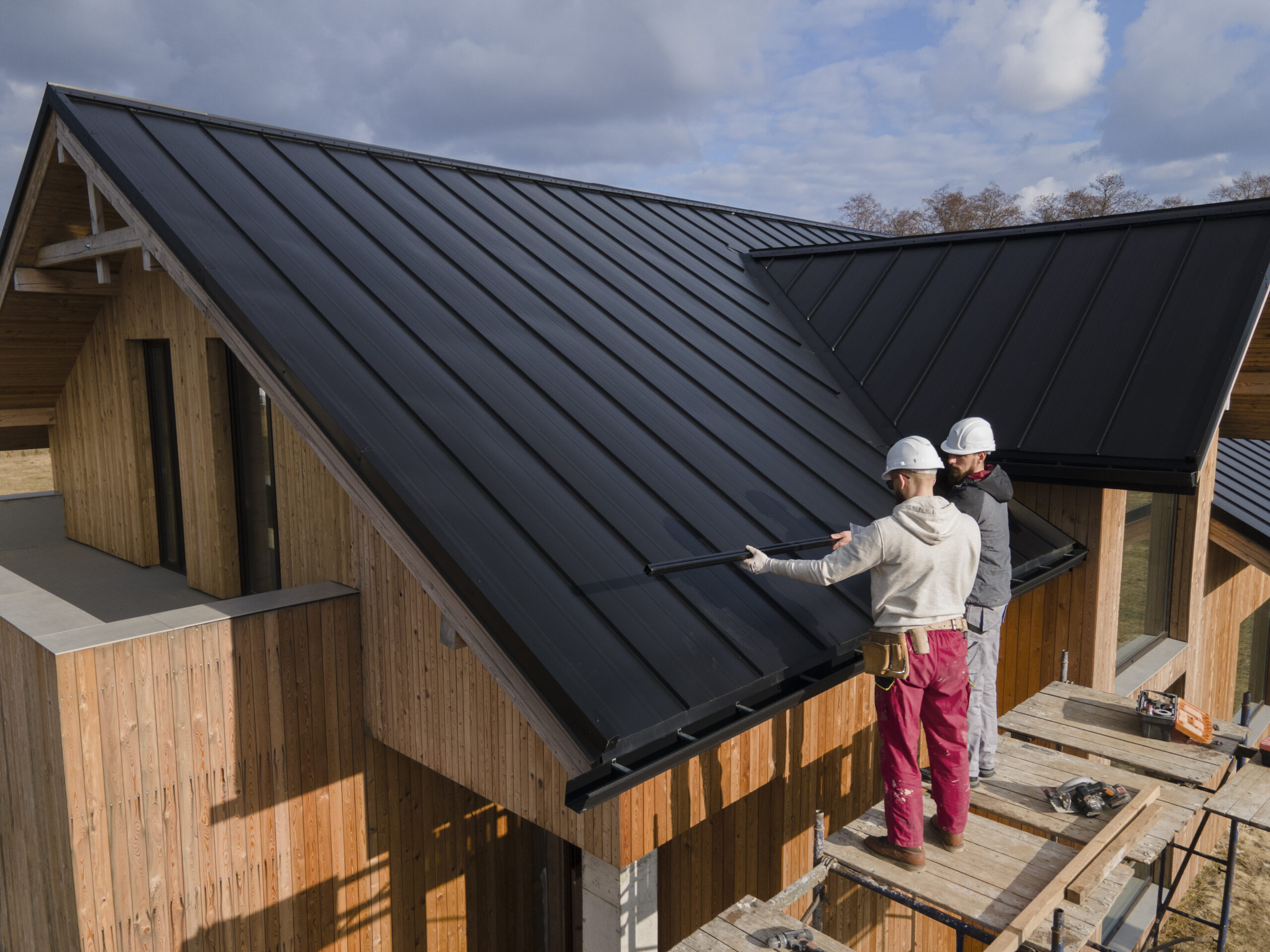
On the day, a crew protects the property, tears off the old roof, inspects and repairs the deck, installs underlayment and flashing, lays the new shingles, and cleans up. A typical house is often finished quickly, but deck repairs and weather can extend it. Knowing the sequence helps you spot when something is skipped.
The usual order looks like this:
- Protection. Tarps over landscaping, a skip or trailer placed, vehicles moved.
- Tear-off. Old shingles and underlayment come off down to the deck.
- Deck inspection. Soft or rotted boards are found and replaced. This is where a quote’s decking allowance matters.
- Underlayment and edges. Drip edge, self-adhering membrane and the field underlayment go down.
- Flashing. Walls, chimneys, skylights and pipes are flashed.
- Shingles and ridge. The new roof goes on, with ventilation at the ridge where specified.
- Clean-up. Magnetic sweeps for nails, debris removed, a final walk-round.
Stay off the roof and keep children and pets well clear of the work area throughout. Our guide to the roof replacement process follows each step in detail.
What about skylights and gutters?
Skylights and gutters are easy to forget until the quote lands. A reroof is the natural time to decide whether each skylight should be replaced, reflashed or removed, because its flashing is disturbed anyway. Gutters and downspouts decide where the new roof’s water goes, which matters on Plano’s clay soil.
For skylights, the options are straightforward:
| Option | When it tends to fit |
|---|---|
| Reflash the existing skylight | The unit itself is sound and not near the end of its service |
| Replace the skylight | The unit is old, fogged, cracked or leaking at the frame |
| Remove and deck over | The skylight is no longer wanted |
Ask why the quote recommends what it does. Our guide to skylights and a new roof covers how to judge each option.
For gutters, the question is where the water ends up. A new roof sheds the same rain the old one did, and the gutters and downspouts send it somewhere near your foundation. Our guide to gutters, downspouts and clay soil explains where roof water should go and why that matters here.
What is the full checklist for planning a roof replacement?
The full checklist runs from inspection to paperwork: confirm replacement is needed, choose materials and underlayment, settle solar, skylights and gutters, agree warranties and registration, check permits and HOA approval, pick a sensible window, and keep every document. Working through it in order turns a stressful project into a series of small decisions.
- Inspection. Confirm replace versus recover versus repair, and check for sag or deck damage.
- Material. Choose the roof covering, with hail ratings in mind.
- Underlayment. Named product, self-adhering areas, and whether a sealed roof deck is included.
- Solar. Replace before installing, or plan removal and reinstall with clear responsibilities.
- Skylights and gutters. Decide replace, reflash or remove; check where water drains.
- Warranties. Manufacturer and workmanship terms in writing; registration confirmed.
- Permit and HOA. Who pulls the permit; written HOA approval if needed.
- Timing. Book outside the worst rush if you can, and allow for weather.
- Tax records. Keep the invoice for your basis records, and ask a tax professional.
- Final walk-round. Photos, clean-up and paperwork before final payment.
When you are ready to turn the plan into a written quote, Roofing Repair Plano can inspect the roof and price the work through our roof replacement service.
Frequently asked questions
How do I plan a roof replacement?
Start with an inspection to confirm replacement is needed. Then choose the material and underlayment, settle what happens to solar panels, skylights and gutters, and agree warranties and the permit in writing. Pick a schedule that allows for weather, and keep every document. Each step has its own guide linked above.
Should I replace my roof before installing solar panels?
If the roof needs work, yes. ENERGY STAR says it makes sense to replace a roof that needs renovation before installing solar panels, so they do not have to be removed and reinstalled later. Tell your roofer solar is planned, and ask each solar provider whether your home needs a new roof first.
Can I deduct a new roof on my taxes?
For a personal residence, generally not as a current-year deduction. IRS Publication 523 lists a new roof as an improvement that increases your home’s basis, which can reduce taxable gain when you sell. Repairs like fixing leaks are not added. Rentals follow different rules, so talk to a tax professional.
What is the best time of year to replace a roof in Plano?
There is no single best month. Plano-area large hail has been reported between March and June and in September, which brings storms and heavy demand for roofers. Mild, dry weeks are easiest for the work. Book early, allow for weather delays, and never rush a contractor decision because of a storm.
What should a roof replacement quote include?
A clear quote names the shingle product, the underlayment and self-adhering areas, flashing work, ventilation, decking allowance, tear-off and disposal, permit responsibility and both warranties. It should say whether a sealed roof deck is included. Ask for anything vague to be written out before you sign.