A re-roof in Plano rarely finishes in one calm, dry stretch. The old shingles come off, the deck is checked, underlayment goes down, and the forecast does not always cooperate. That leaves a question many homeowners ask while watching the sky: how long can underlayment be exposed before the new shingles have to be on?
The honest answer depends on the product, not on a rule of thumb. This guide explains what the manufacturers actually publish, why rain on underlayment is different from rain on an open deck, and what to ask your roofer before the tear-off starts. There are no prices here and nothing you should try on the roof yourself.
What does underlayment do during a re-roof?
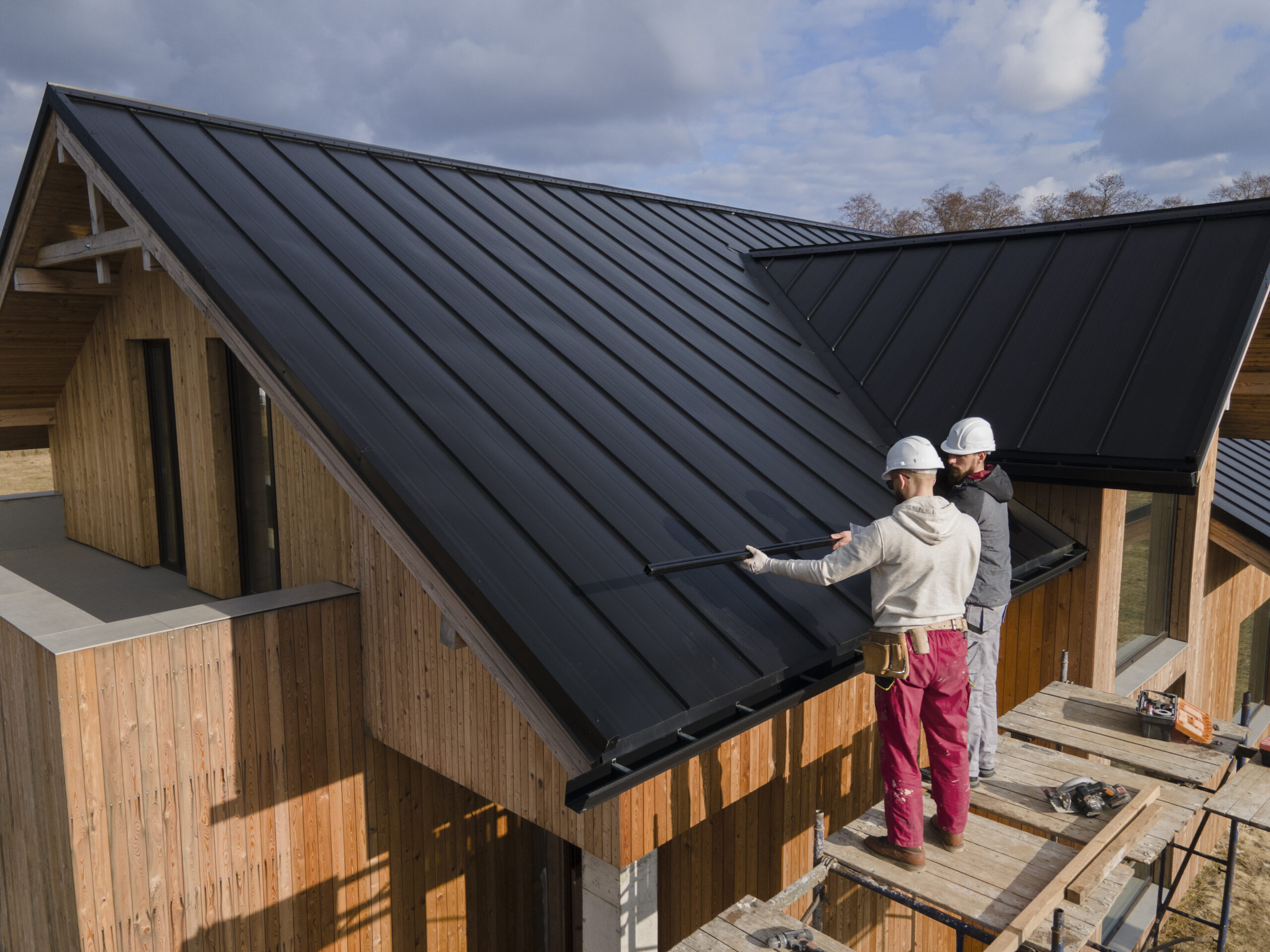
During a re-roof, underlayment is the sheet laid over the bare roof deck before the shingles go on. It gives the deck a temporary skin while the crew works, and it stays under the finished roof as a second layer behind the shingles. It is a backup layer, not the roof itself.
On a finished roof, the shingles shed nearly all of the water. The underlayment sits beneath them to catch what gets past, such as wind-driven rain at a lifted tab. Our guide to what roof underlayment is and why it matters covers the materials, the code basics and how the layers fit together.
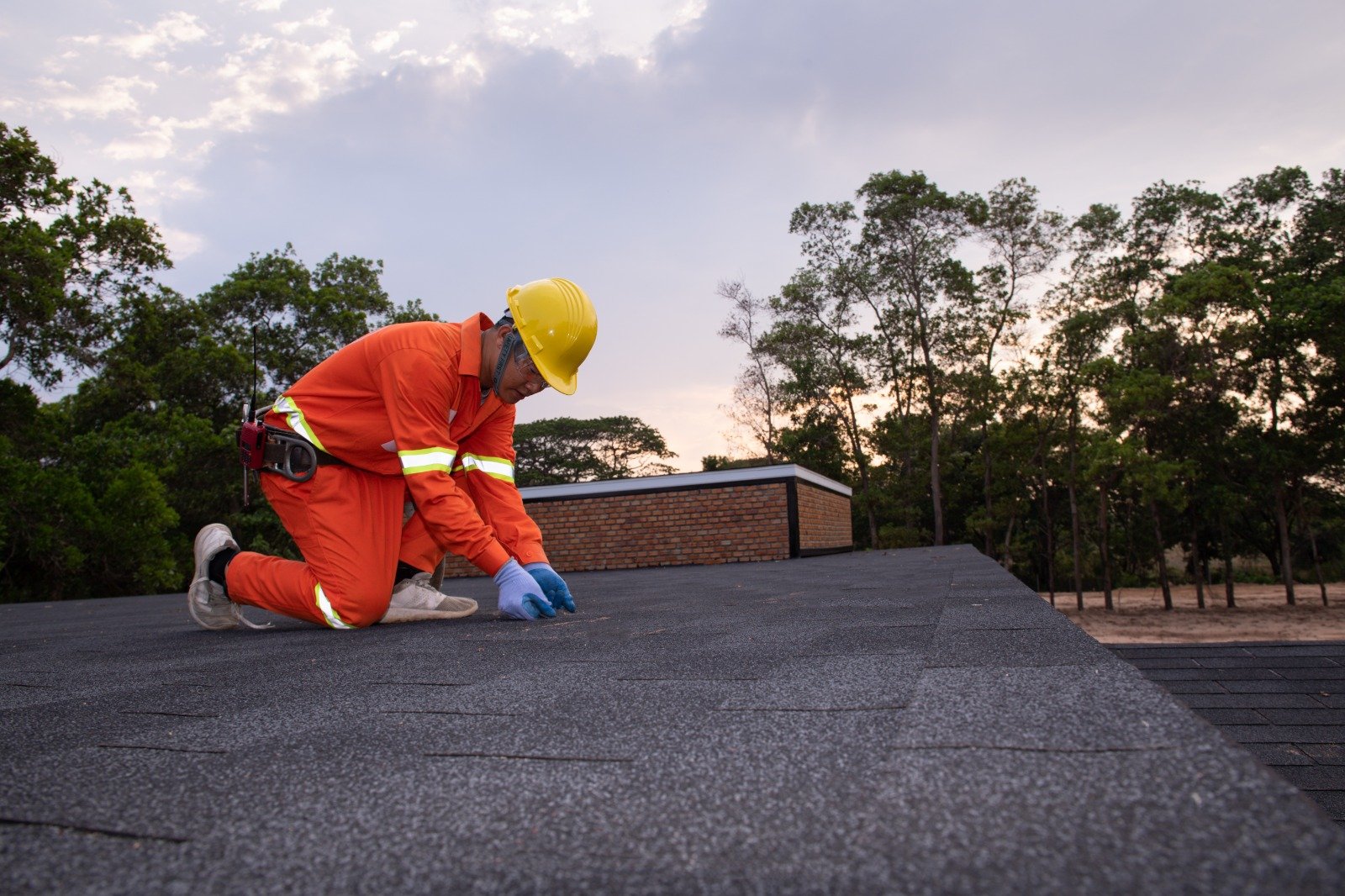
During the job itself, its role is different. Between tear-off and the final shingle course, the underlayment is often the only thing between the deck and the weather. That is why exposure time matters. A product that performs well under shingles for decades can still be damaged if it sits in the sun or in storms for longer than its maker allows.
Two broad families exist. Asphalt-saturated felt is the older product. Synthetic underlayment, usually woven polypropylene, is now common. Atlas Roofing, a shingle and underlayment manufacturer, describes synthetic underlayment as thinner and stronger than felt and more effective as a temporary weather barrier during installation.
How long can underlayment be exposed before shingles go on?
How long underlayment can be exposed is set by each product’s installation instructions, and the limits vary widely. One manufacturer caps a synthetic product at 45 days of sun exposure. Industry sources describe other synthetics rated for months, while felt is meant to be covered quickly. The governing number is on the product’s own sheet.
Here is what the fetched sources say, product by product:
| Source | Product type | What it says about exposure |
|---|---|---|
| TAMKO Synthetic Guard installation instructions | Synthetic | Must not be exposed to UV rays for more than 45 days |
| Same TAMKO instructions | Synthetic | Exposure longer than 1 day and up to 45 days calls for nails with round plastic caps |
| Atlas Roofing on felt and synthetic | Felt | Cannot be left on the roof for long before shingles cover it |
| Same Atlas article, citing Green Building Advisor | Synthetic | Can be exposed to UV light and weather for up to six months |
Two points stand out. First, the limits are not interchangeable. A six-month figure for one synthetic says nothing about a different brand. Second, the TAMKO instructions tie fastening to exposure time. A sheet expected to sit for more than a day needs a different nail than one that will be shingled the same day.
So the useful question for your roofer is not “how long can underlayment last?” in general. It is “which underlayment is going on my roof, and what does its sheet allow?” A good crew plans the job so the sheet is covered well inside that limit.
The same TAMKO document also links proper application to warranty coverage. It states that failing to apply the underlayment according to its instructions could adversely affect coverage under the limited warranty. Exposure beyond the stated limit is therefore a warranty issue as well as a weather issue.
Can roof underlayment get wet?
Yes. Roof underlayment is designed to get wet, because shedding stray water is part of its job. A short shower on properly fastened, lapped underlayment is normal on a re-roof. The risks are water reaching the deck at seams or open edges, and wind lifting or tearing the sheet before shingles hold it down.
Felt and synthetic behave differently when wet. Atlas notes, citing InterNACHI, that felt can wrinkle as water permeates it and can weaken with UV exposure. Wrinkles under shingles can show through as ripples on the finished roof, which is one reason crews try to keep felt dry and covered quickly.
Synthetic underlayment does not absorb water the same way. Atlas describes synthetic polypropylene as not permeable by moisture or vapor. That helps during a wet week, but it does not make the sheet a roof. Water can still run under laps that were installed in the wrong order, or through tears.
The TAMKO instructions add a practical warning: moisture, frost or debris make the surface slippery. That is a crew safety issue, and it is one reason work may pause after rain even when the sky clears. It is also one more reason a homeowner should never walk on an underlayment-covered roof.
Is underlayment enough to keep rain out of the house?
Underlayment alone is not a finished roof and is not built to keep out every storm. TAMKO states plainly that its synthetic underlayment will not prevent wind-driven rain from entering the building and should not be used as the primary roof covering. Treat a roof in underlayment as a roof in progress, not a dry one.
The same instructions say the final roof covering must be installed before the structure is exposed to adverse weather. The examples given are wind-driven rain, high wind, hail and ice storms. In other words, the manufacturer does not expect underlayment to stand alone through a severe storm.
That shapes how a well-run job is scheduled. The crew strips only what it can cover. Areas that cannot be shingled the same day are dried in with underlayment as the stop-gap, and the shingles follow as fast as the plan allows. If severe weather is forecast, the sensible move is to delay the tear-off rather than gamble.
A roof deck under underlayment is also still vulnerable at its edges. Valleys, walls, chimneys and roof penetrations are where water finds a way in. Our guide to what happens on re-roof day walks through the order of work and where flashing fits.
Why does North Texas weather make exposure time matter?
North Texas weather makes exposure time matter because rain and hail arrive in bursts during the busiest roofing seasons. At DFW, May and October are the two wettest months. The Plano area’s largest hail days also cluster in spring. An open roof in those weeks faces more risk than one in a dry spell.
The National Weather Service Fort Worth office publishes DFW climate normals for 1991 to 2020. May averages 4.78 inches of rain, the wettest month, and October averages 4.37 inches, the second wettest. These are DFW Airport figures, not a Plano station, but they describe the regional pattern well.
Hail is the second factor. According to the NOAA Storm Events Database, the Plano area logged 310 hail reports on 62 separate days between 2016 and 2025. Every day with hail of 2 inches or larger fell between March and June, or in September.
| Season | What the records show | What it means for an open roof |
|---|---|---|
| Spring (March to June) | May is the wettest month at DFW; most large-hail days fall here | Plan short exposure windows and watch forecasts daily |
| Summer (July and August) | The two driest months at DFW | Less rain risk, but long sun exposure on the sheet |
| Fall (September and October) | October is the second wettest month; some large-hail days in September | Similar caution to spring |
Many roofs are replaced in the weeks right after a hailstorm, which means many tear-offs happen in the stormiest part of the year. That is exactly when a crew’s dry-in discipline matters most. Our planning guide for a re-roof covers timing, materials and the other decisions to settle first.
What should a roofing crew do when rain is forecast mid-job?
When rain is forecast mid-job, a careful crew limits how much roof is open, dries in every exposed section before leaving, and checks its work after the storm. The aim is that no bare deck is left open overnight and that the underlayment is fastened for the time it may sit exposed.
These are the practices worth asking about. They are not rules from a single code section. They follow from the manufacturer instructions above and from the plain fact that underlayment is a temporary barrier.
- Strip in sections. Tear off only the area the crew can dry in that day.
- Dry in before leaving. Every open area gets underlayment, lapped correctly, before the crew goes home.
- Fasten for the wait. If the sheet may sit for more than a day, it is fastened as its instructions require for longer exposure.
- Protect the edges. Ridges, valleys and walls are where an incomplete roof takes water first.
- Check after the storm. Someone looks for lifted or torn sections and for any water inside before work restarts.
- Watch the clock. The crew tracks how long each section has been exposed against the product limit.
Two days of rain in the middle of a job is not, by itself, a failure. A section that stays in underlayment for weeks because the shingle delivery slipped is a different matter. Ask what happens to the schedule if materials are delayed.
What if it rains during your re-roof and water gets inside?
If water gets inside during a re-roof, stay off the roof, protect the interior and call the contractor straight away. Move belongings away from the drip, catch the water, and photograph the ceiling and the date. Turn off power to any fixture that is wet. Then let the crew find and fix the source.
Do not climb up to look or to tarp the roof yourself. A wet underlayment surface is slippery even for crews in fall protection, as the TAMKO instructions warn. The roof is the contractor’s job site until it is finished.
Write down what happened while it is fresh. Note the time the rain started, where water appeared and whether the crew had left sections open. Keep the photos with your contract. If interior damage needs repair, those notes help settle who pays, and your written contract decides what the contractor owes.
Interior water also has a clock of its own. Wet drywall and insulation should be dried promptly. If you are unsure how far the water spread, ask the contractor to check the attic and the ceiling cavity before closing the job.
What questions should you ask before the tear-off starts?
Before the tear-off starts, ask which underlayment will be installed, what its exposure limit is, and how the crew will dry in each day. Ask too what happens if materials arrive late or a storm moves in. Clear answers to these questions protect both the deck and the warranty.
A short checklist to take into the conversation:
- Which brand and product of underlayment are you installing?
- What exposure limit do its installation instructions state?
- How much of the roof will be open at one time?
- How will each section be dried in at the end of the day?
- Will the fasteners match the time the sheet may sit exposed?
- Will you delay the tear-off if severe weather is forecast?
- Who checks for interior water after a storm, and how fast?
- Are the shingles and underlayment on site before tear-off begins?
If you are planning a replacement, Roofing Repair Plano handles roof replacement and can walk you through the schedule, the materials and the dry-in plan before any shingles come off.
Frequently asked questions
How long can roof underlayment be exposed?
It depends on the product. TAMKO’s instructions cap its Synthetic Guard underlayment at 45 days of UV exposure. Atlas Roofing, citing Green Building Advisor, says some synthetics can be exposed for up to six months, while felt should be covered quickly. Ask your roofer for the exposure limit on the specific product being installed.
Can roof underlayment get wet?
Yes. Underlayment is made to handle stray water, and a shower on a properly lapped and fastened sheet is normal during a re-roof. The risks are water reaching the deck through seams or open edges, and wind lifting the sheet. It is not a finished roof and should not face a severe storm alone.
What does roofing underlayment do?
Underlayment is the layer between the roof deck and the shingles. On a finished roof it catches water that gets past the shingles, such as wind-driven rain. During a re-roof it acts as a temporary weather barrier over the bare deck until the shingles go on. It backs up the roof covering rather than replacing it.
Which is better, 30 lb felt or synthetic underlayment?
For exposure during a job, synthetic usually has the edge. Atlas Roofing describes synthetic as stronger than felt and more effective as a temporary weather barrier, while felt can wrinkle when wet and weaken in UV light. Either can perform under shingles. The right choice depends on the roof and the shingle maker’s system requirements.
Can underlayment go on wet plywood?
A wet deck should be dry before it is covered. Trapping moisture under underlayment and shingles can damage the deck and affect the roof’s performance. If rain soaks an open deck during a tear-off, ask your roofer how they will check and dry it, and whether any boards need replacing before underlayment goes down.